Budget-Linked Divergence in Christmas Gift Shopping Channel Preferences
How consumers divide their gift purchases between physical stores and digital platforms is shaped by a combination of convenience preferences, product category habits, and the nature of the purchase occasion. Christmas shopping, given its scale and time sensitivity, tends to intensify these channel decisions in ways that vary meaningfully across different levels of planned expenditure.
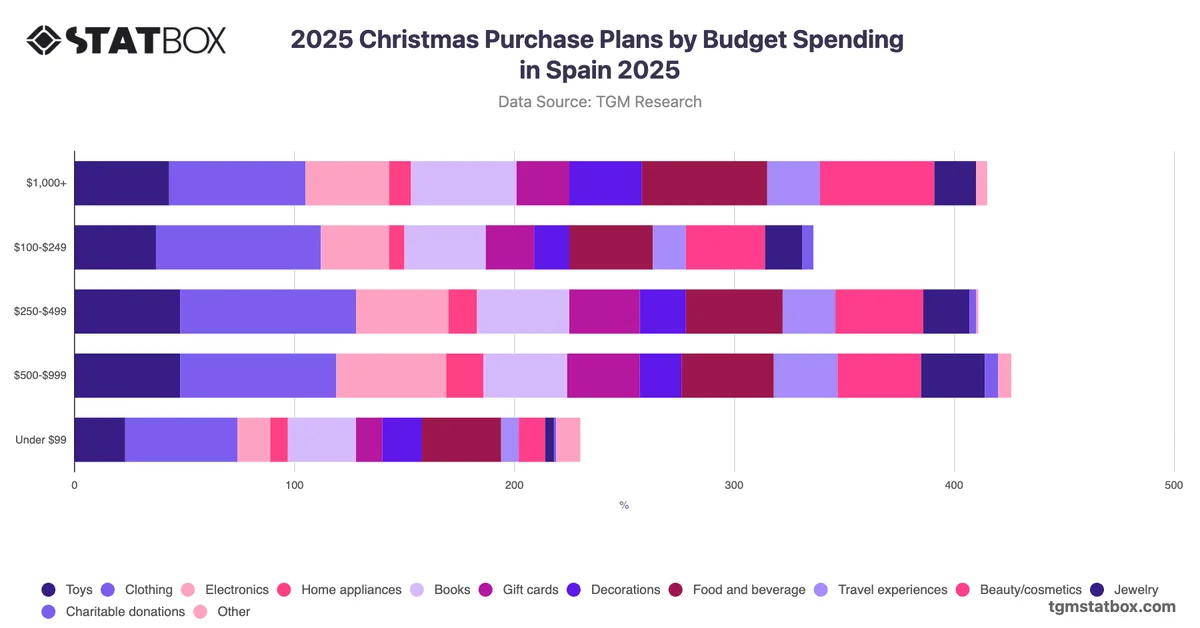
The most analytically significant pattern in Spain is the pronounced contrast at opposite ends of the spending spectrum. Low-budget shoppers, those spending under $99, stand apart from all other groups: 35% shop exclusively in stores, a figure more than three times higher than among the $500–$999 segment at 6%, and a majority avoid online channels entirely or nearly so. At higher spending levels, blended channel behaviour becomes the norm, with balanced in-store and online shopping attracting 37%–38% of mid-to-high spenders. The $1,000-plus group, however, tilts noticeably toward store-led purchasing, with 38% choosing mostly in-store with some online activity. This pattern suggests that higher-value gift purchases may carry a stronger preference for physical retail, possibly tied to product evaluation or service expectations. Retailers targeting premium Christmas shoppers in Spain should consider whether their in-store experience and service proposition adequately supports high-ticket gift selection.