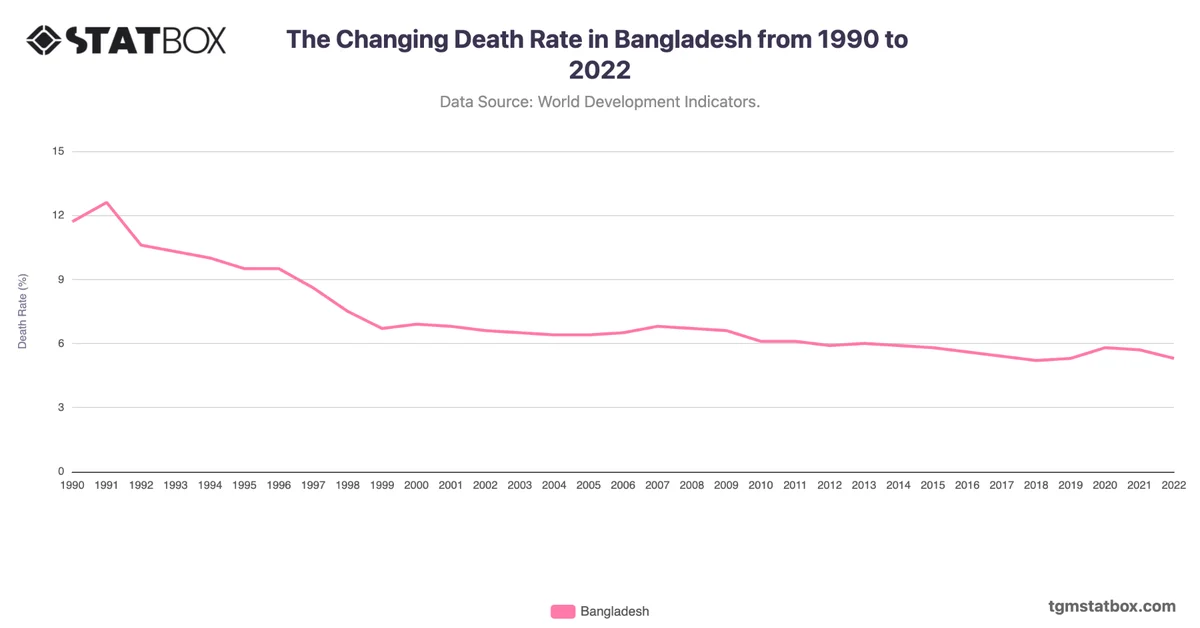
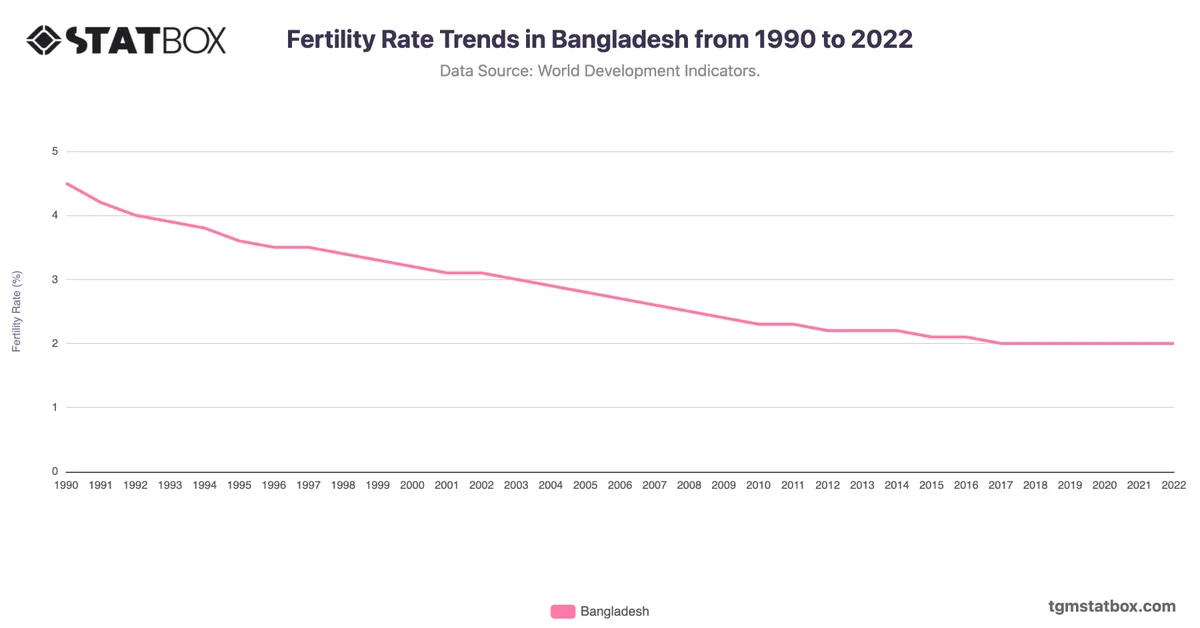
Bangladesh saw a significant reduction in its mortality rate from 101.1 in 1990 to 24.1 in 2022, reflecting remarkable progress in public health. During the 1990s, the mortality rate dropped steadily, reaching 63.0 by 2000. This was driven by the widespread adoption of immunization programs, investments in maternal and child health, and improved access to sanitation in rural areas. Government and NGO partnerships played a critical role in implementing community health initiatives.
From 2000 onwards, the decline accelerated with advancements in healthcare infrastructure, increased use of modern contraceptives, and a focus on female education. By 2020, the mortality rate fell below 26, emphasizing the success of targeted interventions such as the promotion of skilled birth attendants. Despite these achievements, challenges like urban-rural healthcare disparity and malnutrition remain areas of concern.
From 2000 onwards, the decline accelerated with advancements in healthcare infrastructure, increased use of modern contraceptives, and a focus on female education. By 2020, the mortality rate fell below 26, emphasizing the success of targeted interventions such as the promotion of skilled birth attendants. Despite these achievements, challenges like urban-rural healthcare disparity and malnutrition remain areas of concern.
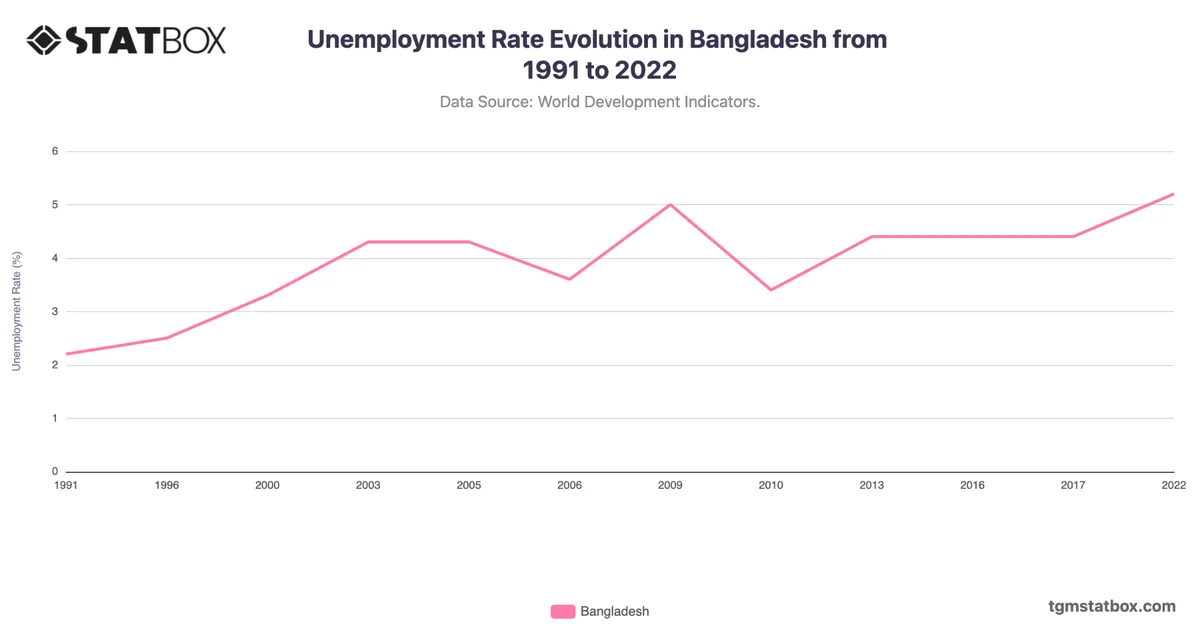
Gain a broader perspective by reviewing Bangladesh’s services sector share in GDP, Bangladesh’s annual GDP growth rate, unemployment rate trend in Bangladesh.