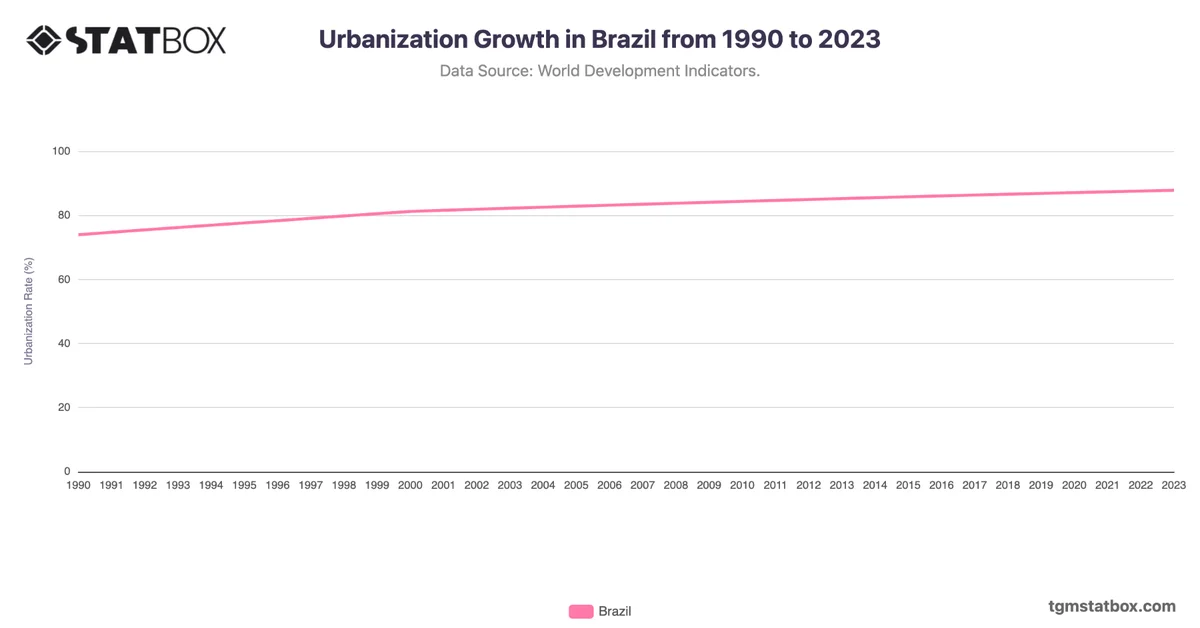
Brazil experienced a consistent decline in population growth over the past three decades, starting at 1.8% in 1990 and dropping to 0.5% by 2023. This trend reflects a demographic shift driven by urbanization, improved access to healthcare, and declining fertility rates. Social policies like Bolsa Família played a significant role in reducing birth rates by improving education and living standards.
The decline in growth rates has become more pronounced since 2010, coinciding with economic stagnation and an aging population. By 2023, Brazil's population growth mirrored the global trend of emerging economies transitioning to slower growth, with migration also contributing to the reduction.
The decline in growth rates has become more pronounced since 2010, coinciding with economic stagnation and an aging population. By 2023, Brazil's population growth mirrored the global trend of emerging economies transitioning to slower growth, with migration also contributing to the reduction.
For a deeper dive into the topic, explore Brazil’s population median age, Brazil’s population trends, Brazil’s agriculture share in GDP.