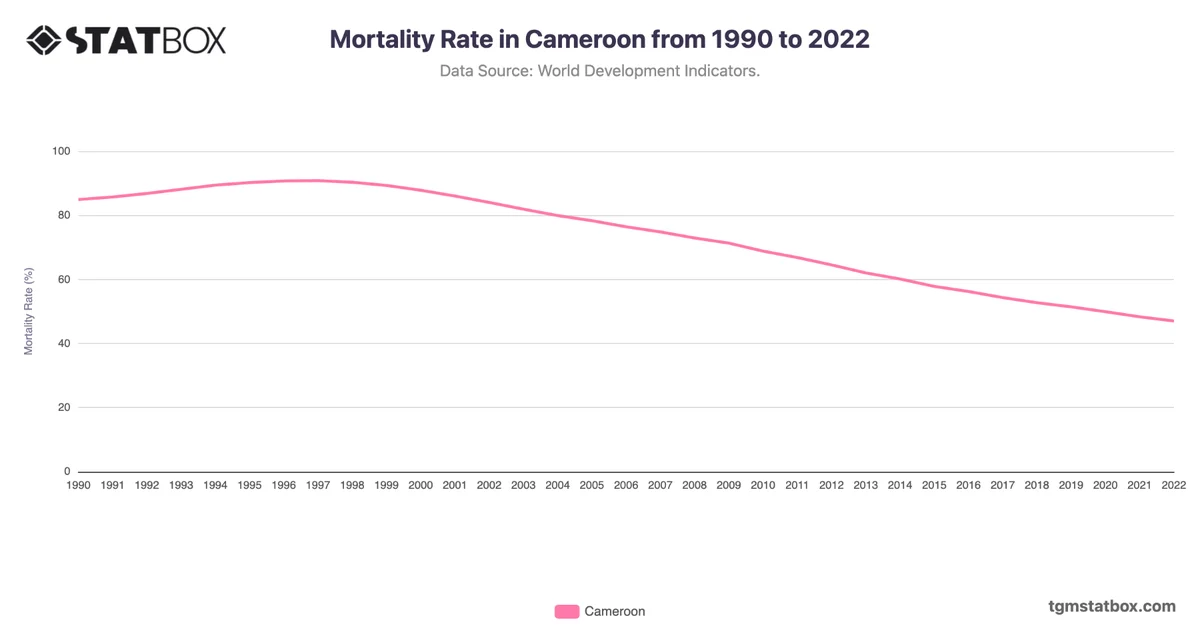
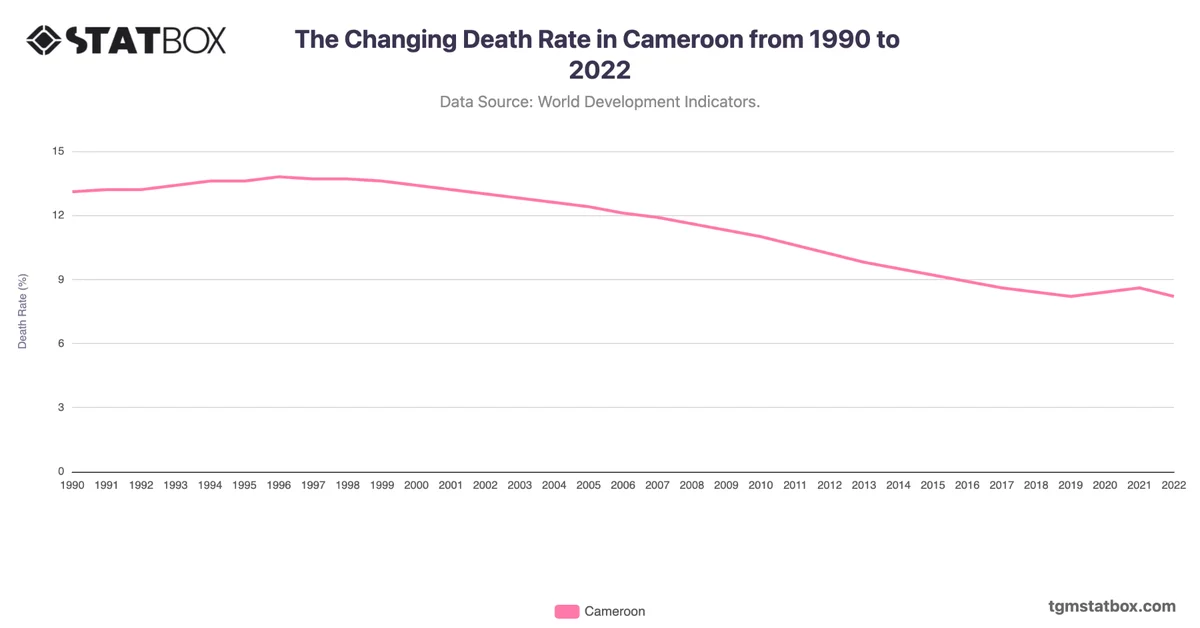
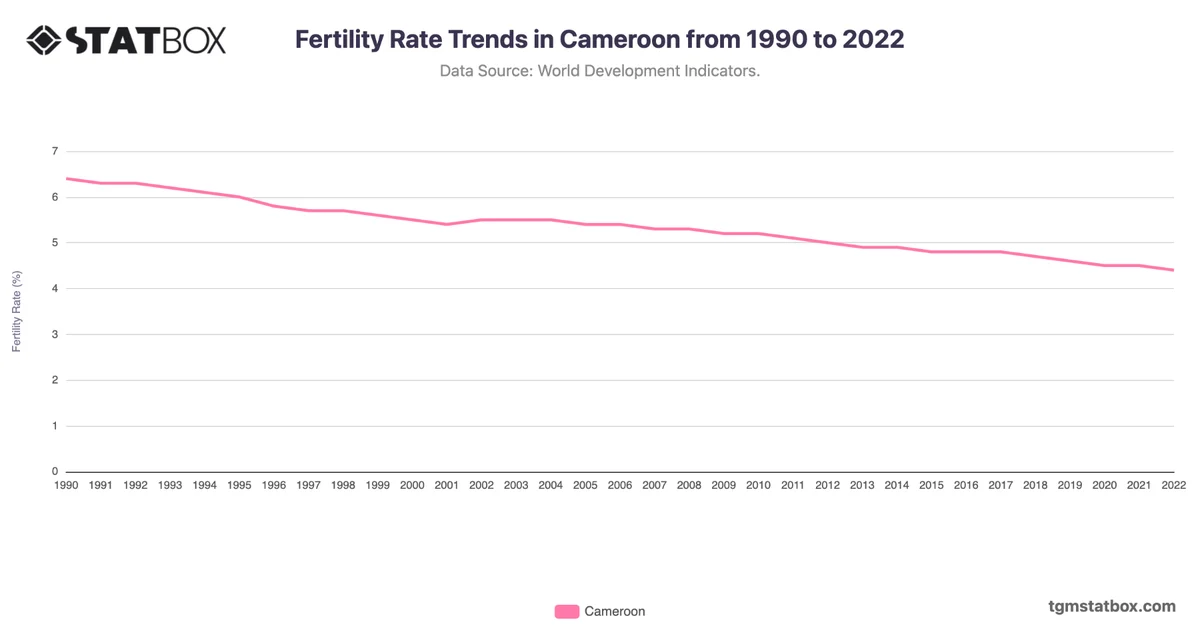
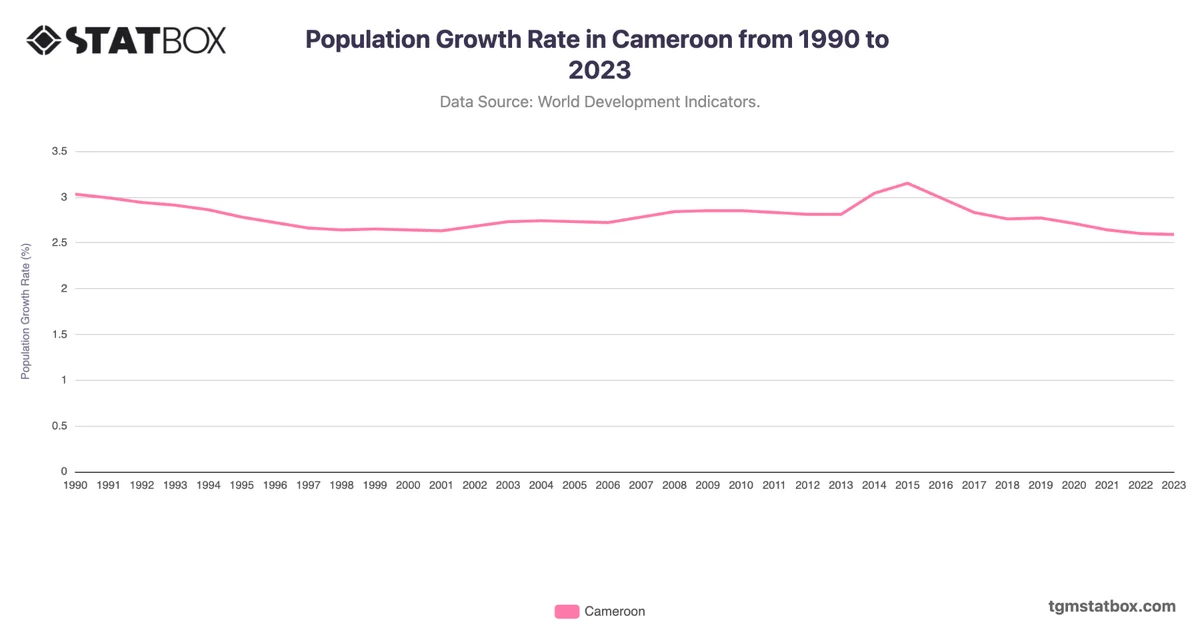
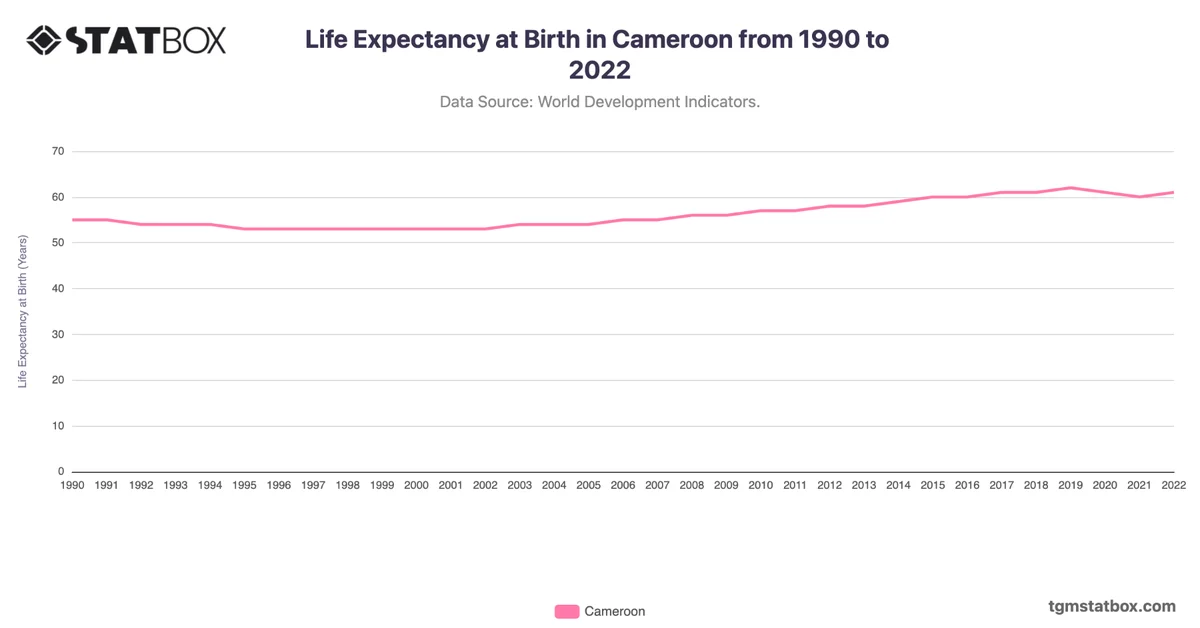
The chart illustrates the gradual increase in Cameroon’s working-age population percentage from 1990 to 2022. In 1990, the working-age group (ages 15 to 64) made up 50% of the total population. Over the next three decades, this figure consistently rose, reaching 55.1% by 2022.
This upward trend reflects improvements in healthcare, education, and overall living conditions, which have contributed to lower mortality rates and a growing labor force. The steady increase in the working-age population suggests potential for economic growth, as a larger portion of the population becomes productive. However, to fully benefit from this demographic shift, Cameroon will need to address challenges such as unemployment, skills development, and job creation.
This upward trend reflects improvements in healthcare, education, and overall living conditions, which have contributed to lower mortality rates and a growing labor force. The steady increase in the working-age population suggests potential for economic growth, as a larger portion of the population becomes productive. However, to fully benefit from this demographic shift, Cameroon will need to address challenges such as unemployment, skills development, and job creation.
For additional information, visit statistics on Cameroon’s urban expansion, Cameroon’s unemployment rate, Cameroon’s population size.