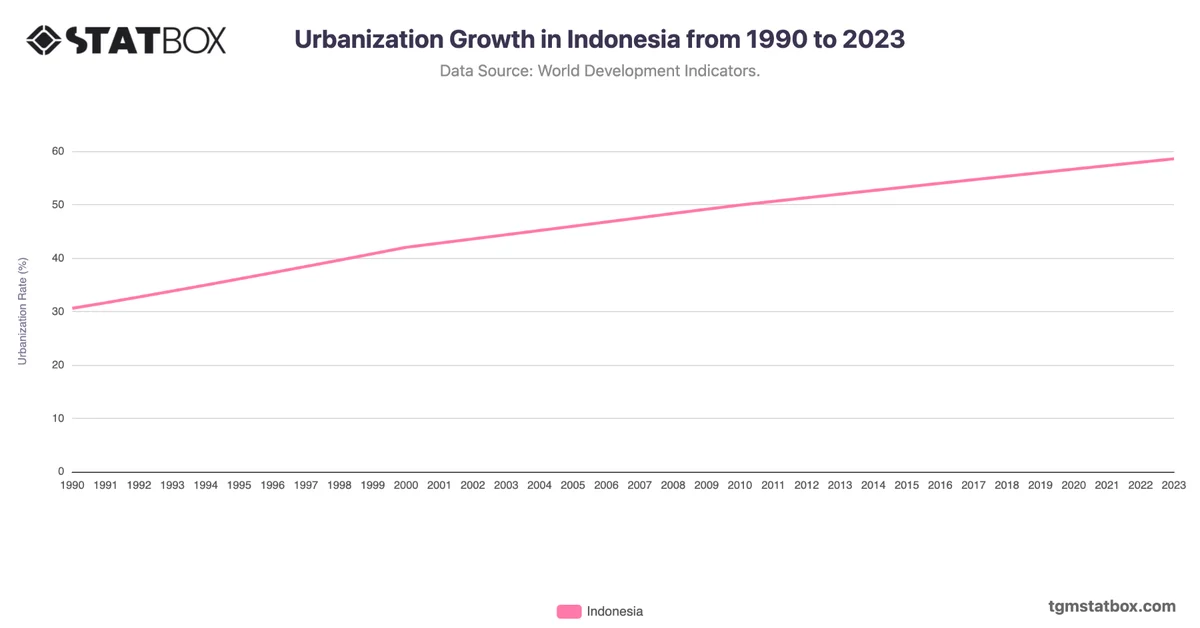
Indonesia maintained a low percentage of military personnel relative to its population, starting at 0.2% in the late 1980s. The percentage dropped to 0.1% in the mid-1990s, consistent with Indonesia’s focus on post-authoritarian reforms and urbanization in major cities like Jakarta. As urban areas grew, the government prioritized urban infrastructure and economic development over expanding the military.
A slight rise back to 0.2% from 2013 onwards may relate to regional security dynamics, though the overall figure remains modest, emphasizing Indonesia’s shift toward building a balanced, modern economy with strong urban centers rather than increasing military personnel significantly.
A slight rise back to 0.2% from 2013 onwards may relate to regional security dynamics, though the overall figure remains modest, emphasizing Indonesia’s shift toward building a balanced, modern economy with strong urban centers rather than increasing military personnel significantly.
For a broader context, visit other statistics on Overview of Indonesian military personnel, Indonesia’s urbanization increase, Indonesia’s population density.