Fragmented Timing Preferences in German Christmas Shopping Behaviour
Christmas shopping planning is a commercially critical period in which retailers must align inventory, marketing, and logistics with consumer timing intentions. In Germany, the distribution of shopping start times across the calendar has direct implications for campaign scheduling, promotional windows, and supply chain readiness.
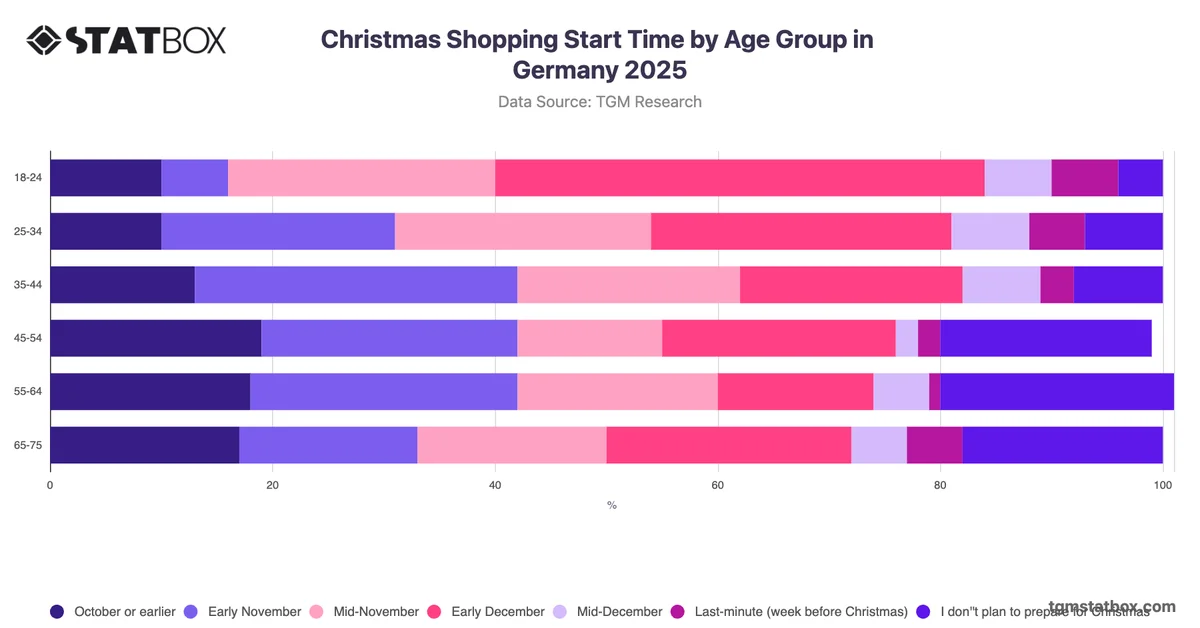
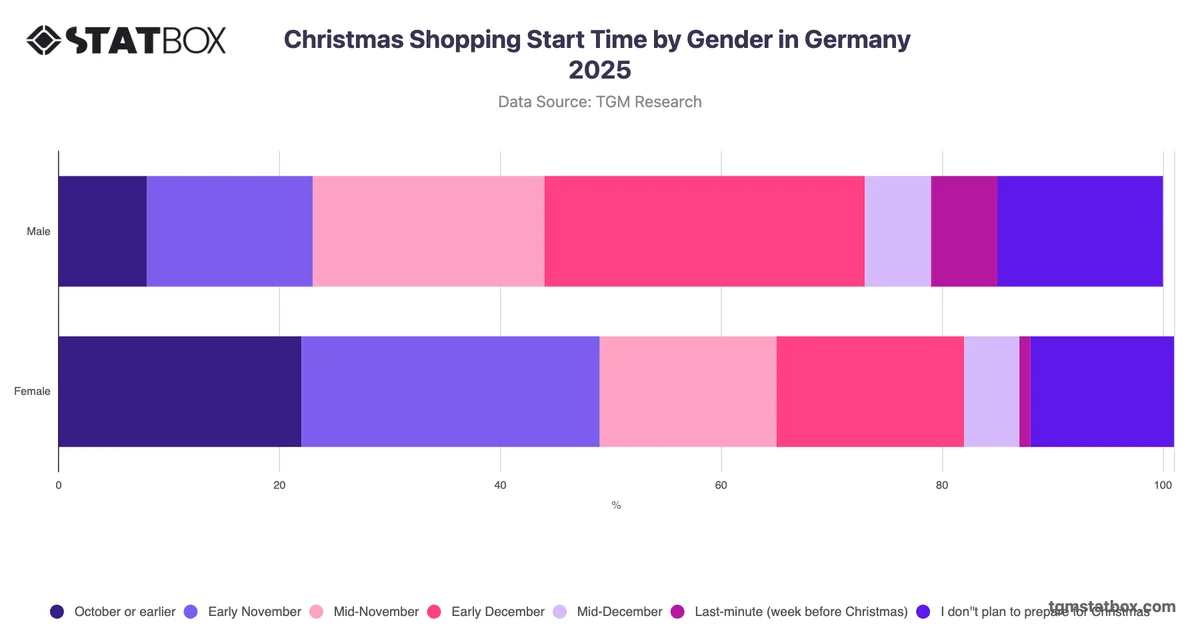
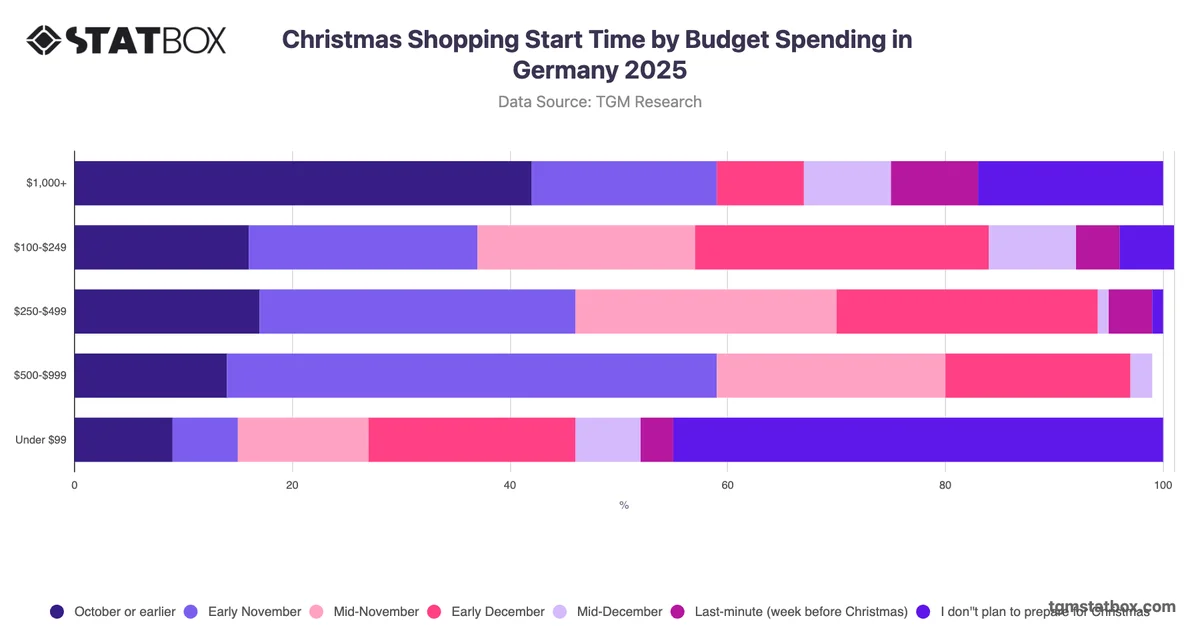
The most notable pattern in German Christmas shopping timing is its fragmentation rather than concentration around any single period. No single timeframe commands a decisive share, with Early December leading at 23% and Early November close behind at 21%, a gap narrow enough to suggest the market lacks a clear consensus on when shopping should begin. Taken together, October through mid-November accounts for over half of planned shoppers, indicating that a substantial portion of consumers intend to start well before December. However, 14% do not plan to prepare for Christmas at all, a segment too large to treat as negligible. This polarisation between early planners and non-participants suggests that retailers may benefit from testing differentiated messaging strategies that address committed early shoppers separately from audiences who require stronger motivation to engage with the season.