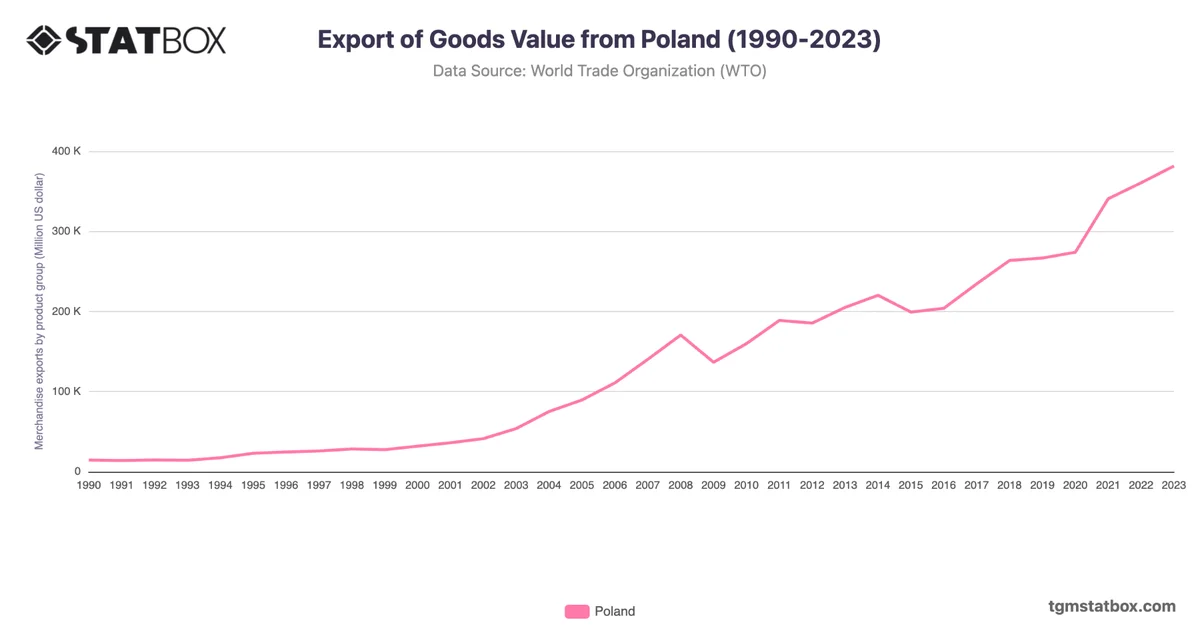
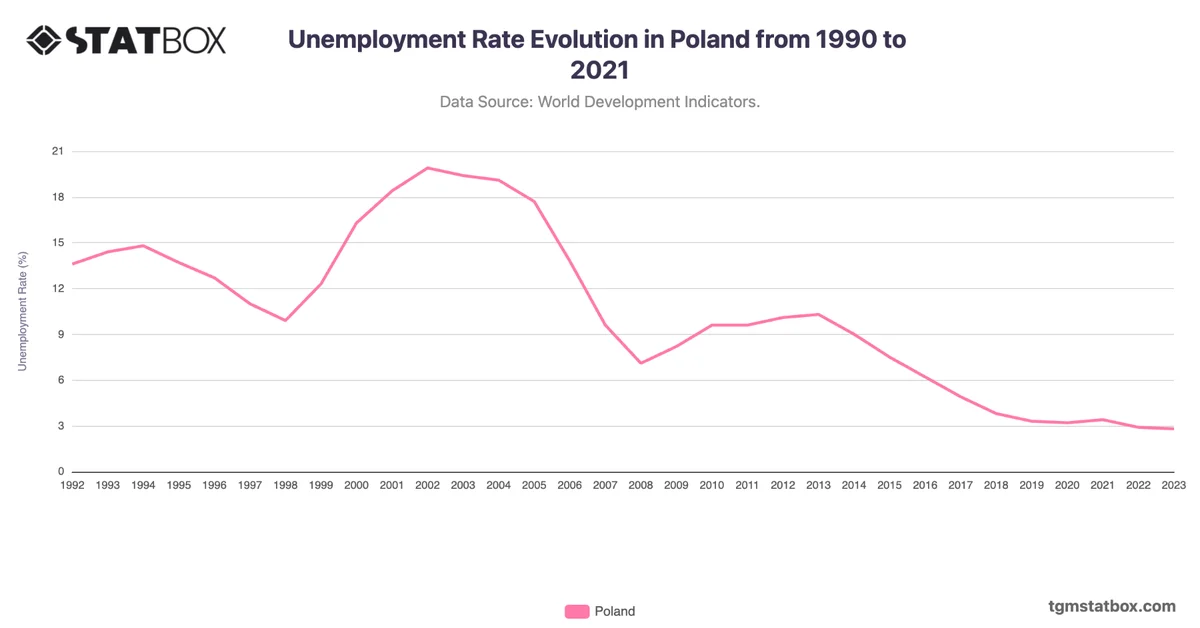
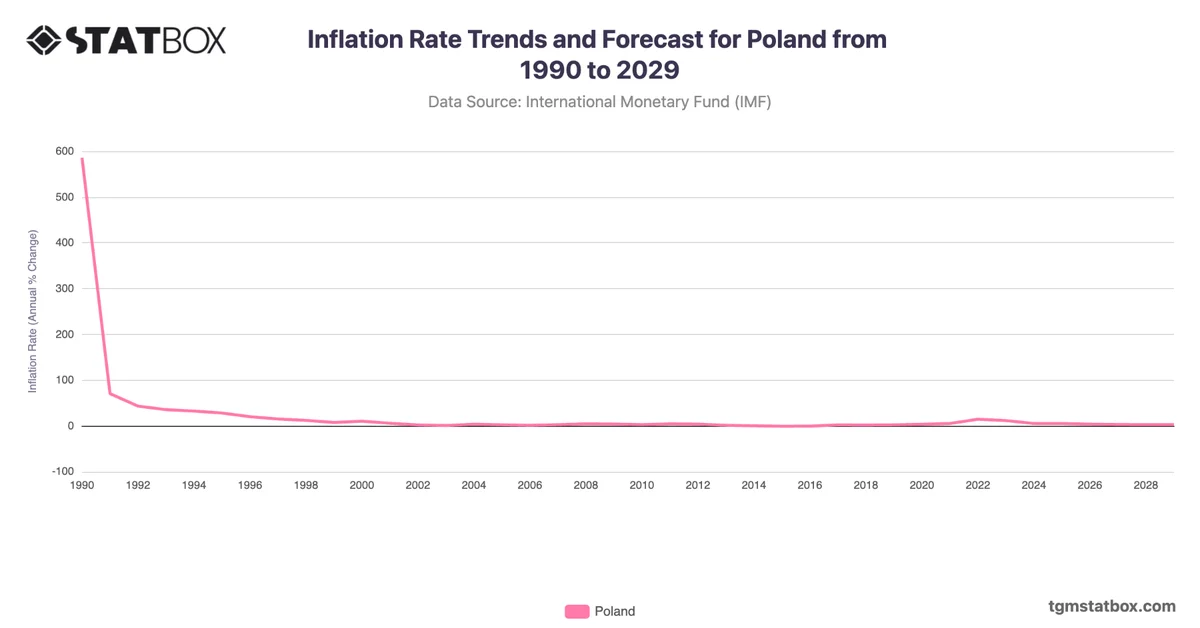
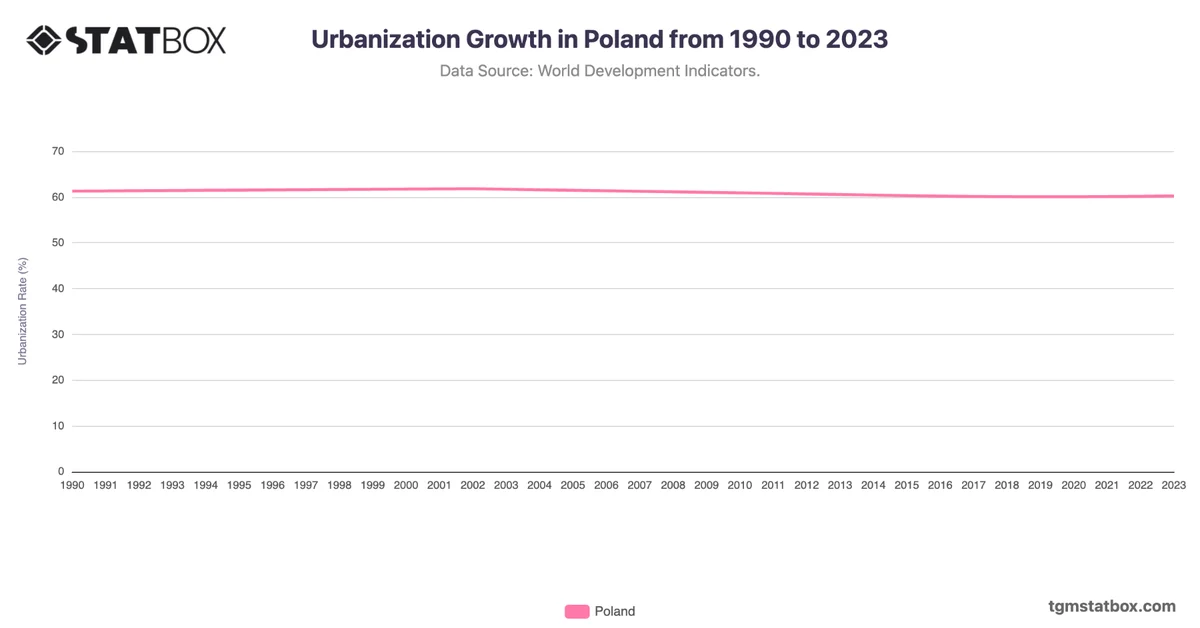
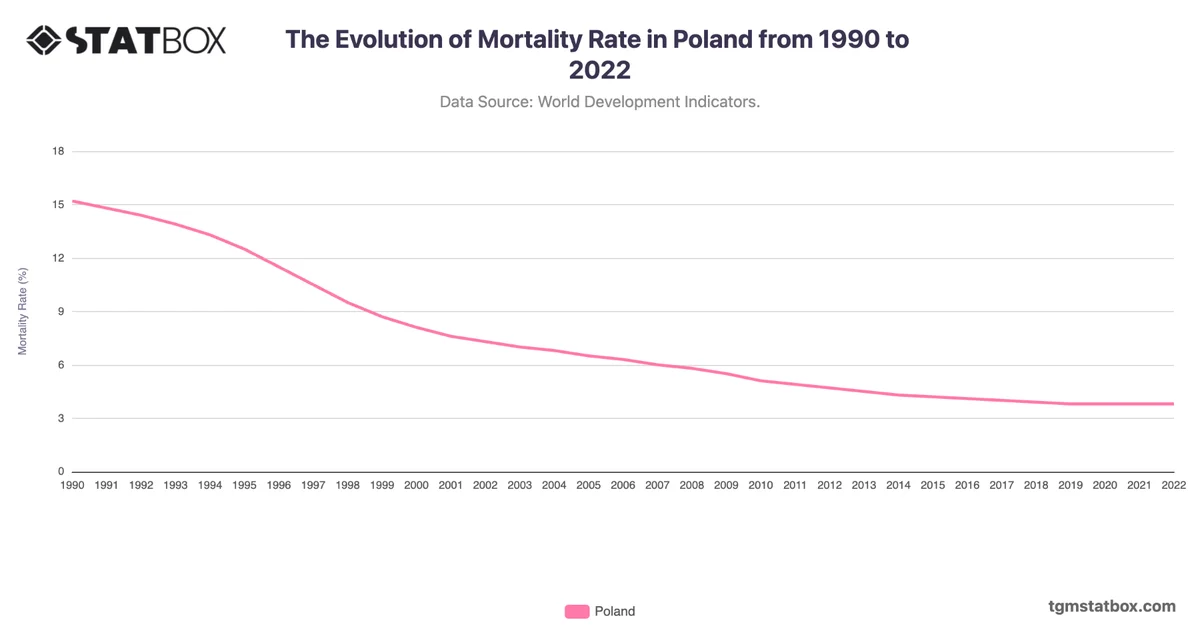
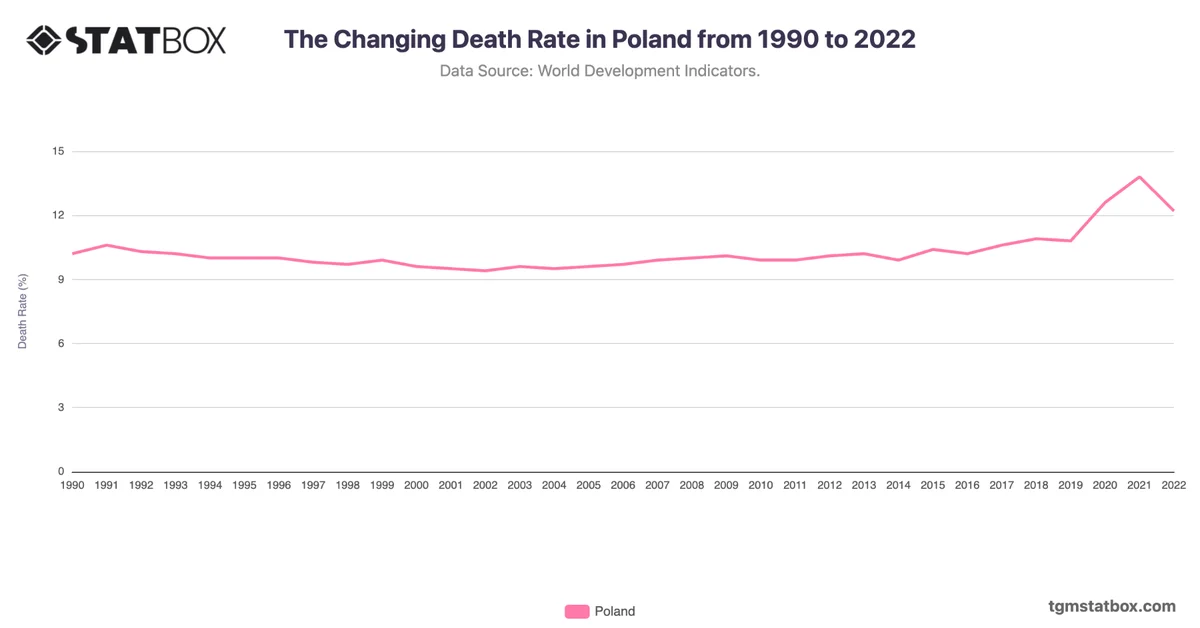
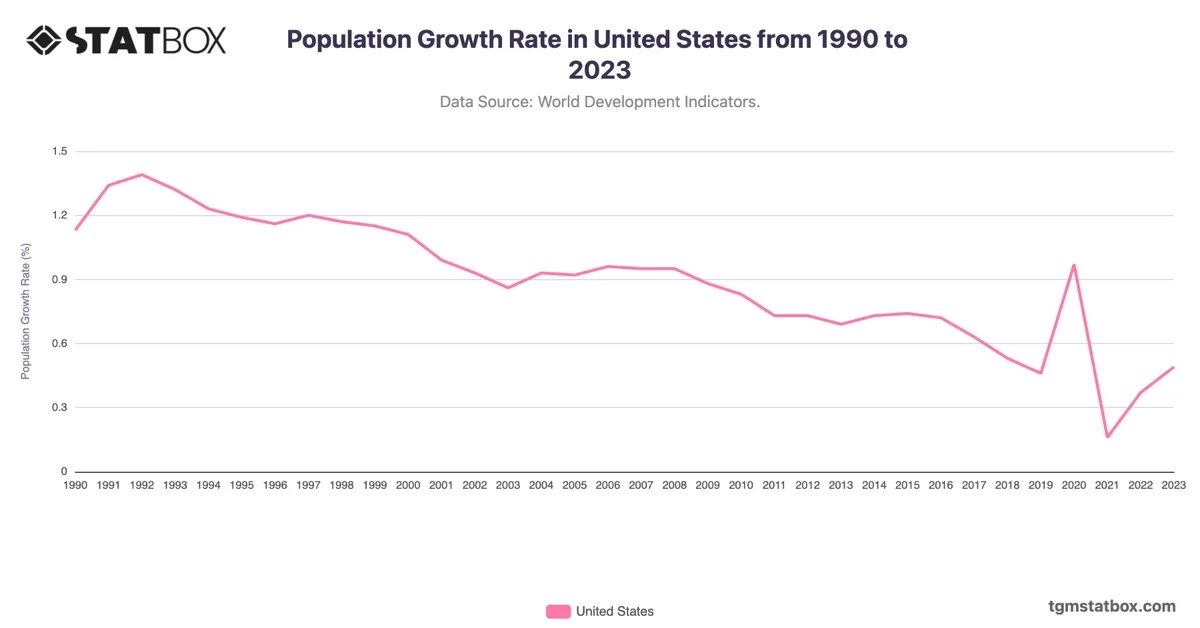
Poland’s population growth experienced significant fluctuations between 1990 and 2023, with periods of stagnation and decline. The early 1990s saw modest growth rates around 0.4%, reflecting post-Cold War optimism and economic reforms. However, by the mid-1990s, growth rates declined sharply to near zero as economic instability and rising emigration impacted demographics. By 2000, the country faced negative growth rates, reaching -1.0%, as Poland transitioned into a member of the European Union, prompting increased emigration for better opportunities abroad.
In recent years, demographic challenges intensified, particularly during the COVID-19 pandemic. Population growth plummeted to -2.5% in 2022, reflecting high mortality rates, lower birth rates, and emigration trends. However, a slight recovery in 2023 to -0.4% may signal stabilization, though Poland continues to grapple with aging populations and labor force reductions, necessitating proactive policy measures.
In recent years, demographic challenges intensified, particularly during the COVID-19 pandemic. Population growth plummeted to -2.5% in 2022, reflecting high mortality rates, lower birth rates, and emigration trends. However, a slight recovery in 2023 to -0.4% may signal stabilization, though Poland continues to grapple with aging populations and labor force reductions, necessitating proactive policy measures.
For additional information, visit statistics on Poland’s unemployment rate trends, Poland’s annual GDP growth rate, Poland’s demographic count.