Age-Based Divergence in Christmas Gift Budget Allocation
Gift-giving during the Christmas period represents a significant component of household discretionary spending in Germany. Budget decisions in this context are shaped by a combination of financial capacity, family obligations, and personal priorities, making age a particularly relevant variable when examining how consumers distribute spending across different life stages.
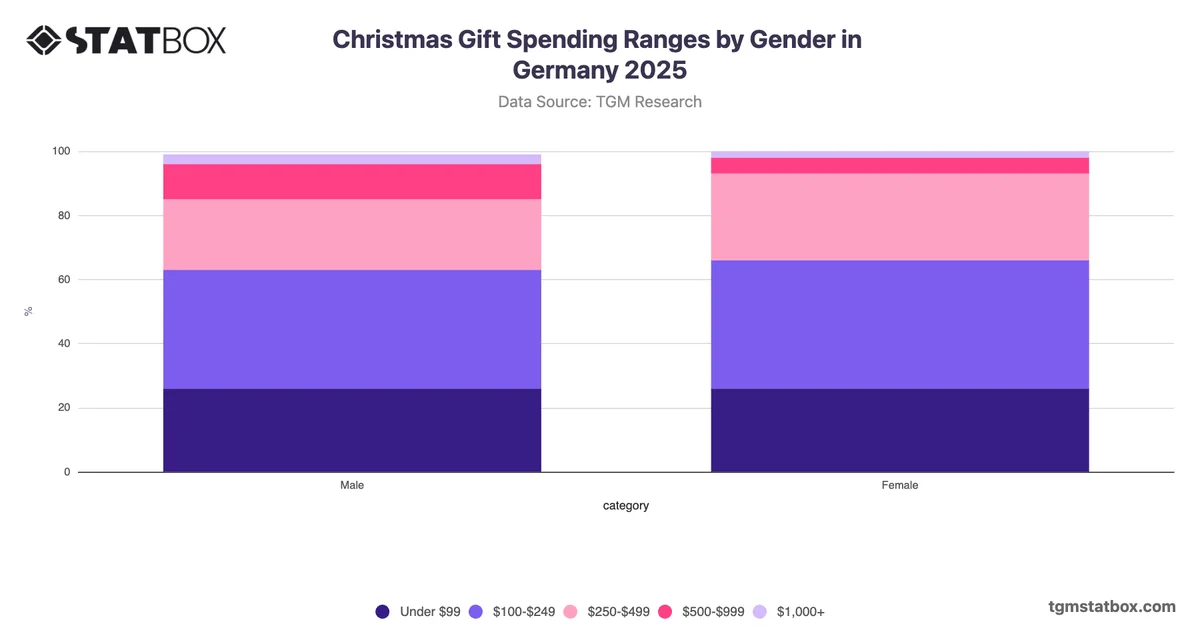
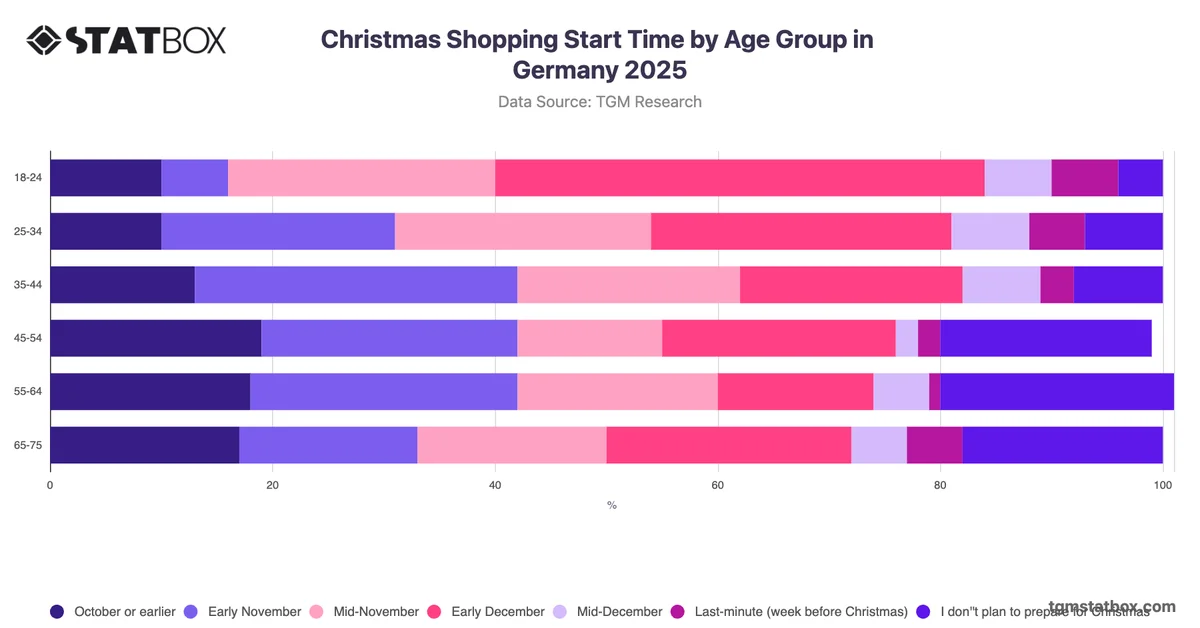
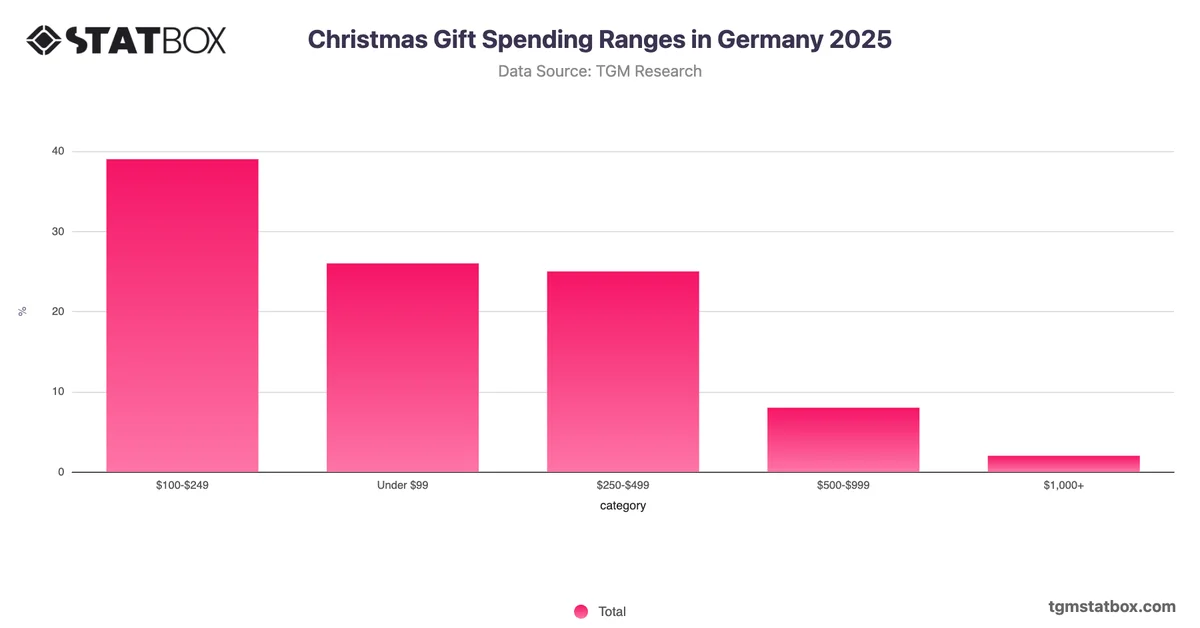
The most analytically significant pattern is a clear inverse relationship between age and mid-range spending commitment. Among 18-to-24-year-olds, 58% place their total Christmas gift budget in the $100–$249 range, a proportion that declines steadily to just 28% among those aged 65–75. Conversely, the share spending under $99 rises from 18% among the youngest group to 37% among the oldest, a gap of nearly 20 percentage points. This suggests that lower budgets among older age groups are not simply a function of reduced generosity but may point to smaller household sizes and fewer gift recipients at that life stage. For retailers and gift-focused brands, communication strategies targeting the 25-to-44 age segment, where mid-to-higher spending is most concentrated, warrant closer segmentation to distinguish budget thresholds by household composition rather than age alone.