Strong Pet Attachment With Minimal Gender Differentiation in Vietnam
The relationship between pet ownership and personal identity is a meaningful dimension of consumer behaviour in many markets. In Vietnam, attitudes toward pets as companions carry implications for how households allocate emotional investment and spending, making the degree of personal attachment a relevant variable for sectors ranging from retail to lifestyle services.
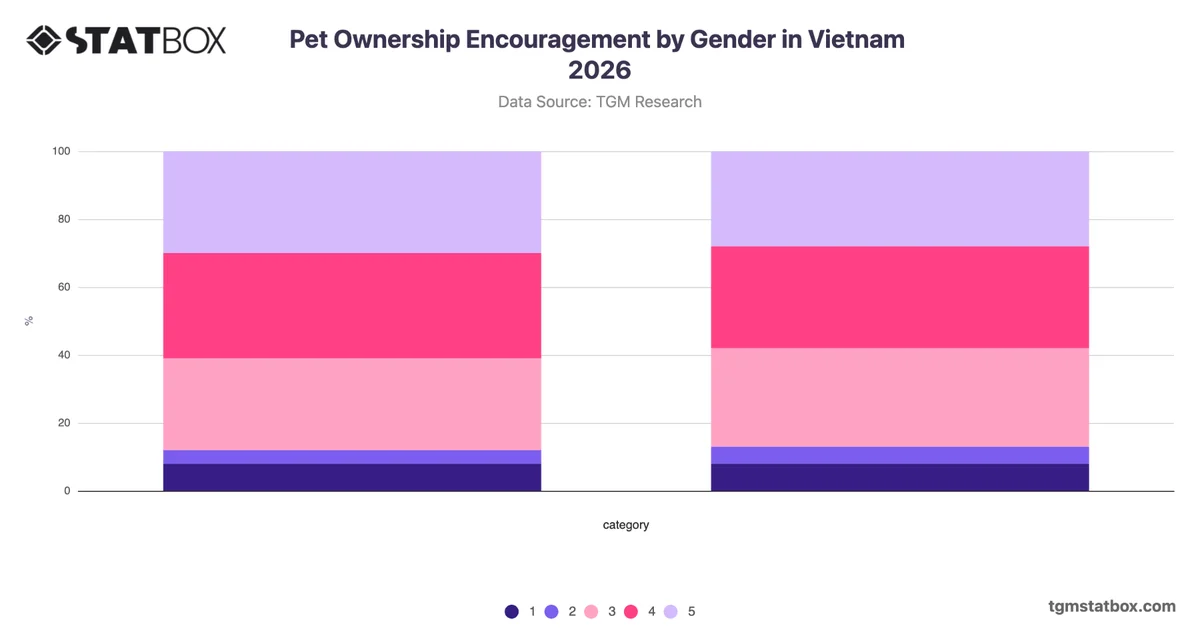
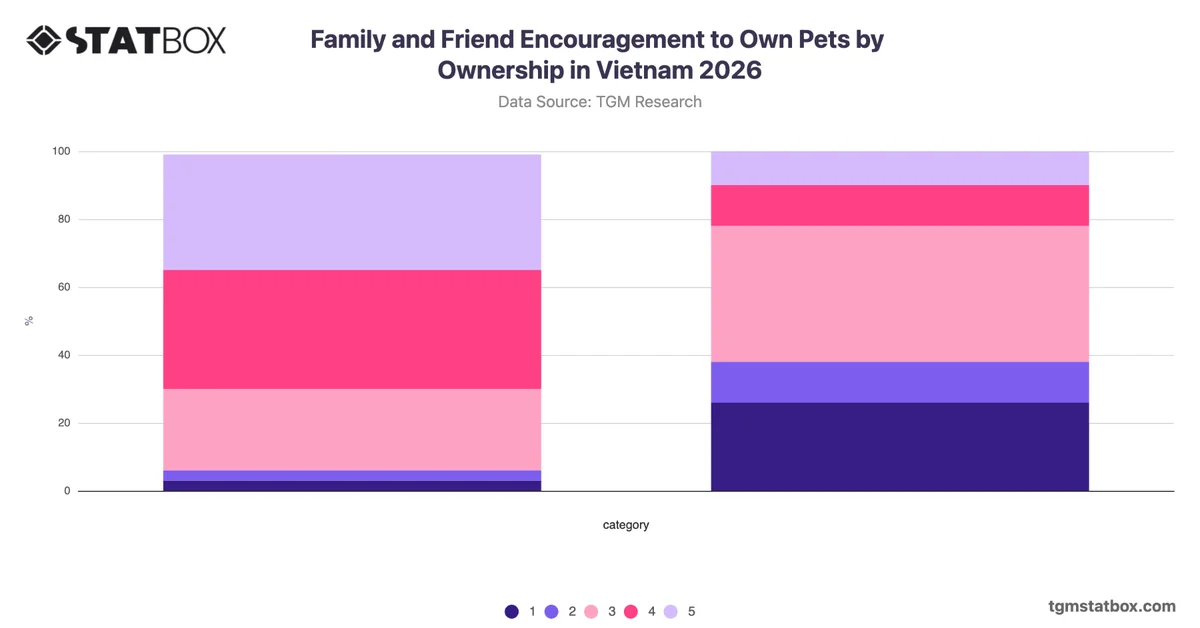
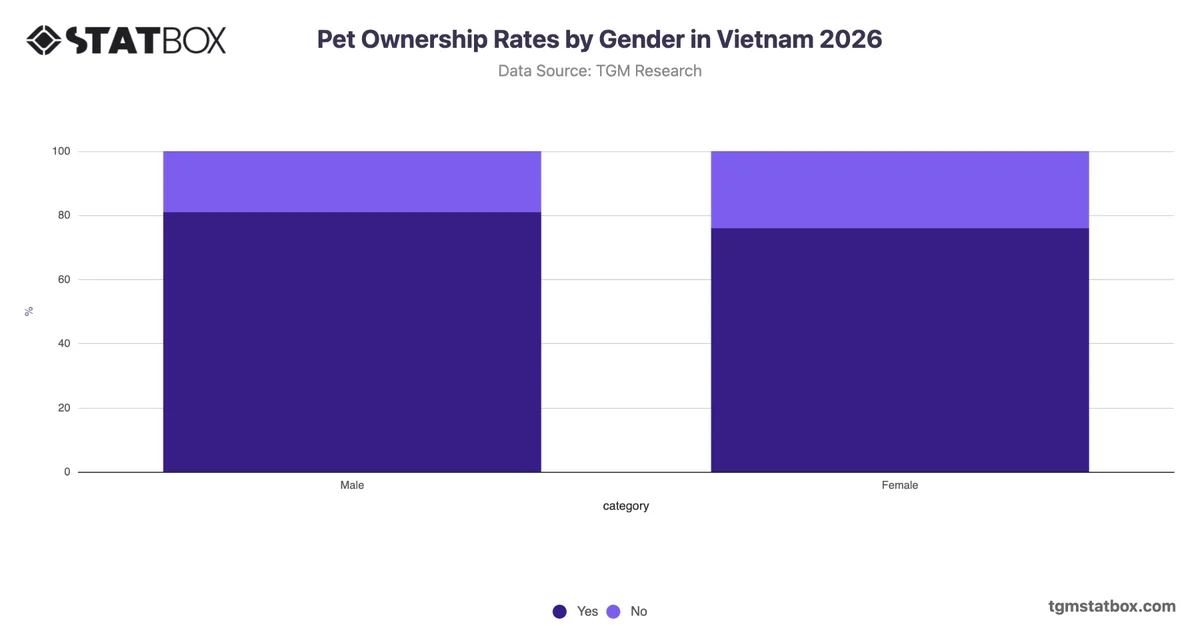
The most notable pattern across gender groups is the consistency of strong agreement rather than any meaningful divergence between male and female respondents. Approximately two thirds of both groups selected one of the two highest agreement levels, with strong agreement (level 5) at 35% among males and 37% among females, a difference too narrow to indicate a genuine attitudinal gap. Neutral responses (level 3) account for roughly one in five respondents across both groups, suggesting a segment that acknowledges pets without expressing deep personal connection. Outright disagreement remains a minority position. For organisations developing pet-related products or communications in Vietnam, the data points to a broadly homogenous audience by gender, indicating that segmentation strategies may yield greater returns when built around engagement depth or ownership context rather than gender alone.