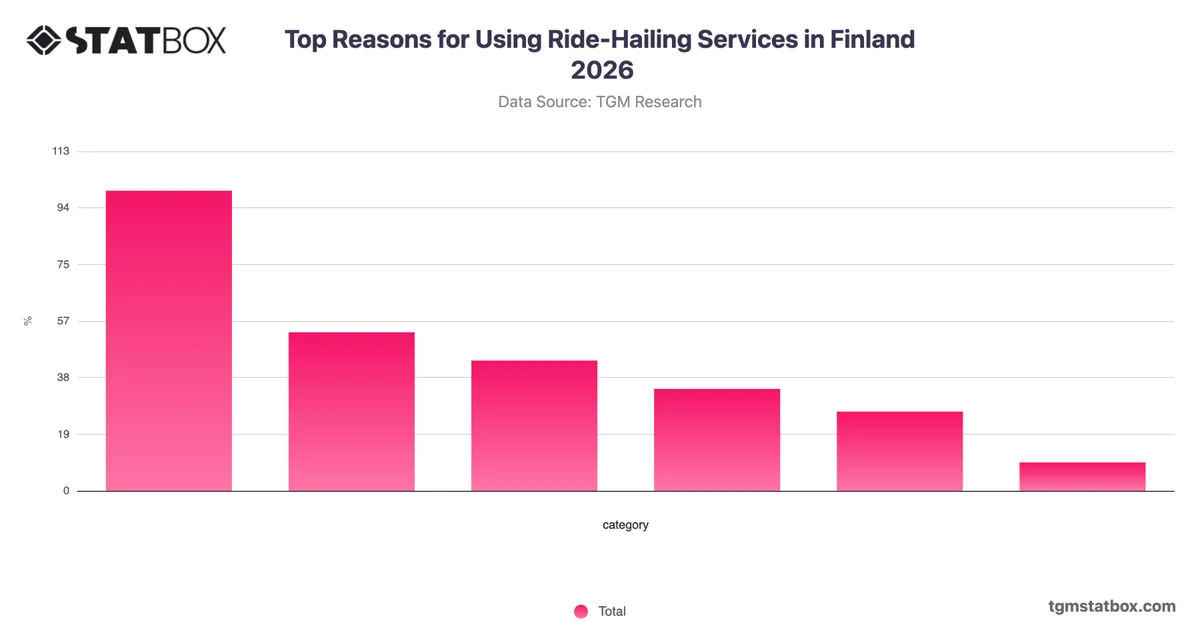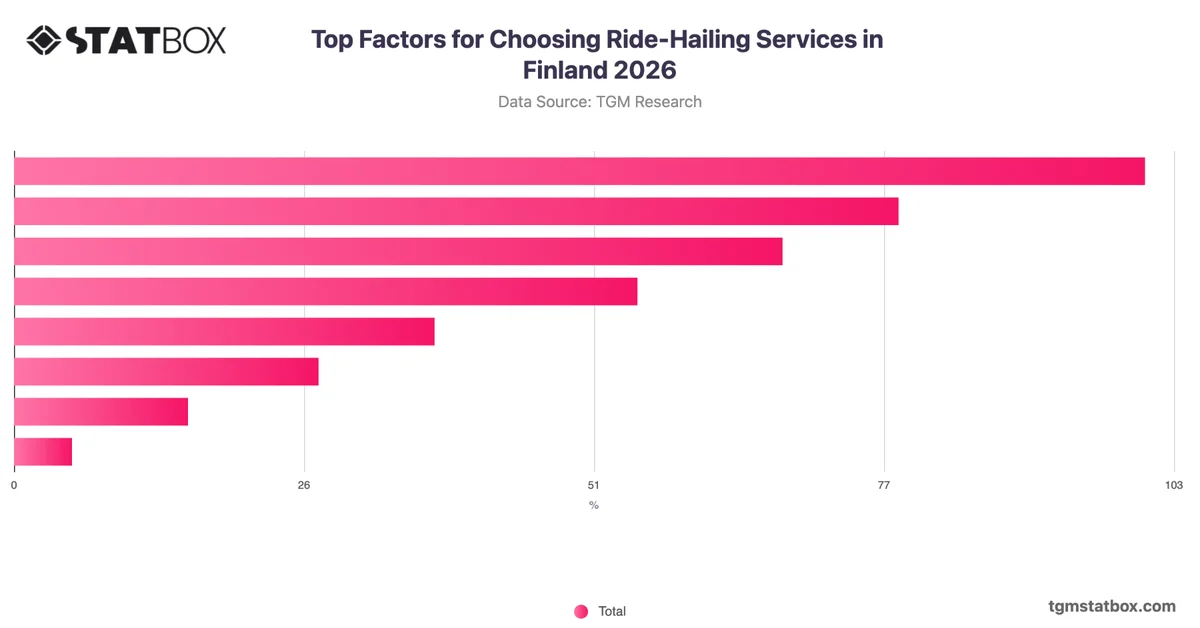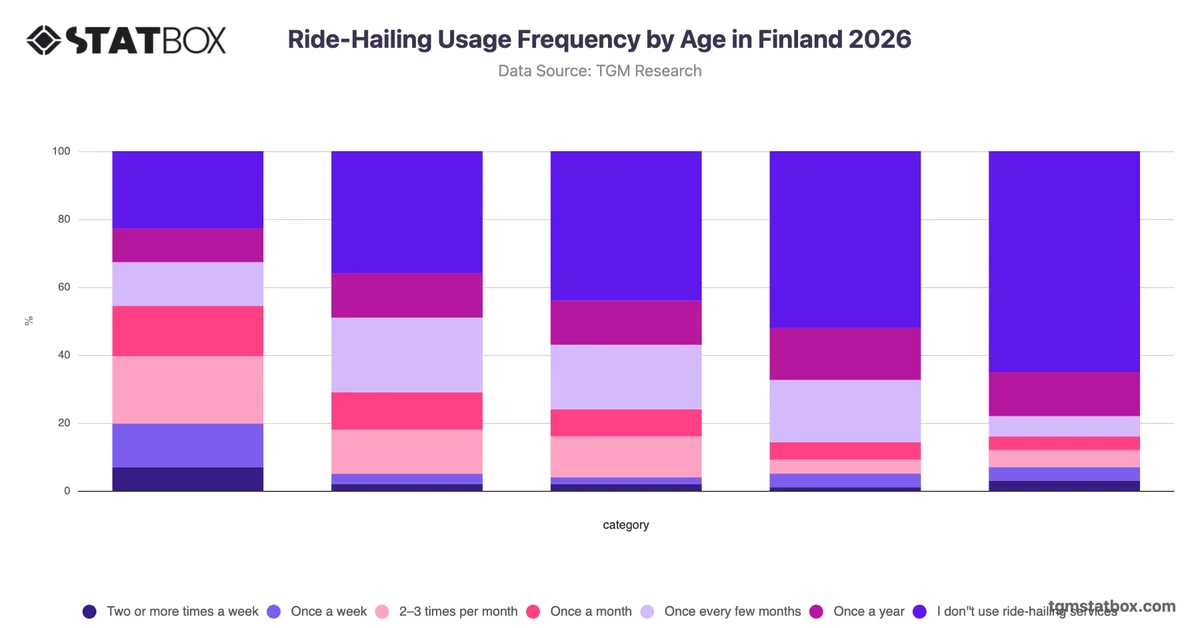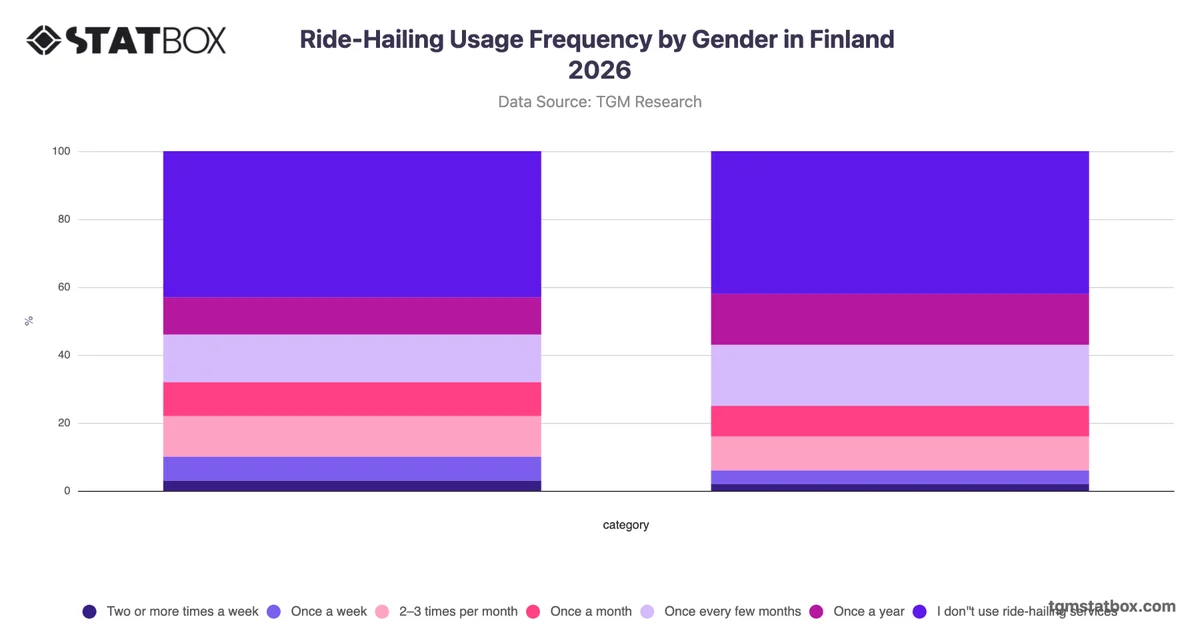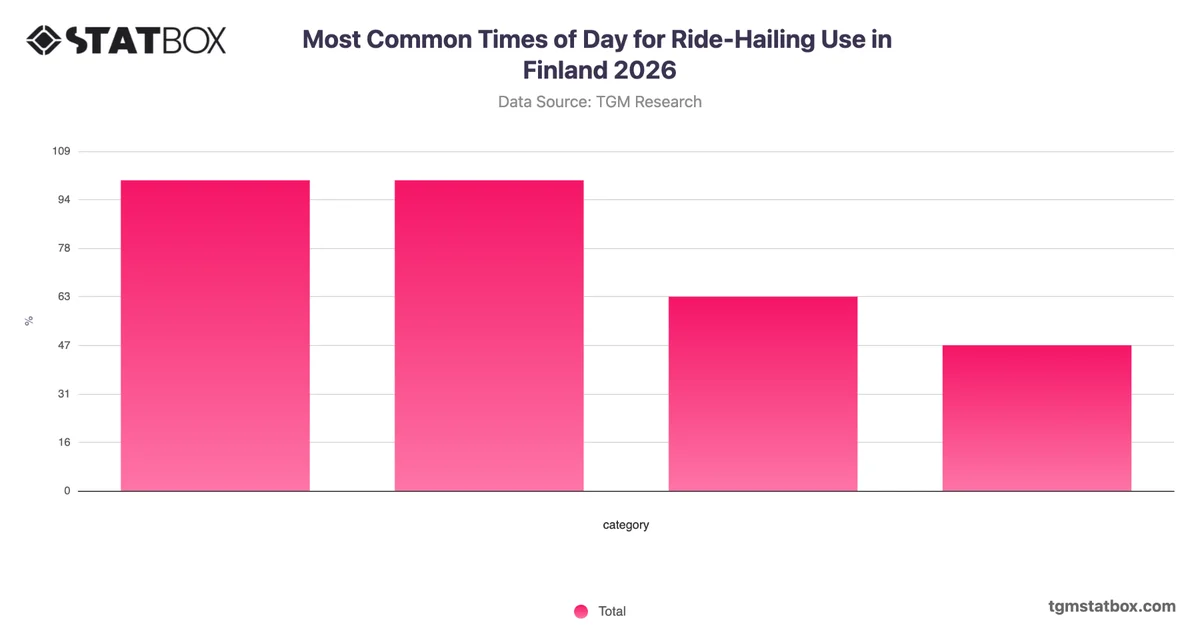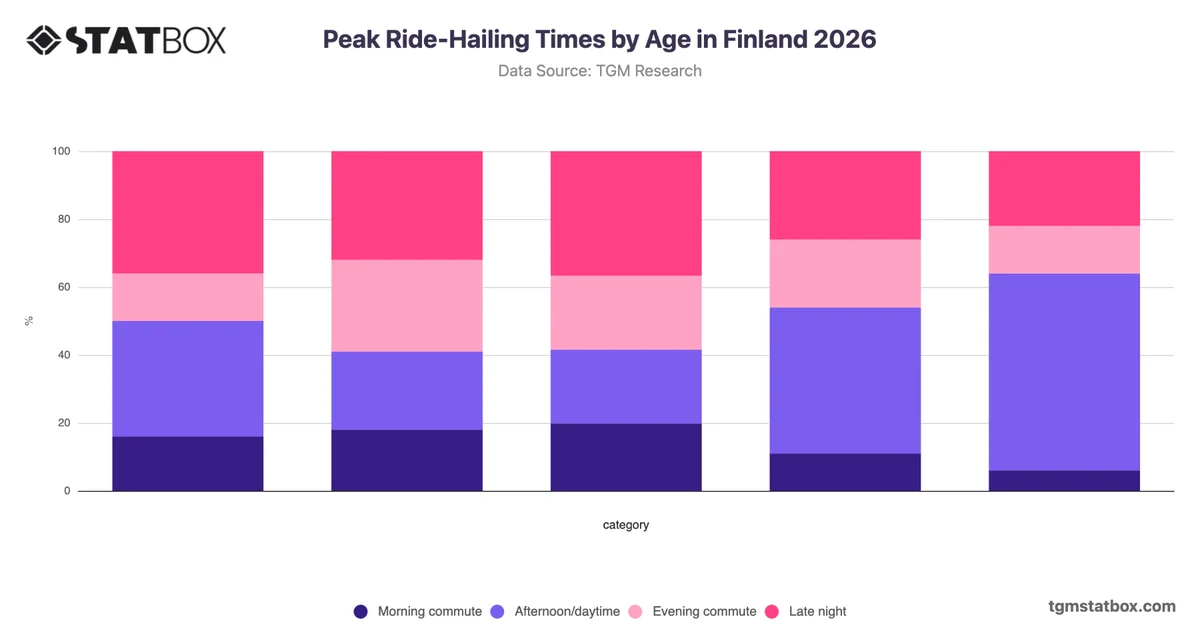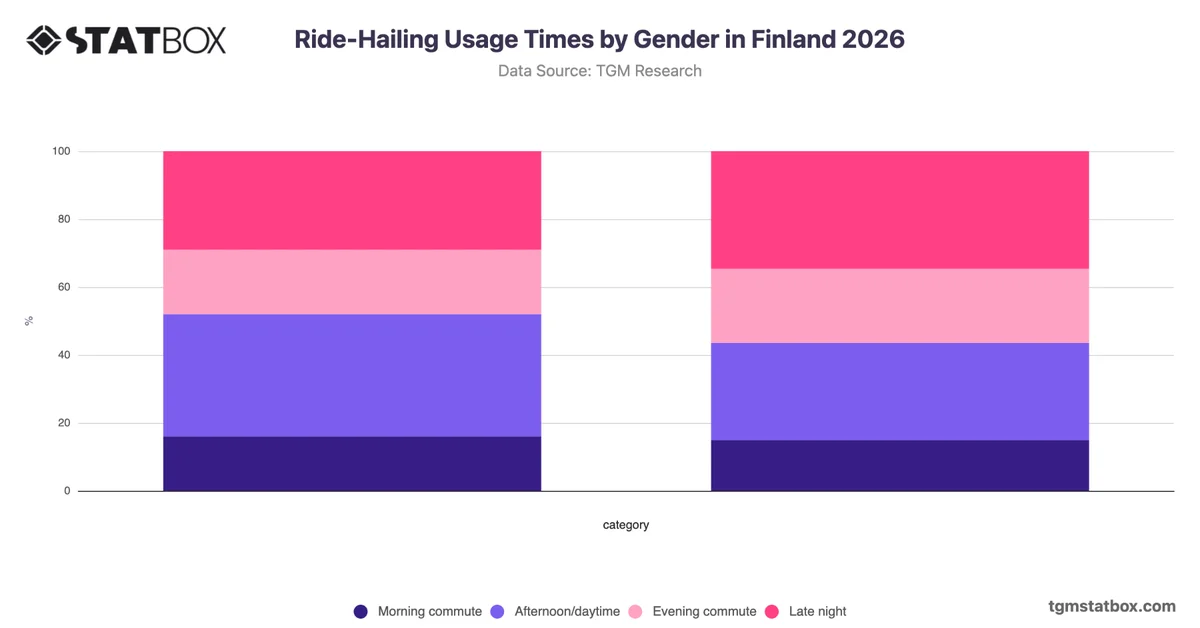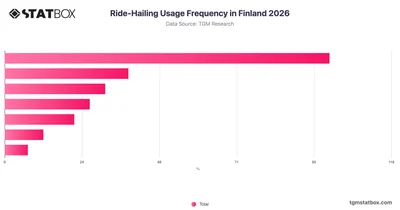
Ride-hailing services such as Uber and Bolt offer urban commuters a flexible, on-demand alternative to public transport and private car ownership, with particular appeal for occasional trips, late-night travel, and airport transfers. Understanding how frequently Finnish consumers engage with these platforms helps operators and mobility planners gauge where demand is concentrated and where growth opportunities remain. In Finland, usage patterns suggest a market where ride-hailing plays a supplementary rather than primary transport role for most of the population, making frequency segmentation a critical lens for targeting both loyal riders and infrequent users.