Thailand's population growth rate steadily declined over the decades, reflecting a transition to a low-growth demographic profile. In the early 1990s, growth rates hovered around 1.7% but gradually dropped to 1.0% by 2000. This decline is closely linked to successful government-led family planning initiatives and improvements in education and healthcare access.
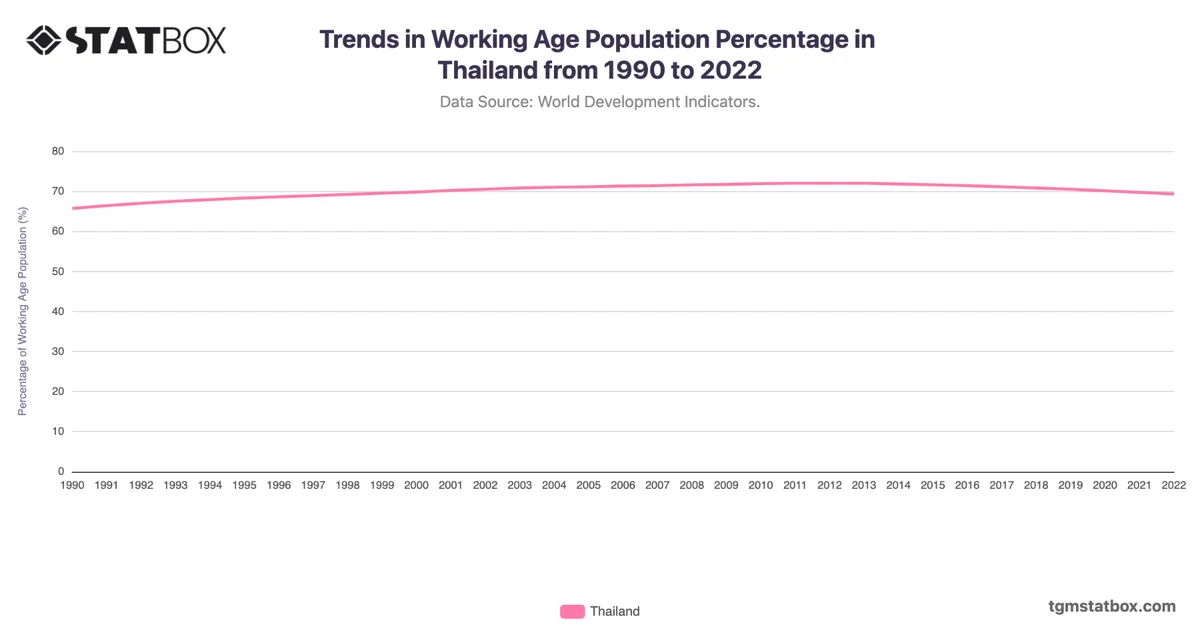
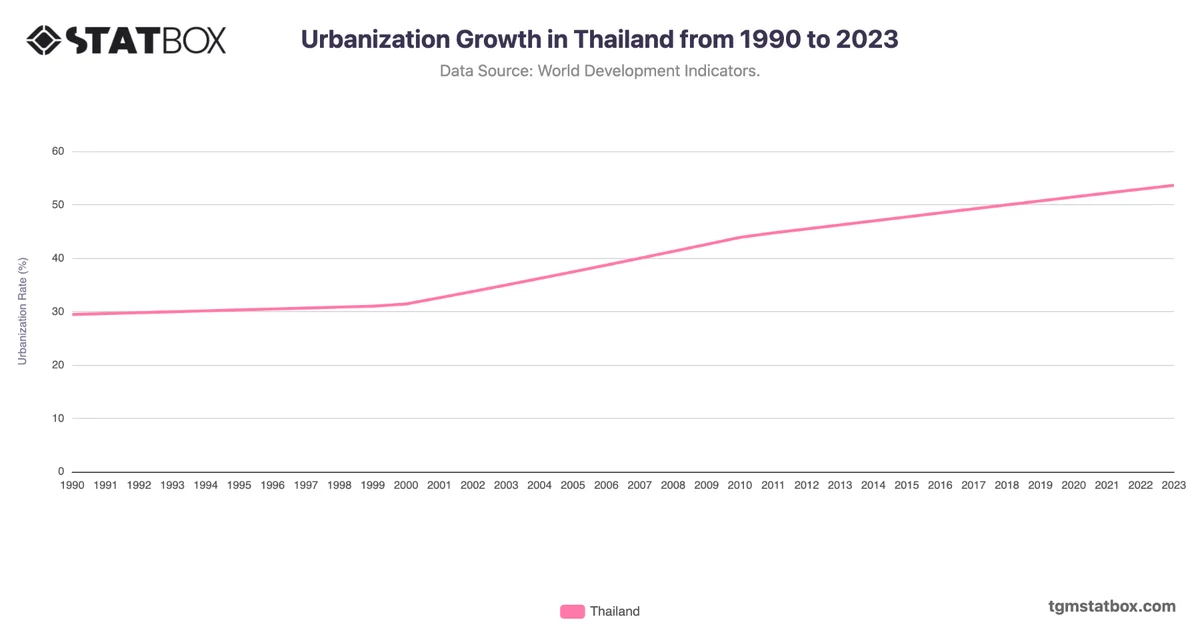
By the mid-2000s, growth slowed further, reaching 0.5% by 2014, as urbanization and delayed family formation became more prevalent. Recent years saw growth rates drop to just 0.1% in 2022-2023, signaling a demographic shift toward an aging population and low birth rates, which pose challenges for Thailand's workforce and economic growth.
By the mid-2000s, growth slowed further, reaching 0.5% by 2014, as urbanization and delayed family formation became more prevalent. Recent years saw growth rates drop to just 0.1% in 2022-2023, signaling a demographic shift toward an aging population and low birth rates, which pose challenges for Thailand's workforce and economic growth.
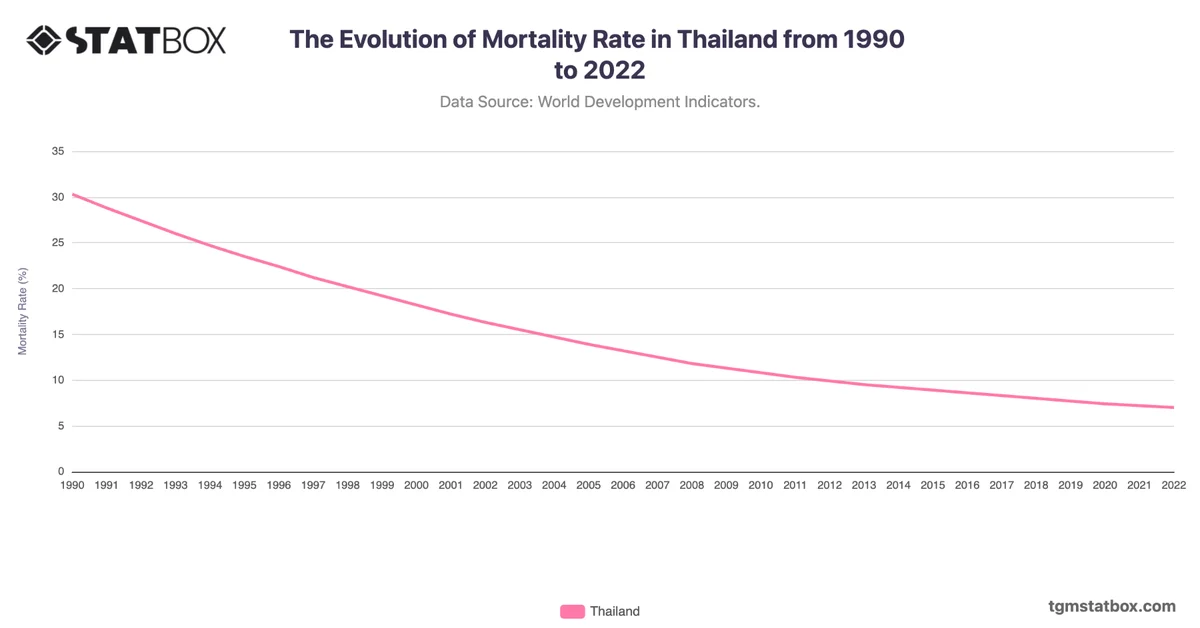
Gain a broader perspective by reviewing Thailand’s annual GDP growth rate, Thailand’s mortality rate evolution, Thailand’s military population ratio.