Statistics library
Explore a wide range of consumer insights and statistics across industries. Discover charts on behaviors, preferences, attitudes, and market trends to find the data most relevant to your research and decision-making.
 Pro
Pro
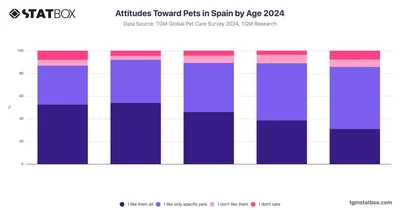
Spanish younger age groups, particularly those aged 18-24 and 25-34, show a higher inclination toward pets, with approximately 52.46% and 53.92% expressing a liking for all types.
 Pro
Pro
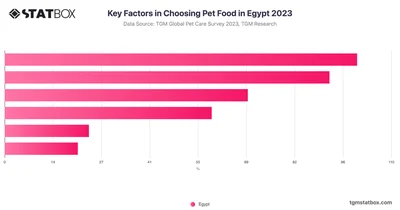
Quality stands out as the top priority, with 72.92% of Egyptian pet owners deeming it essential. Price comes next, with 67.20% considering it a key factor when purchasing pet food.
 Pro
Pro
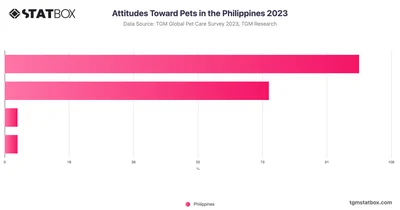
A majority of Filipinos (55%) prefer specific types of pets. This suggests a selective approach towards pet ownership, where certain animals are favored over others.
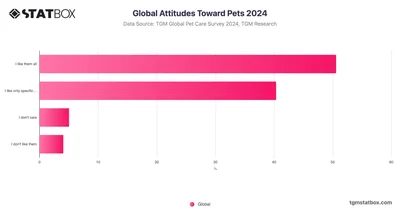
Worldwide, pet ownership reveals varied preferences, with 50.58% of respondents expressing a fondness for all pets, while 40.34% prefer specific species.
 Pro
Pro
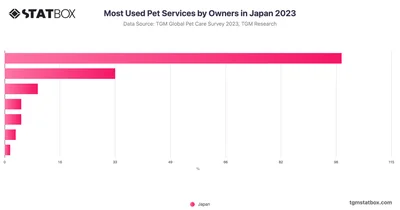
20% of Japanese respondents use pet hotels. This service provides flexibility for pet owners who travel or require temporary pet accommodation.
 Pro
Pro
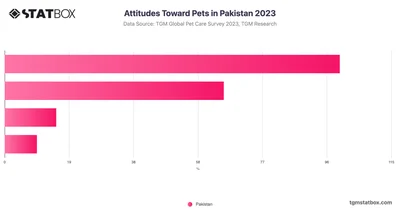
A significant proportion of respondents in Pakistan, 52%, prefer specific types of pets, indicating a selective attitude toward pet ownership in the country.
 Pro
Pro
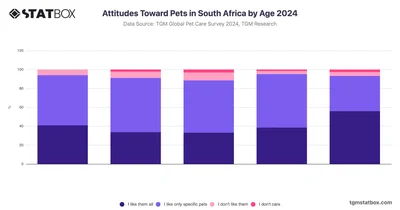
50.8% of South African males and 56.6% of females indicate they like only specific pets, with younger age groups showing particularly strong preferences.
 Pro
Pro
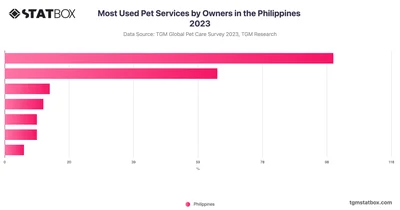
Veterinarian services are crucial for pet owners, with 51% of respondents utilizing this service. This indicates a strong focus on wellness among pet owners in the Philippines.
 Pro
Pro
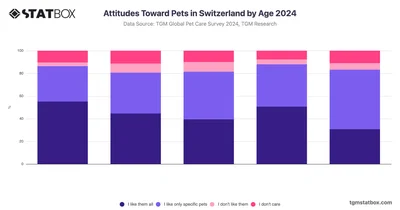
Swiss men are more likely to dislike pets (8.45%) or be indifferent (13.49%) compared to women. The 35-44 age group shows the lowest general liking for all pets.
 Pro
Pro
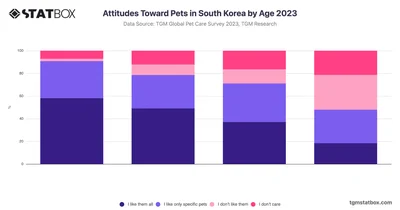
Younger South Koreans generally express a preference for all types of pets. Specifically, 57% of those aged 18-24 and 48% of those aged 25-34 reported liking all pets.
 Pro
Pro
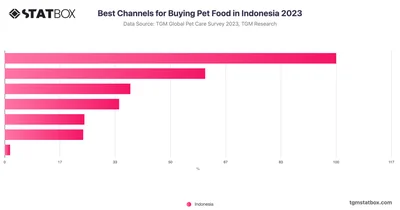
Online platforms are also popular in Indonesia, with 36.30% of respondents buying pet food online. Interestingly, 14.22% of respondents make pet food at home.
 Pro
Pro
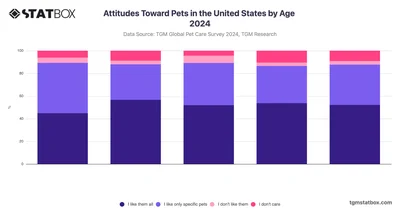
American younger age groups, particularly those aged 25 to 34, showed the highest enthusiasm, with 56.63% stating they like all pets.
 Pro
Pro
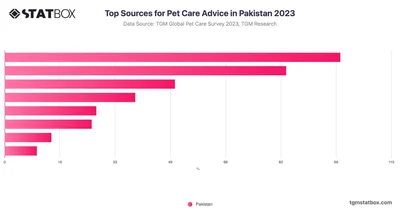
In Pakistan, 60.77% of pet owners turn to online searches for pet care advice. Social media platforms are also popular, with 50.96% of respondents using them for guidance.
 Pro
Pro
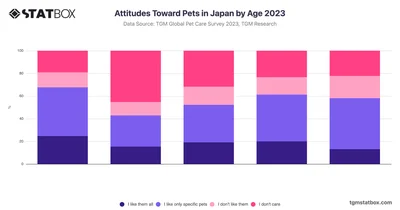
Among Japanese individuals aged 18-24, 24.75% express a liking for all pets, significantly higher than other age groups.
 Pro
Pro
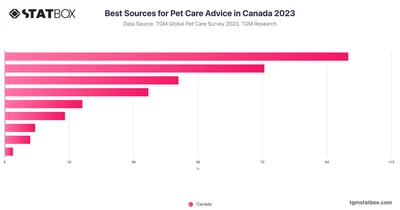
In Canada, veterinarians are the most trusted source of pet care information, with 53.32% of pet owners relying on their expertise.
 Pro
Pro
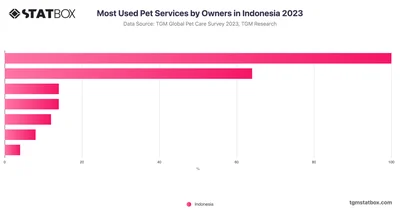
Veterinary services are the top choice for Indonesian pet owners, with 50% using them, while grooming services closely follow at 32%.
 Pro
Pro
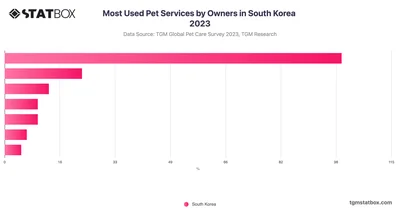
Veterinarian services dominate pet care choices in South Korea, with 61% of respondents utilizing these services, reflecting a strong emphasis on health care for pets.
 Pro
Pro
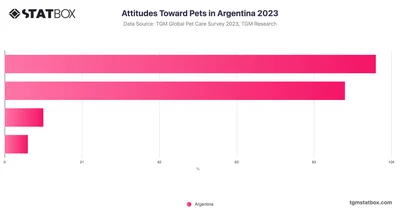
44% of respondents in Argentina show a universal liking for all pets. About 5% of the population is indifferent towards pets.
 Pro
Pro
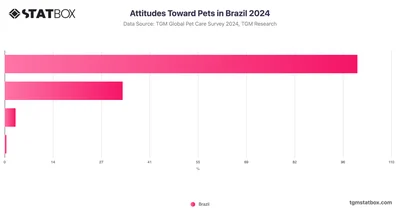
In Brazil, attitudes towards pets are overwhelmingly positive, with the data revealing a strong affinity for animals among the population.
 Pro
Pro
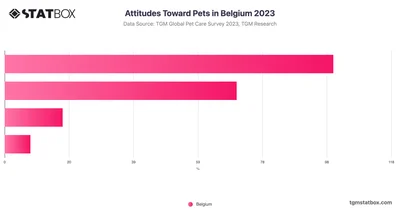
Over half of Belgians express a universal fondness for all pets, while others show selective preferences or remain indifferent, revealing distinct patterns in the country's pet-friendly culture.
 Pro
Pro
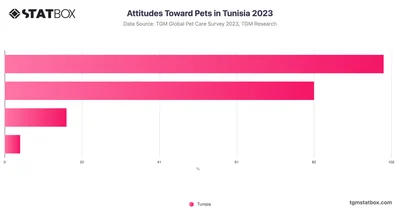
In Tunisia, there's a strong positive sentiment towards pets, with 49% of respondents saying they "like them all" and another 40% indicating they "like only specific pets".
 Pro
Pro
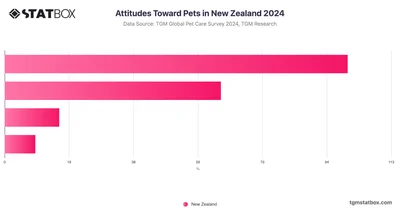
Approximately 53.22% of New Zealanders respondents expressed a fondness for all types of pets, while 33.55% reported preferring only specific pets.
 Pro
Pro
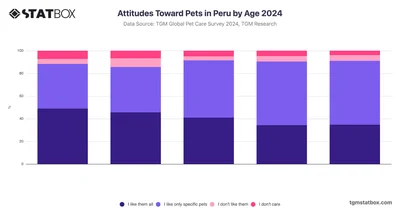
Younger Peruvians (18-24) show the highest general liking for all pets at 48.95%, while the preference for specific pets increases with age.
 Pro
Pro
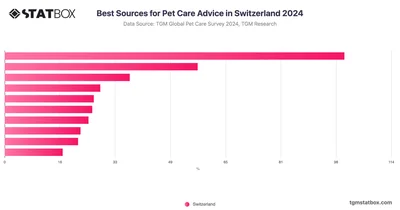
Swiss pet owners rely on various sources for pet care advice, with veterinarians being the most trusted source of information at 61.51%.
 Pro
Pro
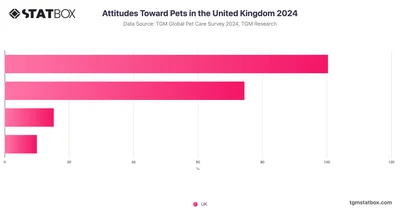
According to survey data, 50.17% of respondents in the United Kingdom expressed a liking for all types of pets, while 37.21% preferred specific pets.
 Pro
Pro
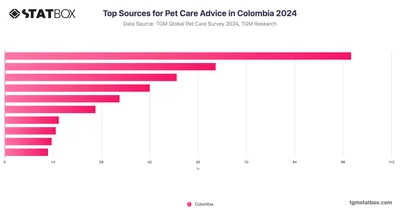
Pet owners primarily rely on veterinarians for pet care advice, with approximately 72% of respondents indicating this as their preferred source.
 Pro
Pro
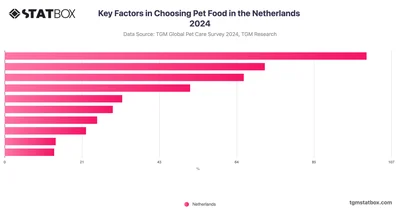
The key factors influencing pet food purchases reflect a blend of quality, price, and specific health needs. The most important consideration is the quality of the pet food.
 Pro
Pro
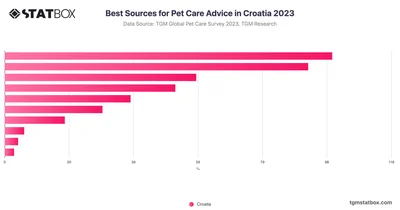
In Croatia, 50.83% of pet owners trust veterinarians for pet care advice, reflecting the importance of professional expertise in ensuring pet health and well-being.
 Pro
Pro
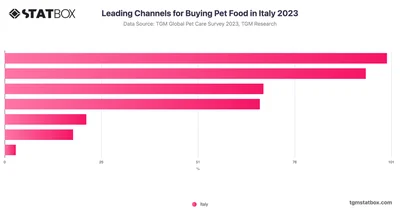
Italian pet owners primarily source their pet food from supermarkets (39.55%) and specialty chains (37.36%), while digital platforms serve about a quarter of the market.
 Pro
Pro
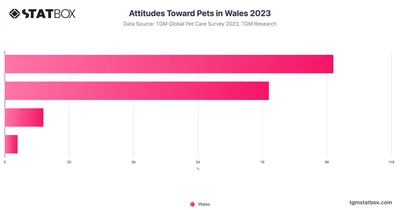
Wales shows a notably positive attitude towards pets, with 51% of respondents indicating they "like them all" and 41% saying they "like only specific pets".