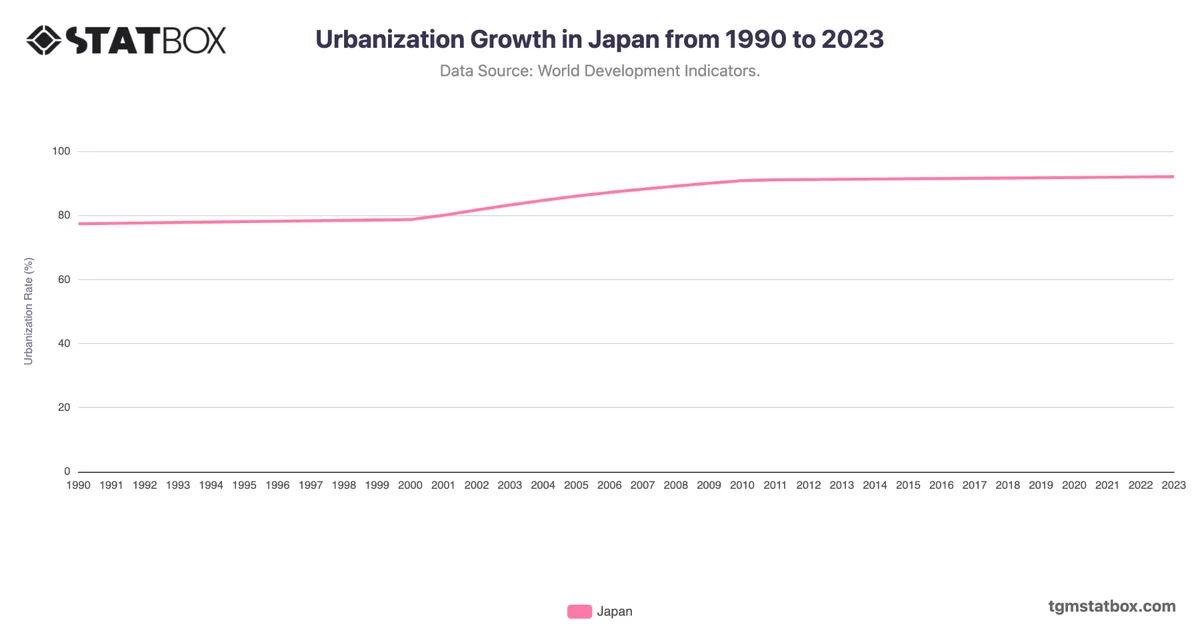
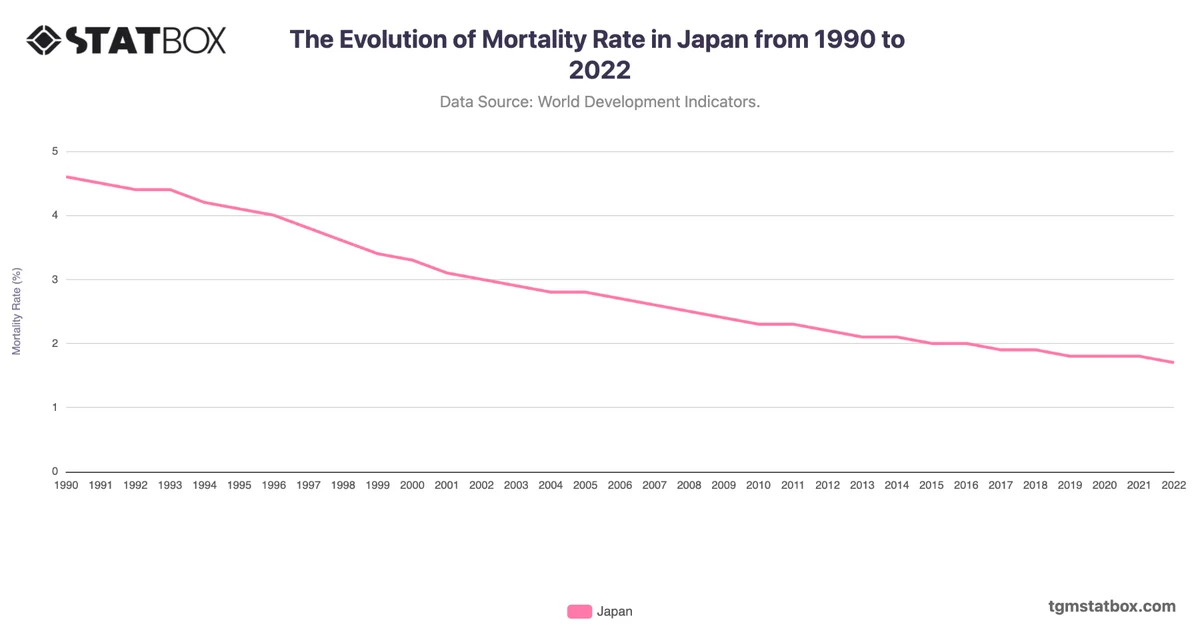
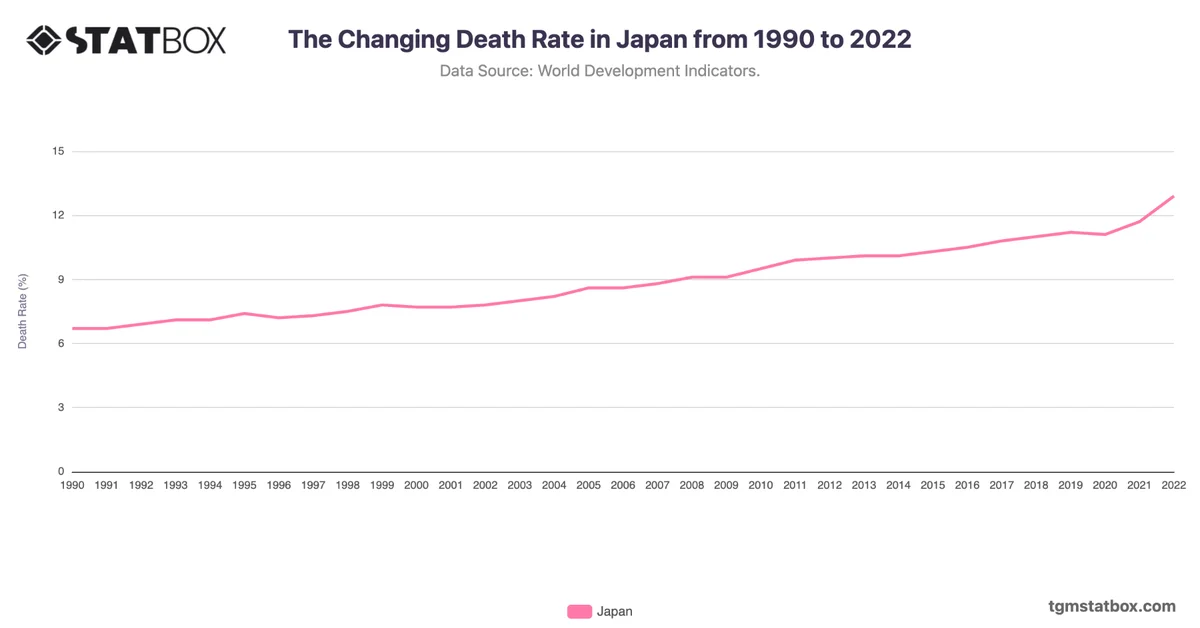
Japan’s median age has risen dramatically from 40.8 years in 2000 to a projected 51.5 years by 2030, reflecting one of the fastest-aging populations in the world. From 2000 to 2010, the median age increased from 40.8 to 44.2, driven by a low birth rate and a high life expectancy, compounded by urbanization. As Japan's urban population grew, access to healthcare improved, further extending life spans and reducing family sizes, thus accelerating the aging process.
By 2023, the median age reached 49.0, with projections indicating it will reach 51.5 by 2030. Japan’s demographic structure presents unique challenges, as an older population impacts labor markets, healthcare demands, and pension systems. Urban migration and societal shifts in family planning have deeply influenced Japan's aging trend, underscoring the need for strategic adaptation to a rapidly aging society.
By 2023, the median age reached 49.0, with projections indicating it will reach 51.5 by 2030. Japan’s demographic structure presents unique challenges, as an older population impacts labor markets, healthcare demands, and pension systems. Urban migration and societal shifts in family planning have deeply influenced Japan's aging trend, underscoring the need for strategic adaptation to a rapidly aging society.
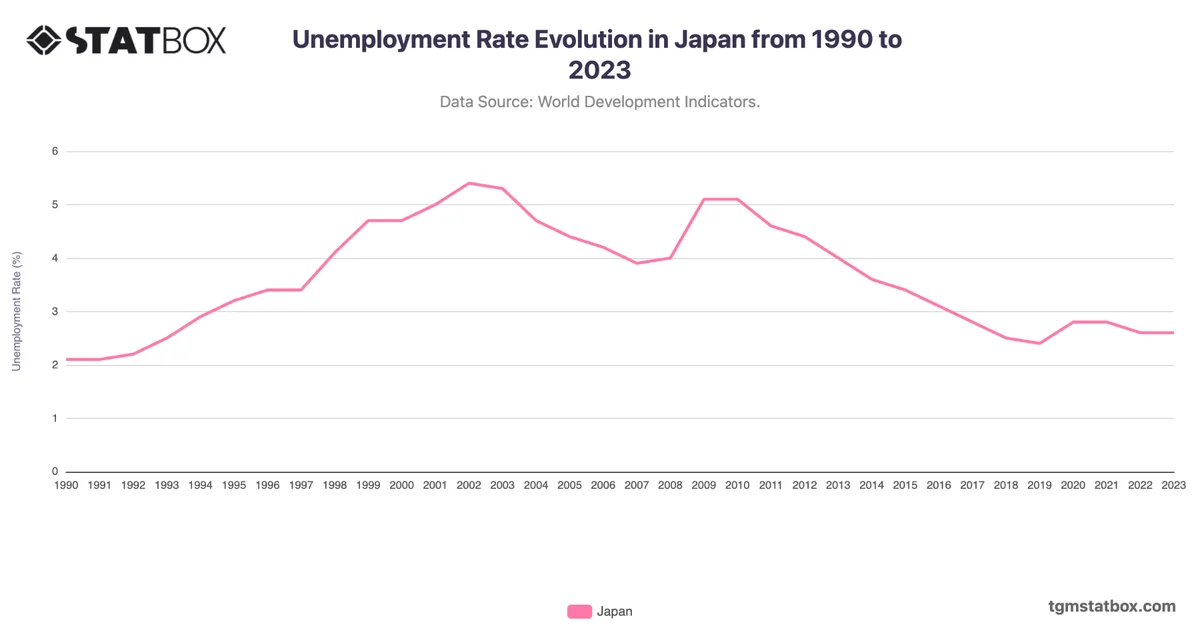
For a deeper dive into the topic, explore Japan’s unemployment rate, Japan’s mortality rate, Japan’s population data.