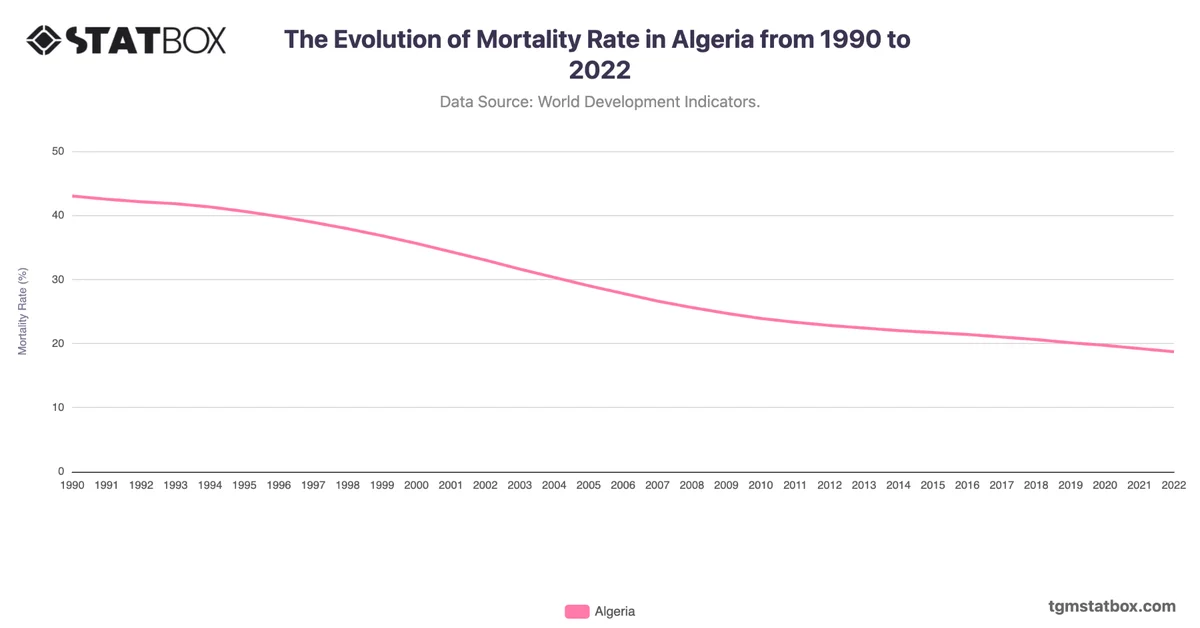
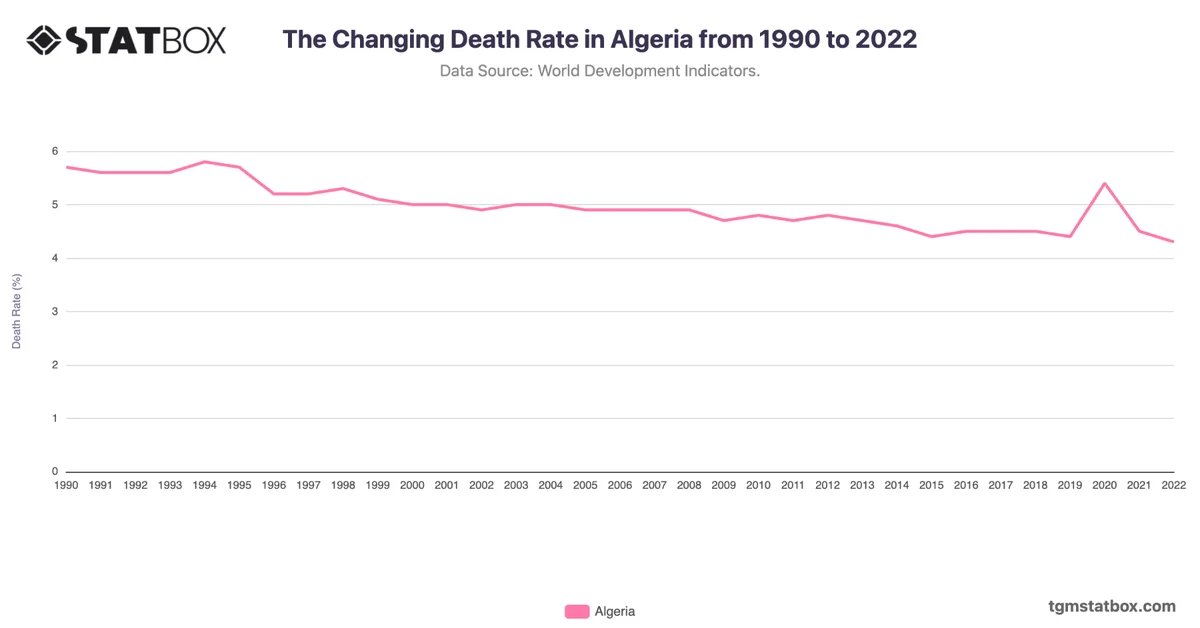
The chart illustrating the changing median age of Algeria's population from 2000 to 2030 reveals a gradual increase in age, reflecting broader demographic trends. Starting at 20.8 years in 2000, the median age is projected to reach 29.5 years by 2030. This upward trajectory indicates a shift towards an aging population, influenced by factors such as declining fertility rates and improvements in healthcare leading to longer life expectancy.
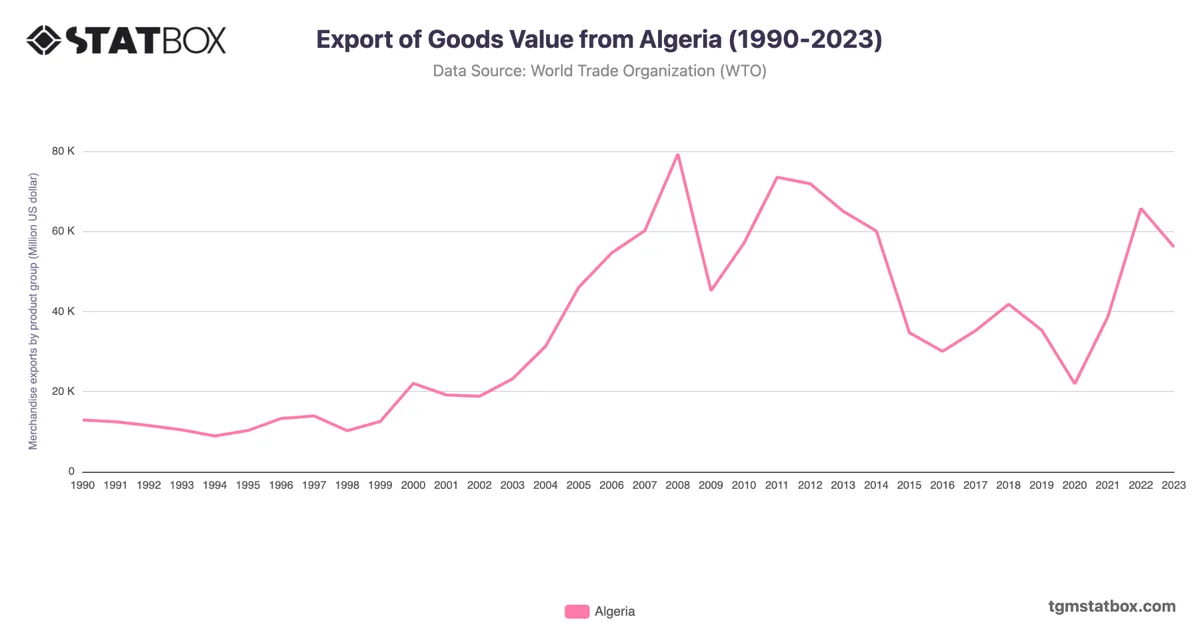
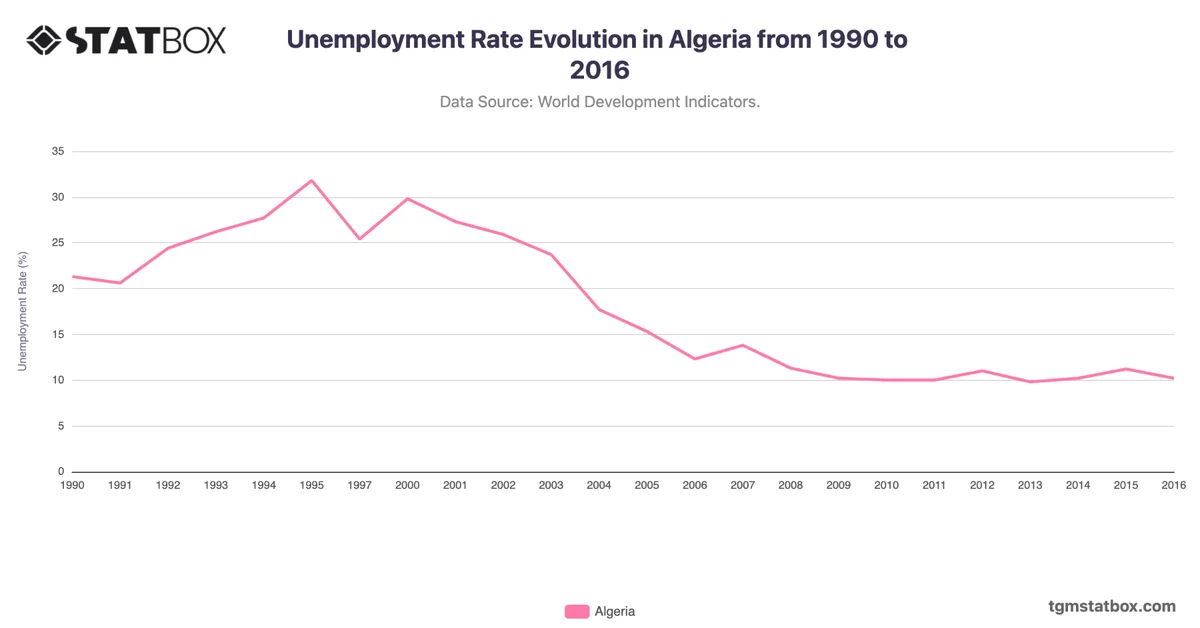
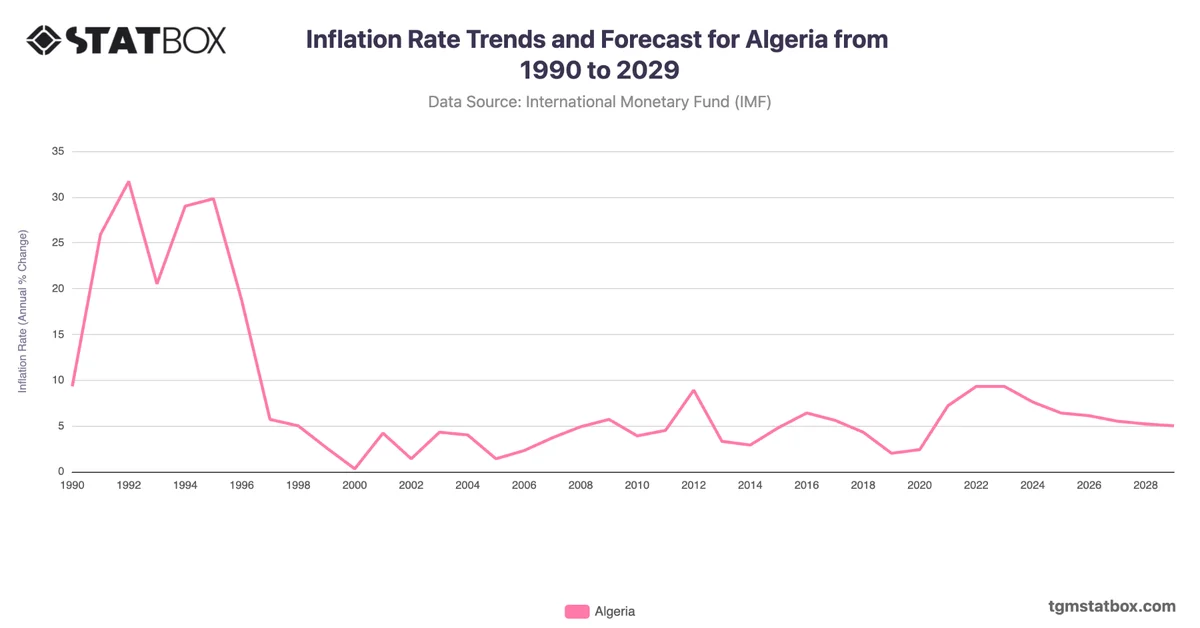
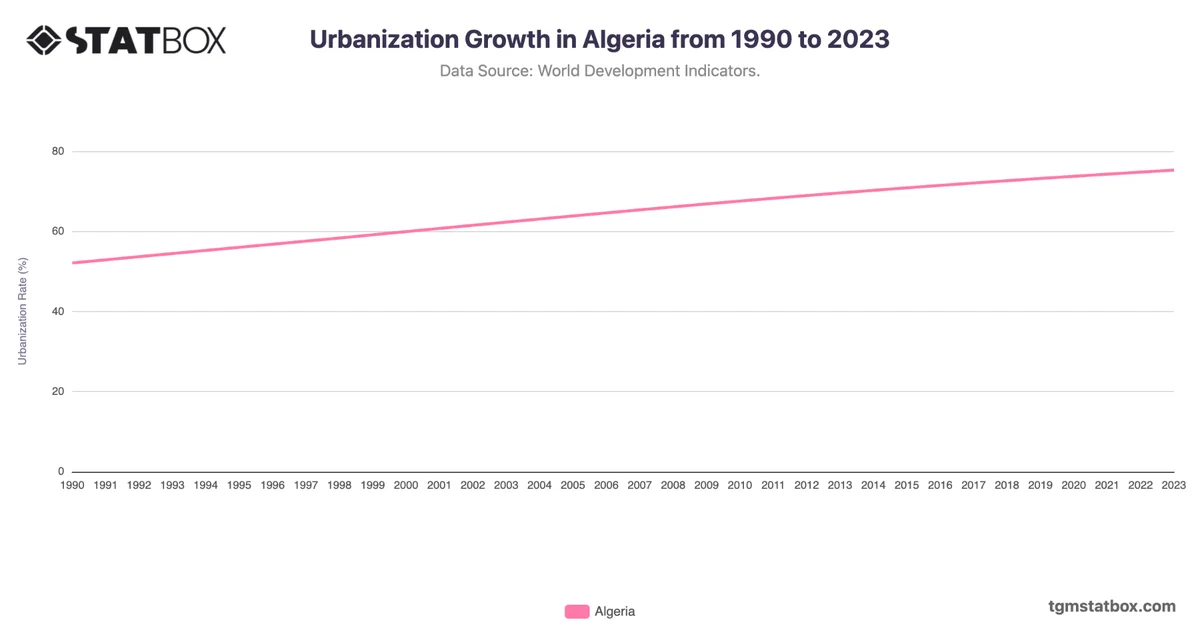
The implications of this demographic shift are significant for Algeria's economy. An older population may lead to changes in labor market dynamics, with potential challenges in maintaining a balanced workforce. Moreover, as the median age rises, the need for social services and healthcare could intensify, impacting government spending and economic growth.
The implications of this demographic shift are significant for Algeria's economy. An older population may lead to changes in labor market dynamics, with potential challenges in maintaining a balanced workforce. Moreover, as the median age rises, the need for social services and healthcare could intensify, impacting government spending and economic growth.
Gain a broader perspective by reviewing Algeria’s population numbers, military personnel share in Algeria, Algeria’s military spending.