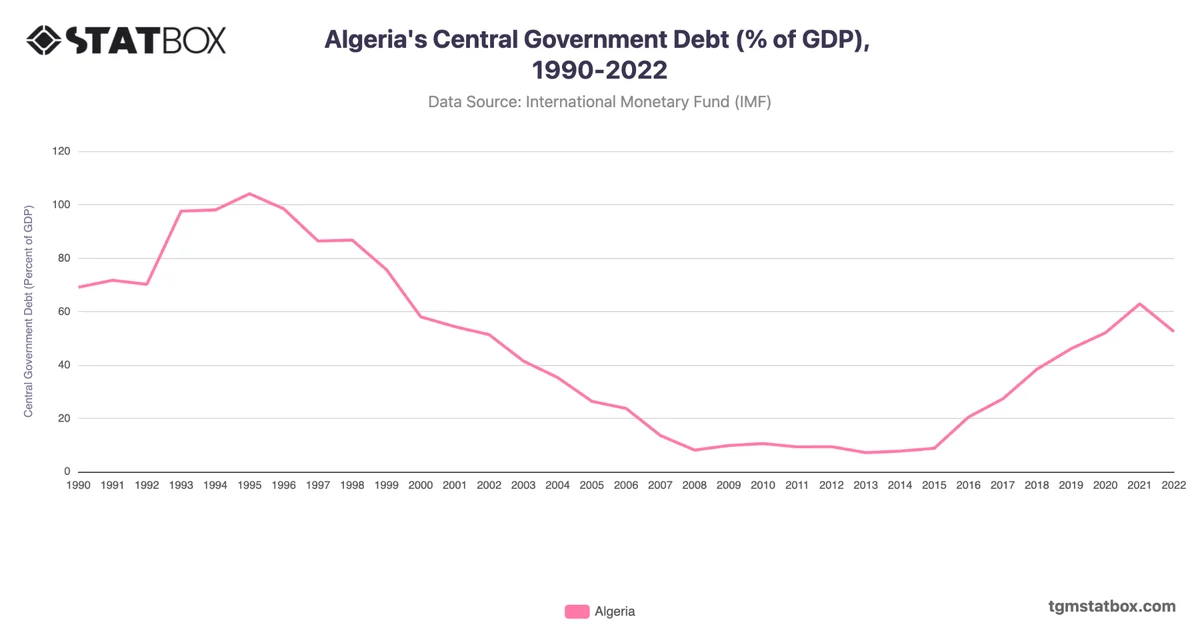
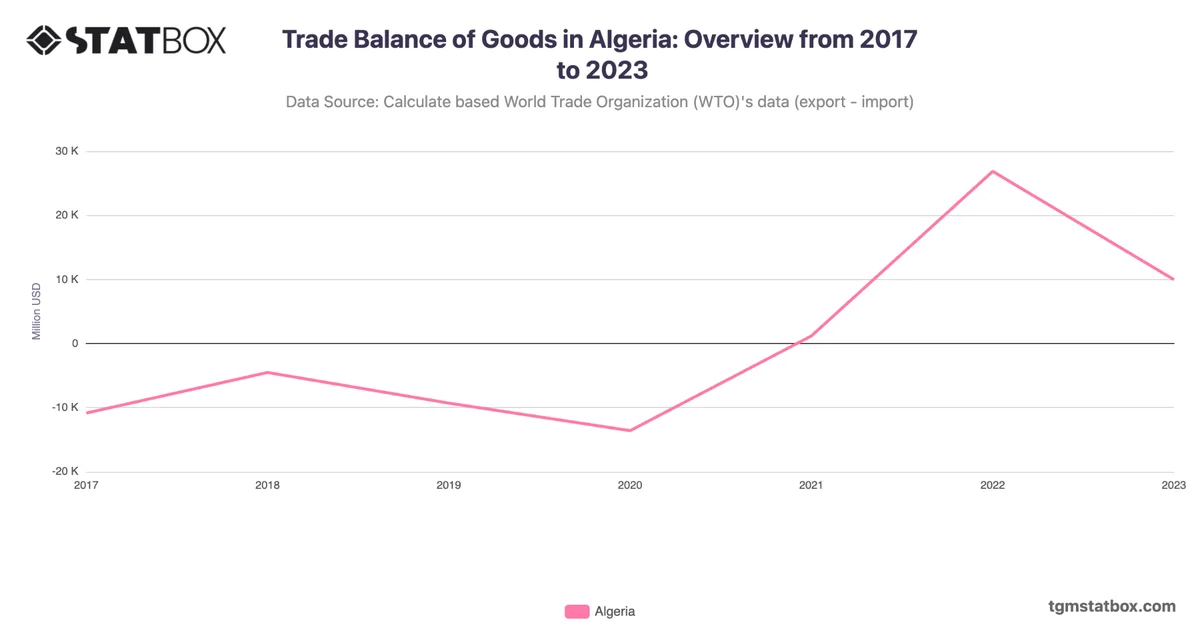
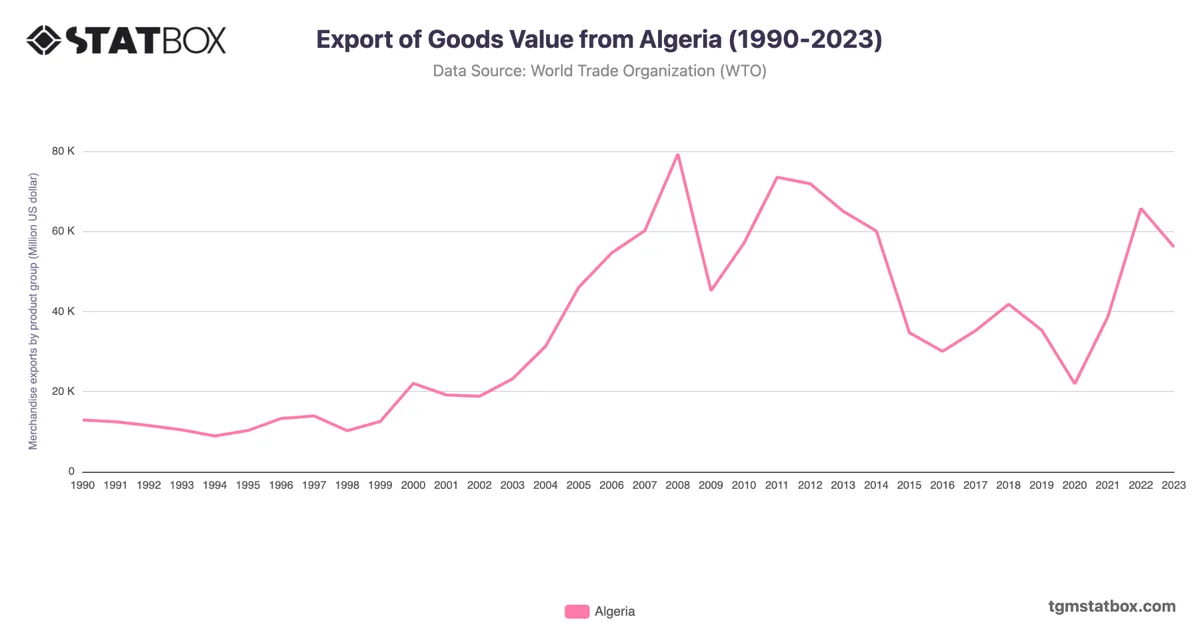
Algeria’s import trends reflect its reliance on external goods to support domestic industries and consumption. The gradual rise from $9.77B in 1990 to a peak of $58.58B in 2014 is closely tied to the oil boom that bolstered Algeria's purchasing power, enabling significant investments in machinery, infrastructure, and consumer goods. However, the oil price collapse post-2014 marked a turning point, with imports contracting to $35.5B in 2020.
Recovery in the following years, reaching $43.7B in 2023, indicates adjustments to diversify Algeria's trade portfolio and stabilize its economy. Government reforms and infrastructure investments also played roles in maintaining import levels despite fluctuating energy revenues. These trends highlight the influence of oil market dynamics on Algeria's trade landscape.
Recovery in the following years, reaching $43.7B in 2023, indicates adjustments to diversify Algeria's trade portfolio and stabilize its economy. Government reforms and infrastructure investments also played roles in maintaining import levels despite fluctuating energy revenues. These trends highlight the influence of oil market dynamics on Algeria's trade landscape.
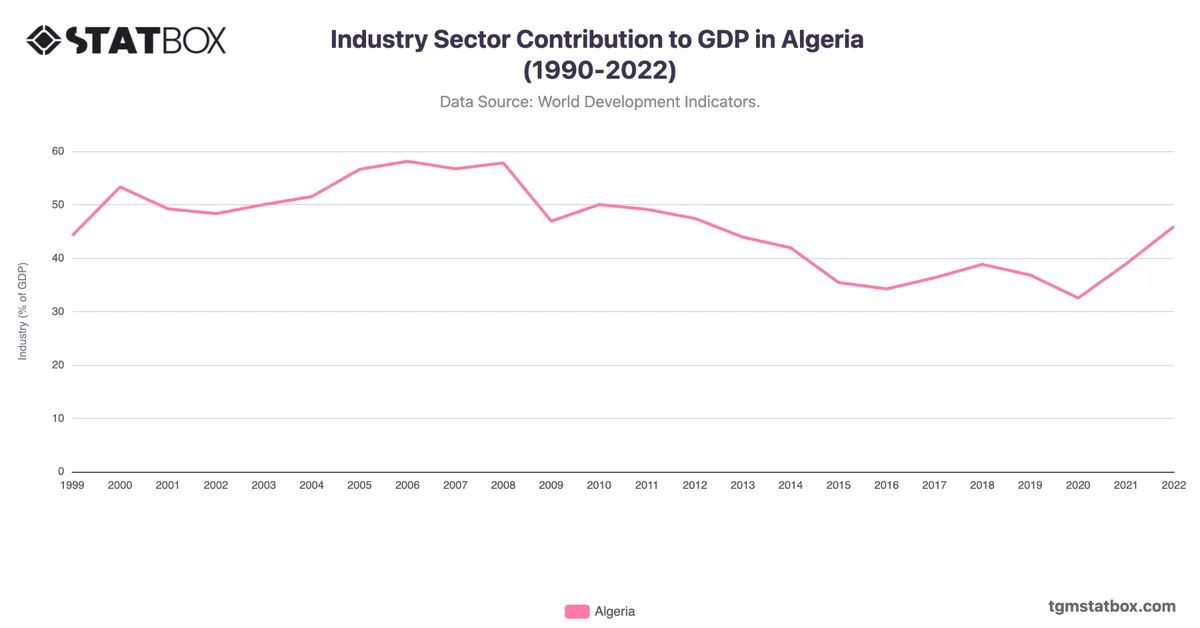
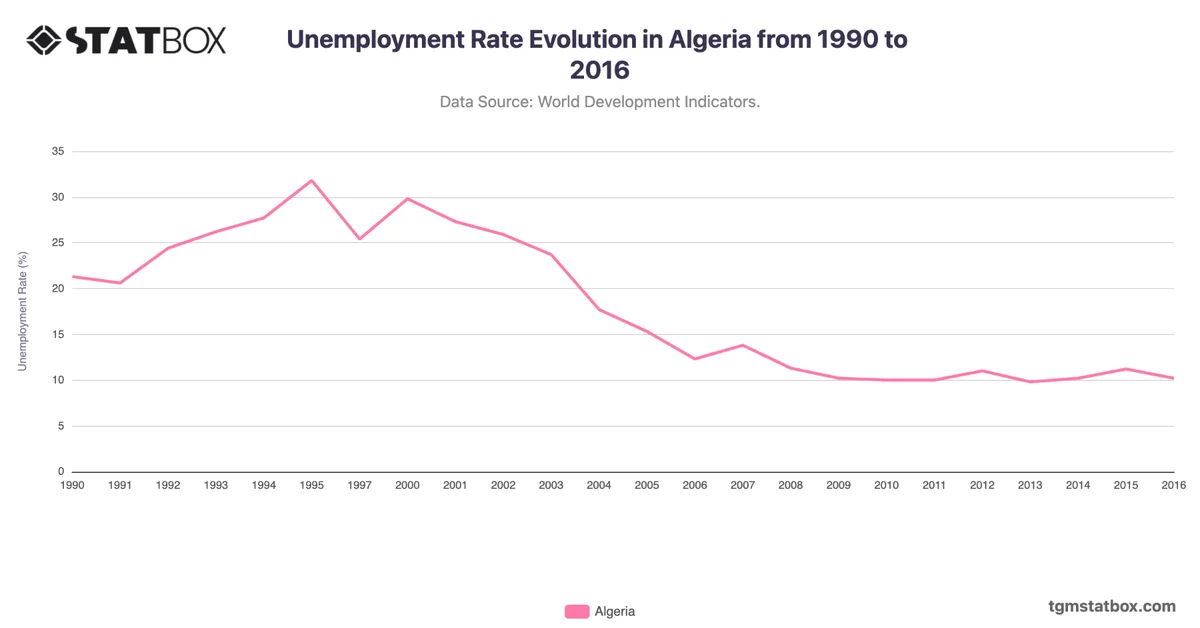
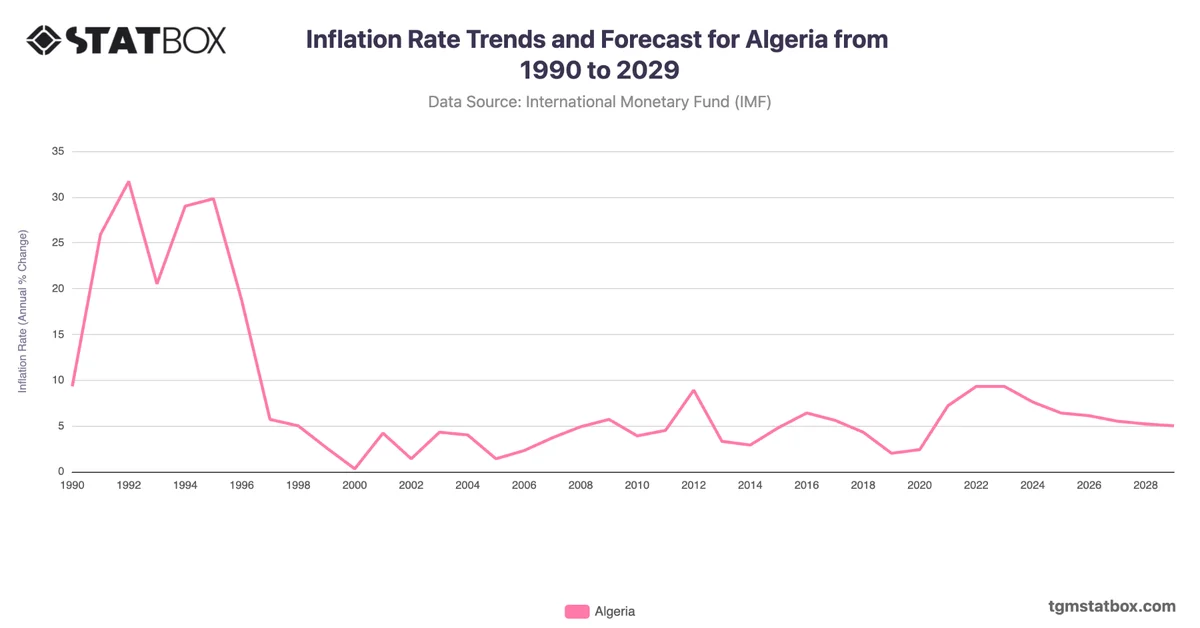
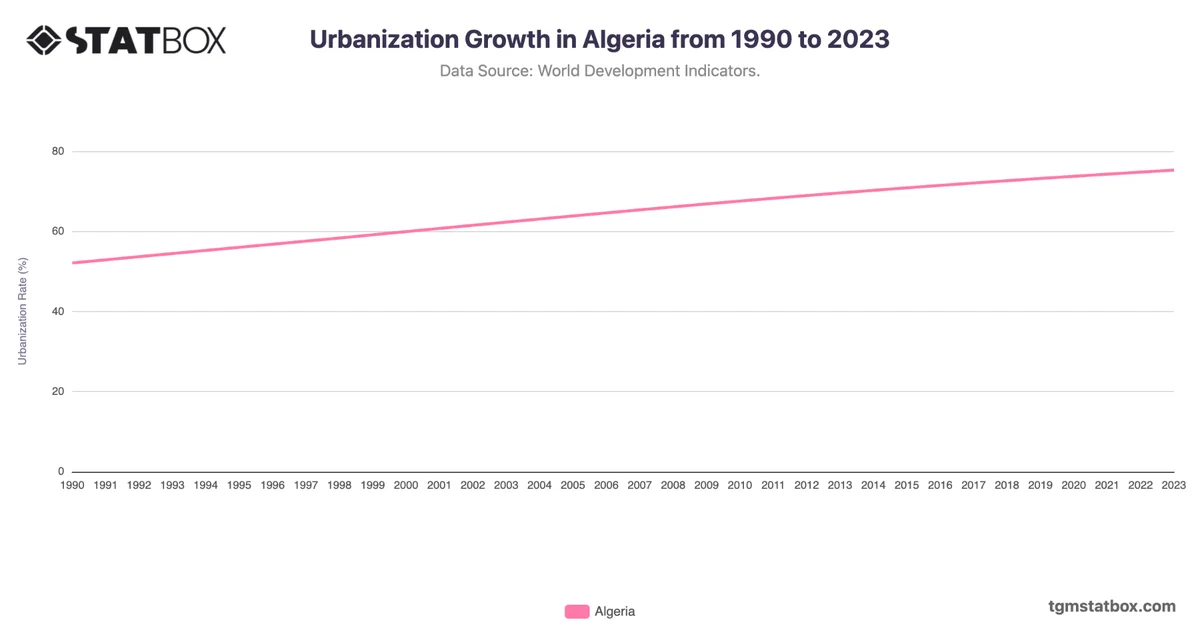
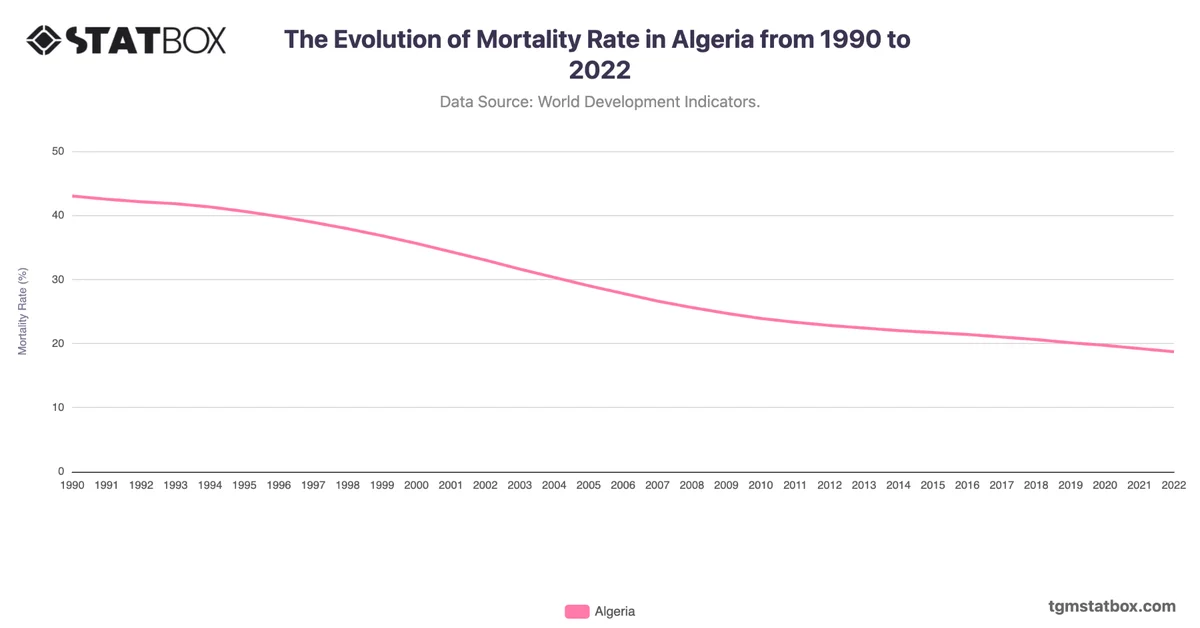
Explore related charts to gain a better understanding of Algeria’s urbanization rate, Algeria’s military spending, industry sector’s share in Algeria’s GDP.