Argentina's inflation trajectory highlights recurring economic crises. The dramatic jump to 25.9% in 2002 followed the 2001 financial collapse and currency devaluation. Despite some recovery in the 2000s, inflation accelerated after 2017, peaking at 72.4% in 2022 and an alarming 133.5% in 2023. Chronic fiscal deficits, monetary expansion, and currency instability remain key drivers.
The forecast suggests inflation peaking at 249.8% in 2024 before a sharp decline as stabilization measures take effect. By 2029, inflation is expected to normalize at 8.9%. This reflects Argentina’s ongoing battle with structural imbalances and the need for sustainable reforms to achieve long-term stability.
The forecast suggests inflation peaking at 249.8% in 2024 before a sharp decline as stabilization measures take effect. By 2029, inflation is expected to normalize at 8.9%. This reflects Argentina’s ongoing battle with structural imbalances and the need for sustainable reforms to achieve long-term stability.
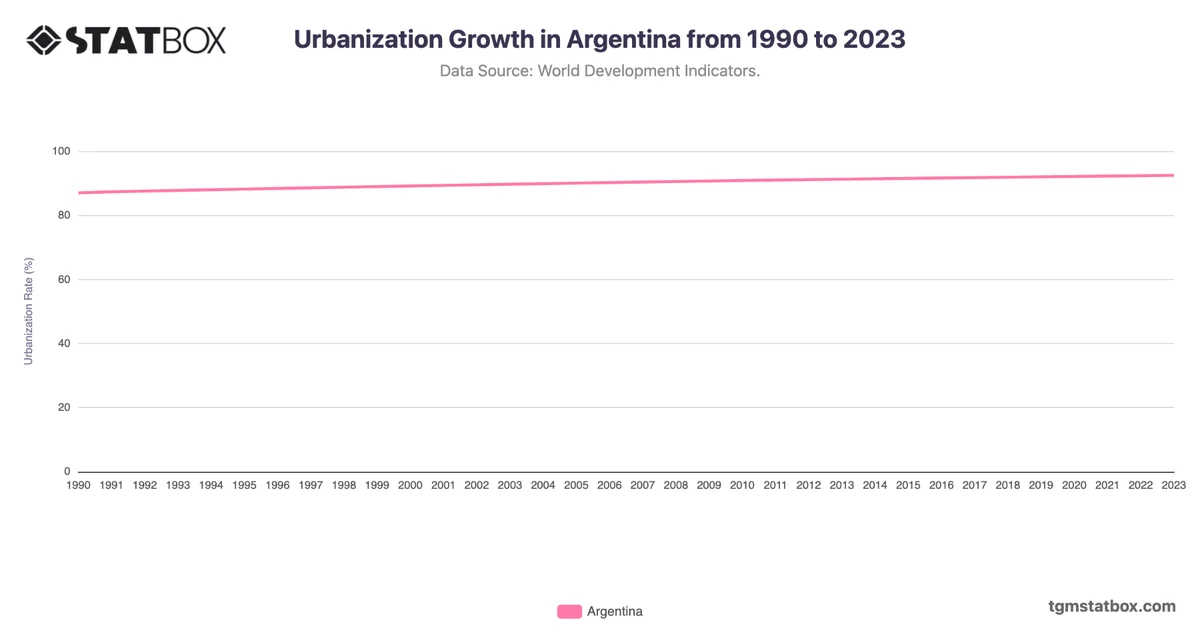
For a deeper dive into the topic, explore Argentina’s urbanization rate, Argentina’s annual GDP, Argentina’s net lending/borrowing as a percentage of GDP.