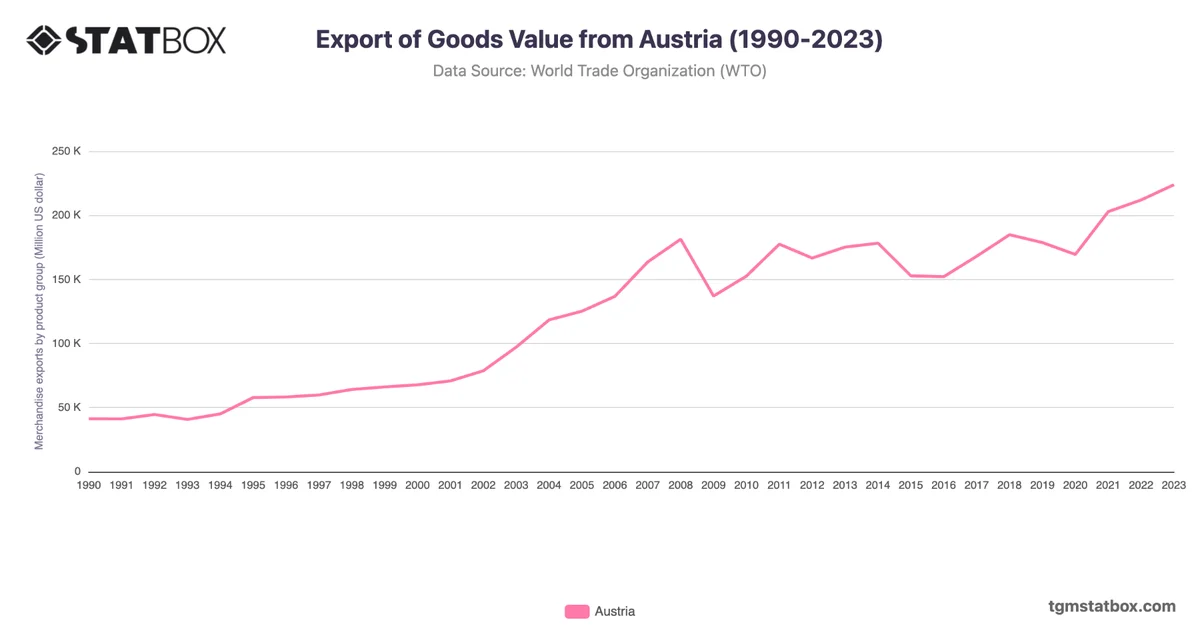
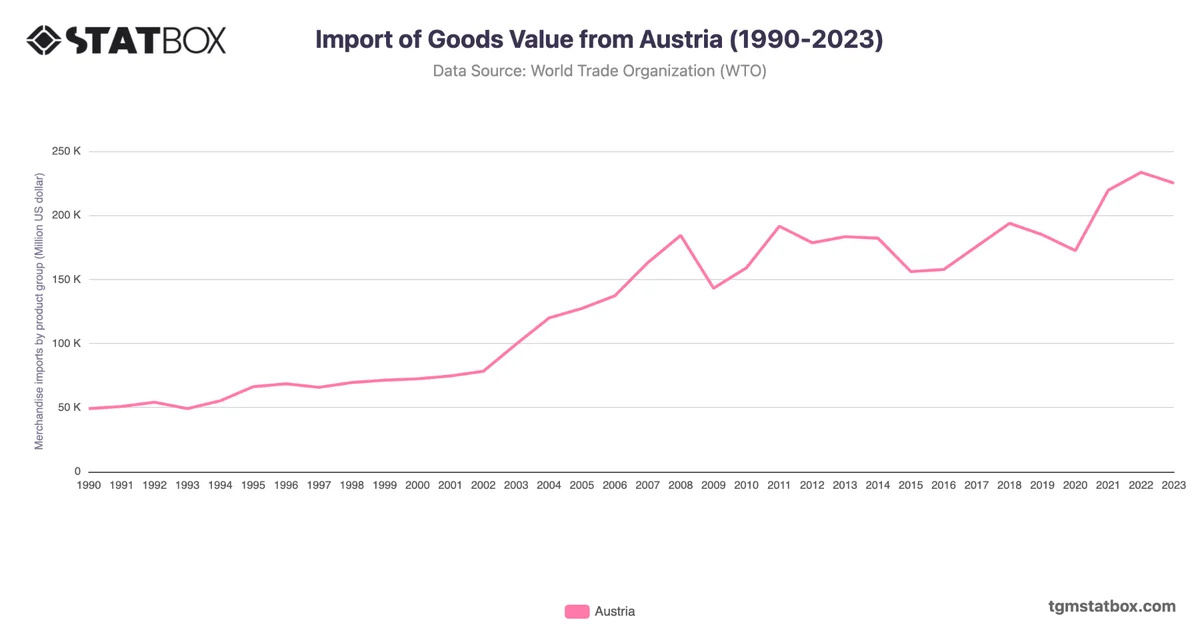
Austria’s trade balance exhibited marked fluctuations, with a consistent deficit widening from -7,729 million USD in 2017 to a peak of -21,590 million USD in 2022, before narrowing dramatically to -993.6 million USD in 2023. The 2022 spike in the deficit reflects increased energy import costs due to the European energy crisis following geopolitical tensions, while the significant improvement in 2023 suggests successful efforts to reduce import reliance or boost exports.
The reduction in the trade deficit aligns with Austria's recovery in manufacturing and export sectors, particularly in machinery and automotive goods. Despite these improvements, Austria remains dependent on energy imports, which makes its trade balance sensitive to global price shifts.
The reduction in the trade deficit aligns with Austria's recovery in manufacturing and export sectors, particularly in machinery and automotive goods. Despite these improvements, Austria remains dependent on energy imports, which makes its trade balance sensitive to global price shifts.
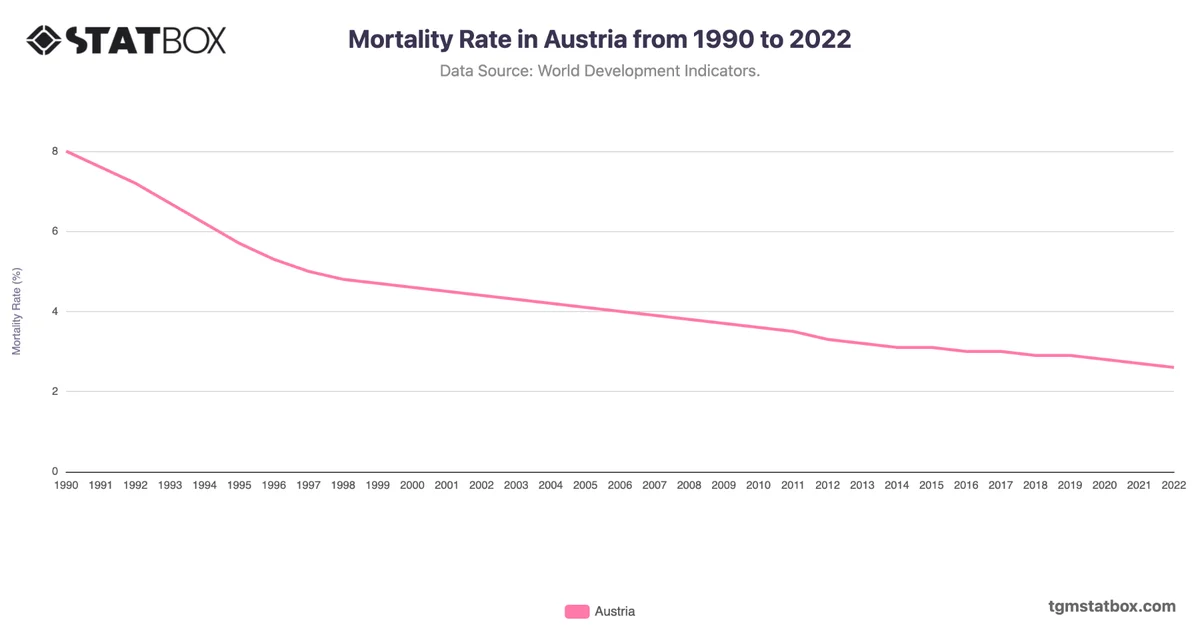
Find out more through related statistics on Austria’s services sector GDP share, Austria’s mortality rate, Austria’s unemployment rate trend.