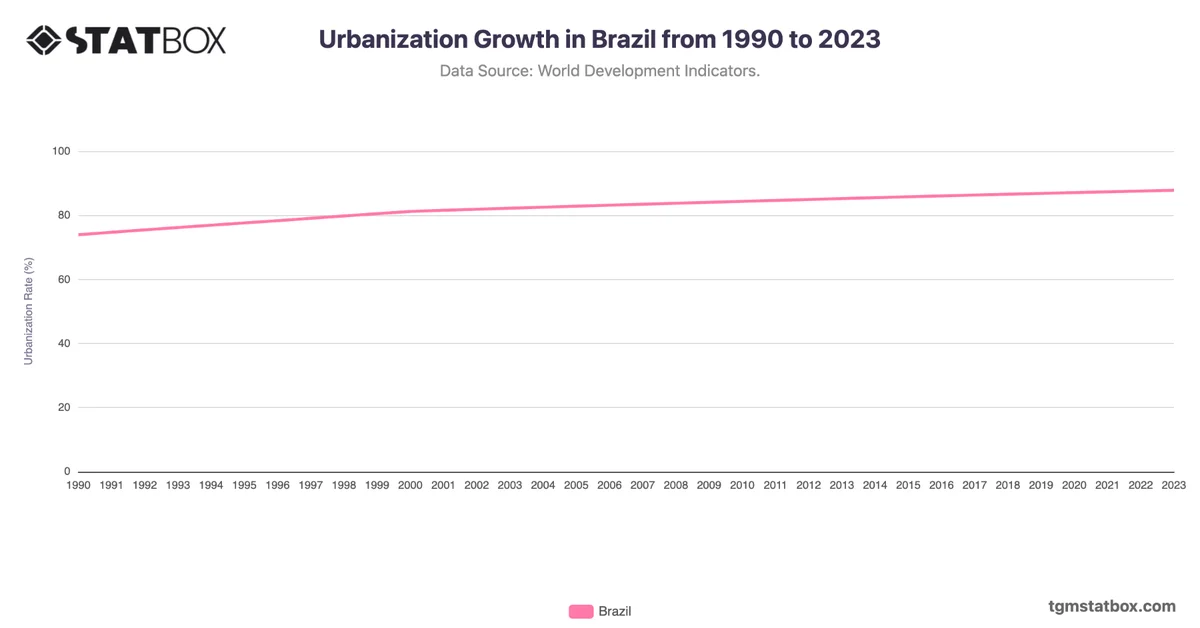
Brazil’s military personnel percentage declined from 0.4% in 1987 to 0.2% by 1988, maintaining this level through 2016. The rapid initial decrease reflects Brazil’s transition from military rule to civilian governance in the 1980s, which likely influenced the decision to reduce military size. Brazil’s significant urban growth in subsequent years redirected governmental focus to urban infrastructure, public health, and education.
The sustained 0.2% military personnel level aligns with Brazil’s emphasis on socio-economic development over military expansion. As cities grew and urban demands increased, Brazil maintained a consistent yet limited military force, balancing domestic priorities with regional stability in South America.
The sustained 0.2% military personnel level aligns with Brazil’s emphasis on socio-economic development over military expansion. As cities grew and urban demands increased, Brazil maintained a consistent yet limited military force, balancing domestic priorities with regional stability in South America.
Gain a broader perspective by reviewing Brazil’s agriculture share in GDP, Brazil’s annual GDP growth rate, Brazil’s manufacturing sector GDP share.