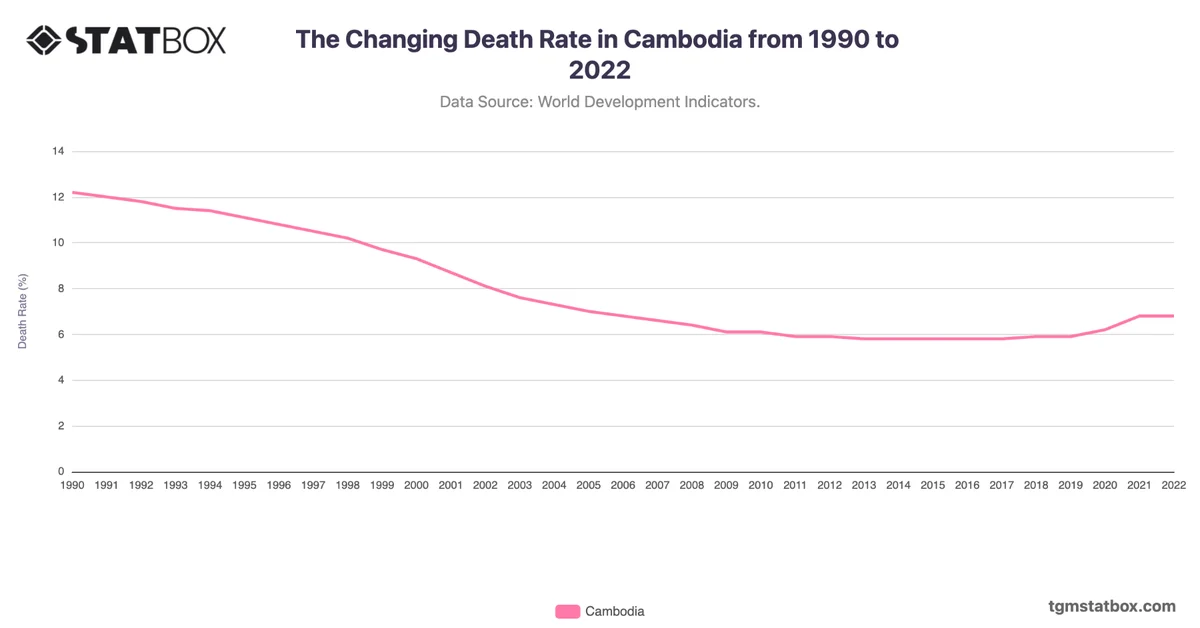
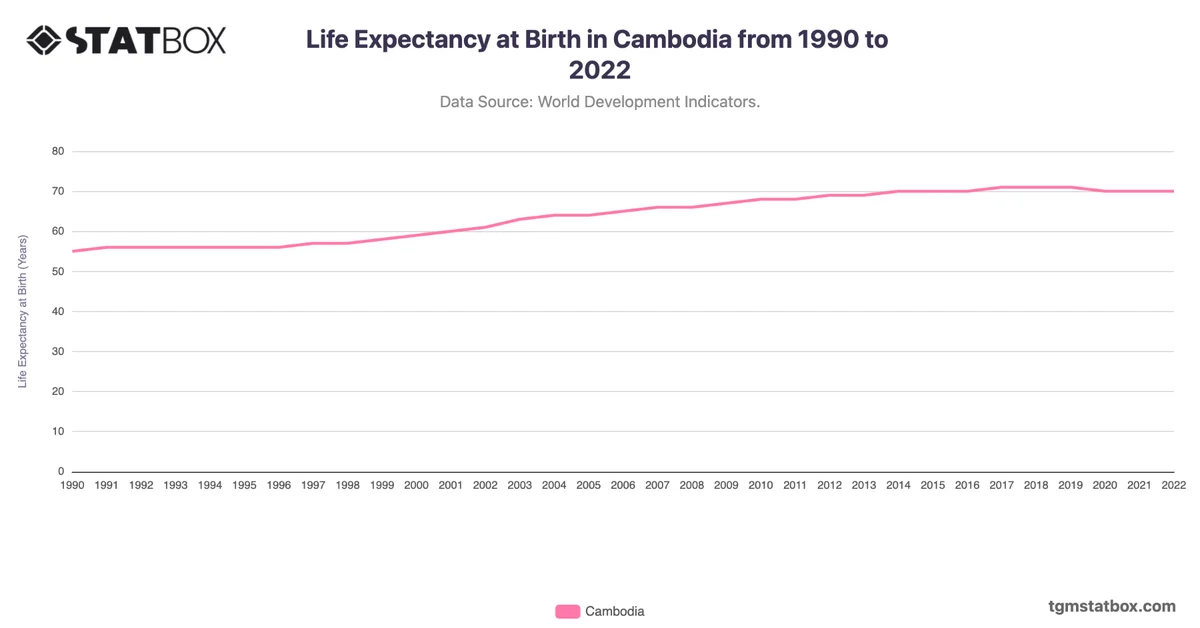
Cambodia's fertility rate experienced a steady decline from 1990 to 2022, dropping from 5.6 in 1990 to 2.3 in 2022. This significant reduction highlights the nation's transition through economic and social reforms following the Khmer Rouge period. The rapid decline in the 1990s, particularly from 5.6 in 1990 to 4.1 in 1998, can be attributed to improvements in healthcare infrastructure, increased access to family planning, and heightened awareness of population growth issues. The government's focus on education and maternal health further supported this trend.
By the early 2000s, Cambodia’s fertility rate had stabilized somewhat, hovering around 3.6 in 2002 and gradually decreasing to 2.3 by 2022. This stabilization reflects sustained efforts in expanding contraceptive use and women's empowerment through education and economic opportunities. The slower decline after 2010 aligns with Cambodia reaching near-replacement fertility levels, signifying its transition toward a more mature demographic stage.
By the early 2000s, Cambodia’s fertility rate had stabilized somewhat, hovering around 3.6 in 2002 and gradually decreasing to 2.3 by 2022. This stabilization reflects sustained efforts in expanding contraceptive use and women's empowerment through education and economic opportunities. The slower decline after 2010 aligns with Cambodia reaching near-replacement fertility levels, signifying its transition toward a more mature demographic stage.
For a broader context, visit other statistics on Cambodia’s annual GDP figures, Cambodia’s working-age population share, Cambodia’s median age.