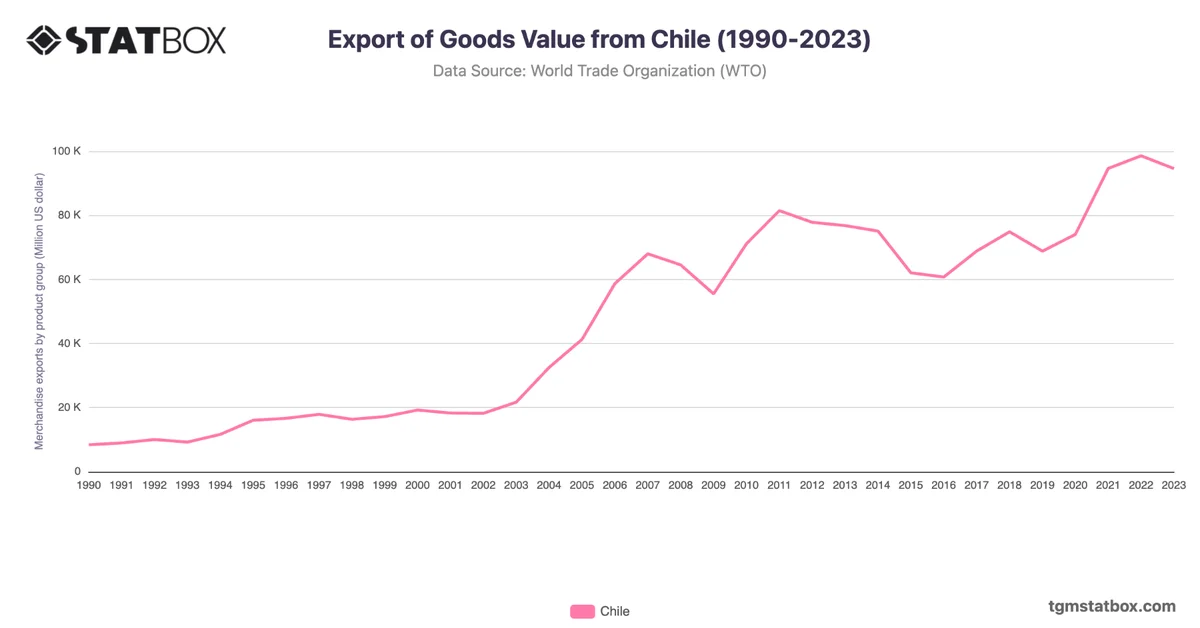
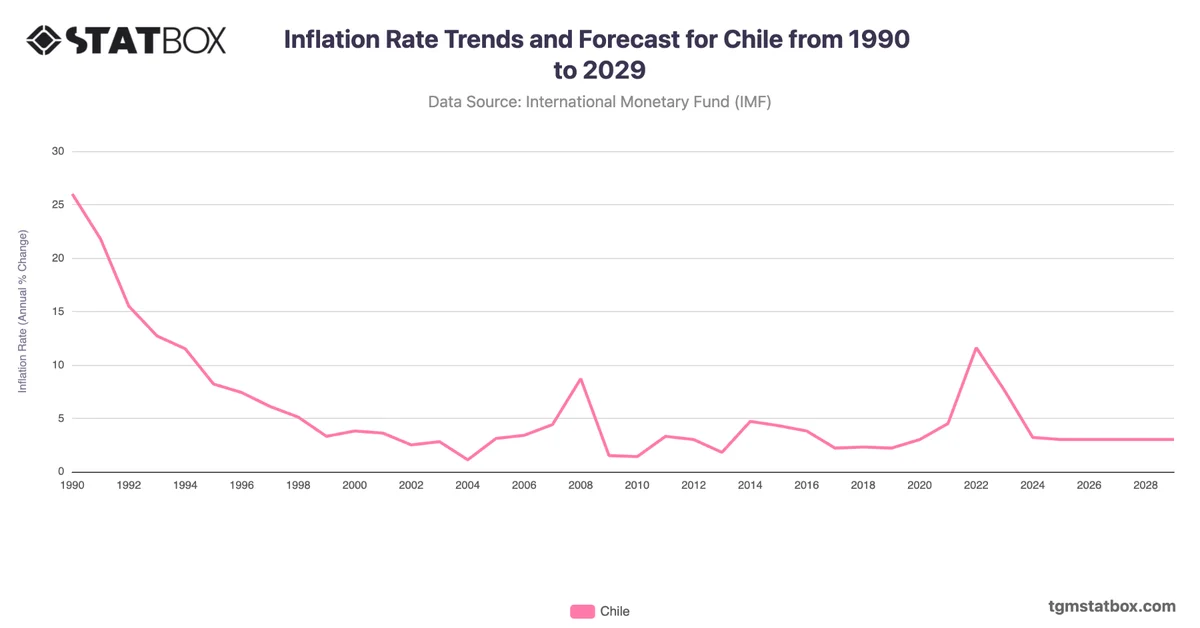
Chile’s unemployment rate from 1990 to 2021 shows periods of economic growth interspersed with challenges. Starting at 5.6% in 1990, the unemployment rate initially declined but saw a sharp rise to 11.2% by 1999 due to the Asian financial crisis, which affected Chile’s export-driven economy. The early 2000s saw unemployment gradually decrease as Chile capitalized on its natural resource exports.
However, the 2008 financial crisis led to a rise in unemployment again, reaching 11.3% in 2009. Afterward, steady improvements in the economy brought the rate down to 6.3% by 2015. The pandemic in 2020 caused another surge in unemployment, with rates reaching 10.9%, but Chile saw a recovery to 9.3% in 2021.
However, the 2008 financial crisis led to a rise in unemployment again, reaching 11.3% in 2009. Afterward, steady improvements in the economy brought the rate down to 6.3% by 2015. The pandemic in 2020 caused another surge in unemployment, with rates reaching 10.9%, but Chile saw a recovery to 9.3% in 2021.
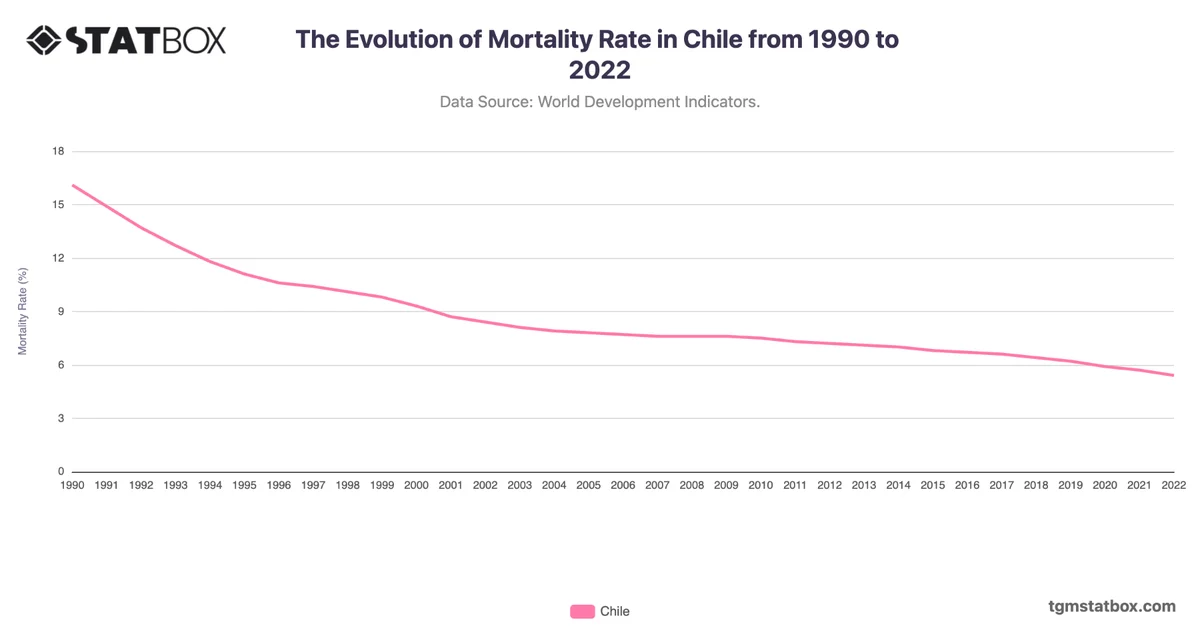
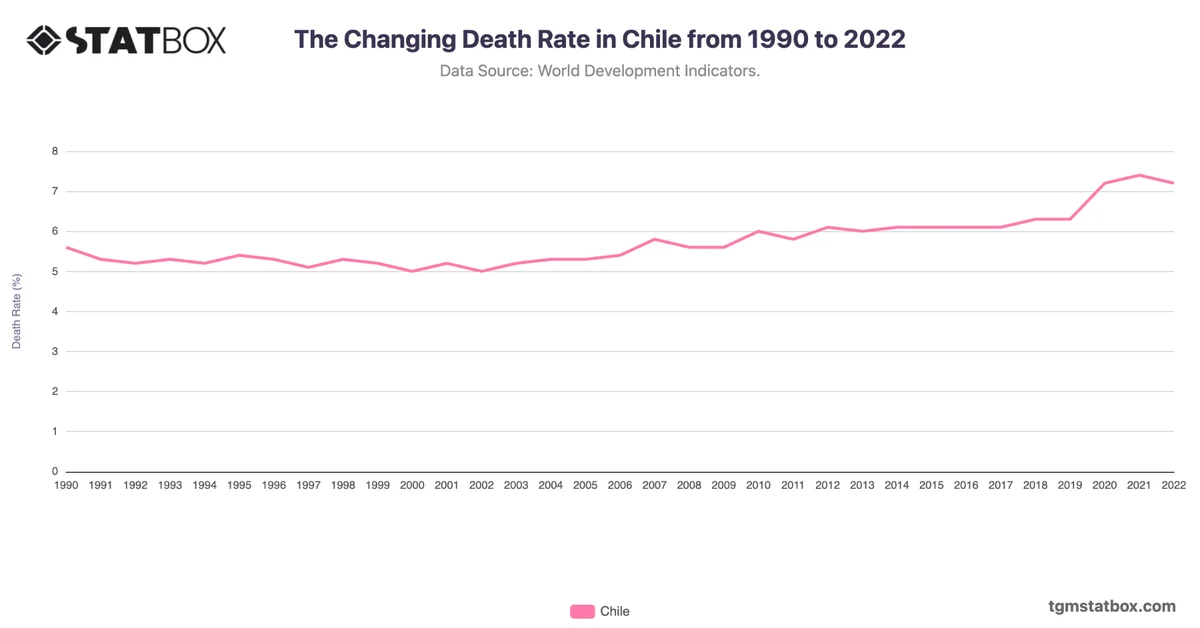
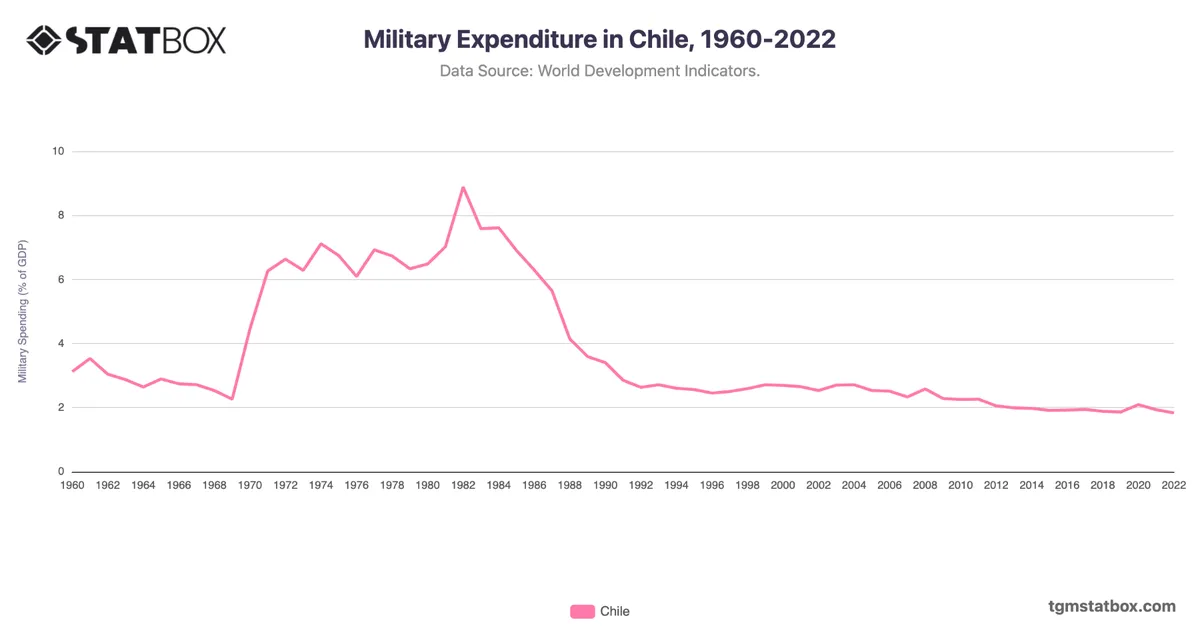
For a broader context, visit other statistics on Chile’s mortality rate fluctuations, Chile’s military personnel proportion, Chile’s manufacturing contribution to GDP.