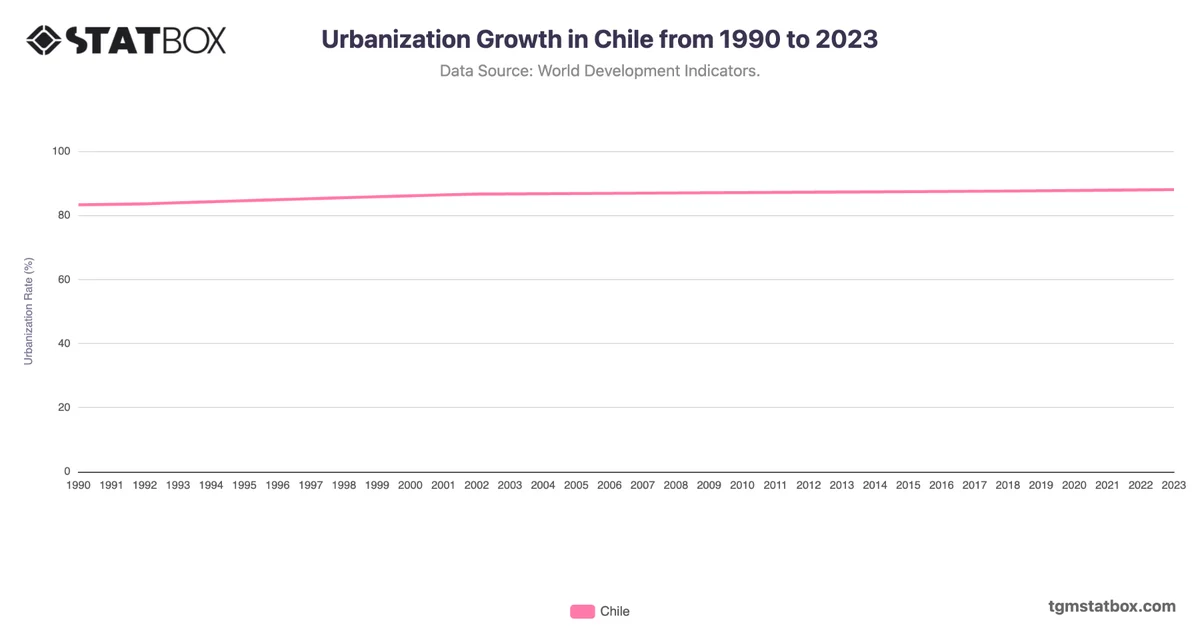
Chile’s military personnel percentage decreased from 1.0% in 1987 to 0.4% by 2016, with a stable period around 0.7% throughout the 1990s. Following Chile’s return to democracy in 1990, the country gradually downsized its military presence, aligning with political shifts and reallocated resources toward urban development. Chile’s focus on urban growth and infrastructure in Santiago and other cities further prompted the government to prioritize public services over military expansion.
The consistent reductions in military personnel underscore Chile’s move toward stability and economic reform. By 2016, at 0.4%, Chile’s focus had shifted to maintaining a smaller, professional military force, with resources directed to supporting urban expansion and improving social services, reducing the need for a high percentage of active personnel.
The consistent reductions in military personnel underscore Chile’s move toward stability and economic reform. By 2016, at 0.4%, Chile’s focus had shifted to maintaining a smaller, professional military force, with resources directed to supporting urban expansion and improving social services, reducing the need for a high percentage of active personnel.
Gain a broader perspective by reviewing Chile’s urbanization rate, Chile’s agriculture share in GDP, Chile’s government debt ratio.