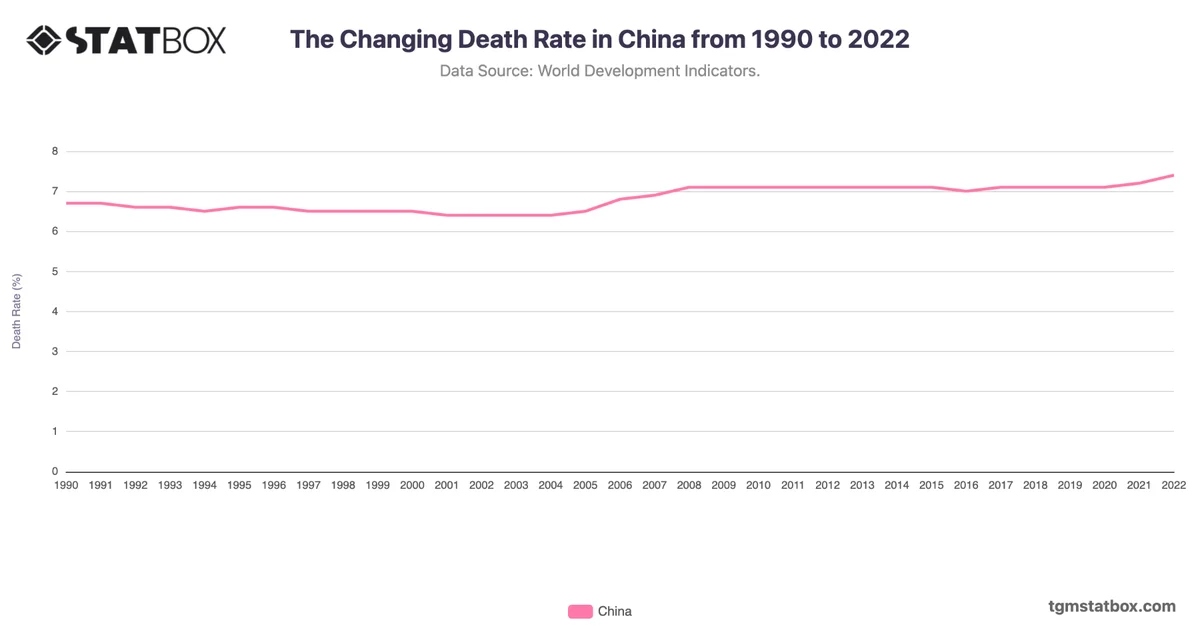
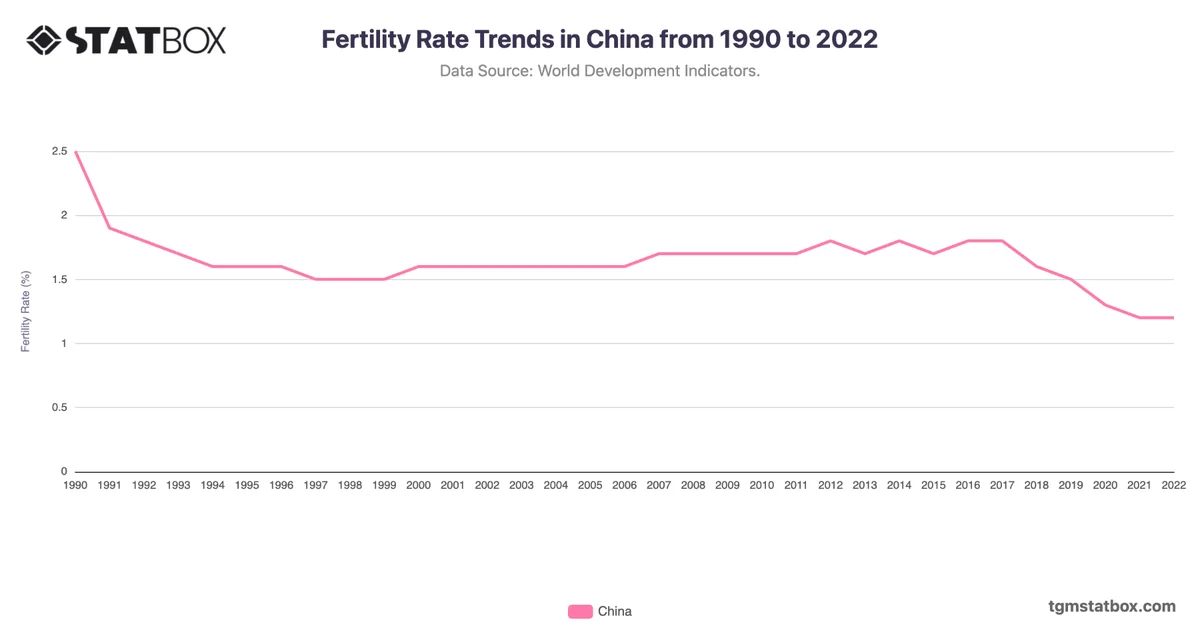
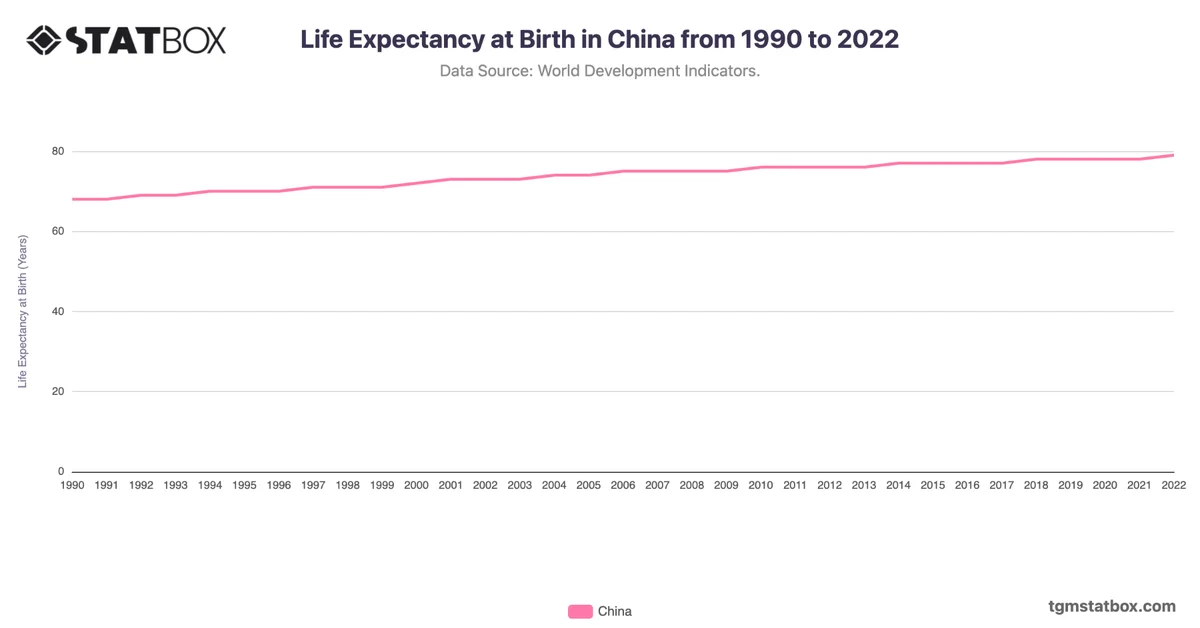
China's mortality rate experienced a remarkable decline from 42.8 in 1990 to 4.8 in 2022, highlighting the nation's substantial progress in healthcare and socio-economic development. The 1990s saw steady reductions, with the rate dropping to 29.9 by 2000. This improvement was largely driven by expanded access to healthcare, rural immunization campaigns, and the reduction of infectious diseases.
From 2000 onward, the rate continued to decline significantly, falling to 12.5 by 2010 and 5.5 by 2020. Contributing factors included enhanced public health infrastructure, the introduction of universal health coverage, and significant improvements in maternal and child health programs. By 2022, China’s mortality rate reached a historic low, reflecting sustained investments in medical technology and health education.
From 2000 onward, the rate continued to decline significantly, falling to 12.5 by 2010 and 5.5 by 2020. Contributing factors included enhanced public health infrastructure, the introduction of universal health coverage, and significant improvements in maternal and child health programs. By 2022, China’s mortality rate reached a historic low, reflecting sustained investments in medical technology and health education.
For a broader context, visit other statistics on China’s birth lifespan, China’s annual GDP growth rate, China’s annual GDP figures.