Age-Based Variation in Christmas Shopping Channel Preferences
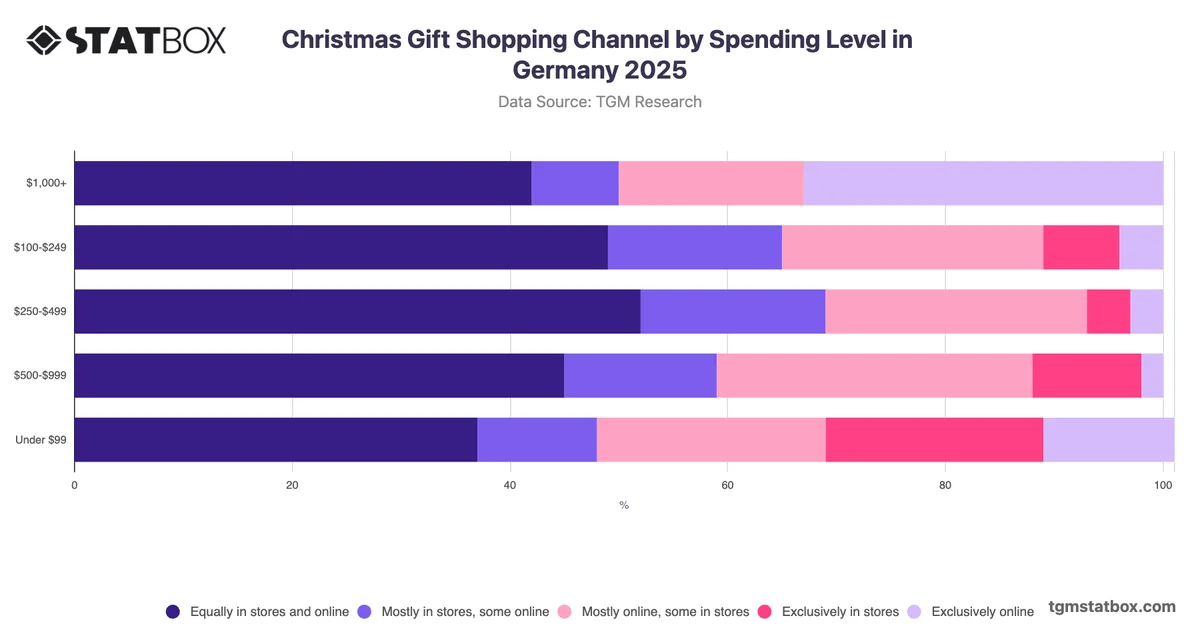
How consumers divide their Christmas gift purchasing between physical stores and digital platforms has significant implications for retail planning, inventory management, and marketing allocation. Channel preference is rarely uniform across age groups, making demographic segmentation a practical necessity for retailers operating across both environments in Germany.
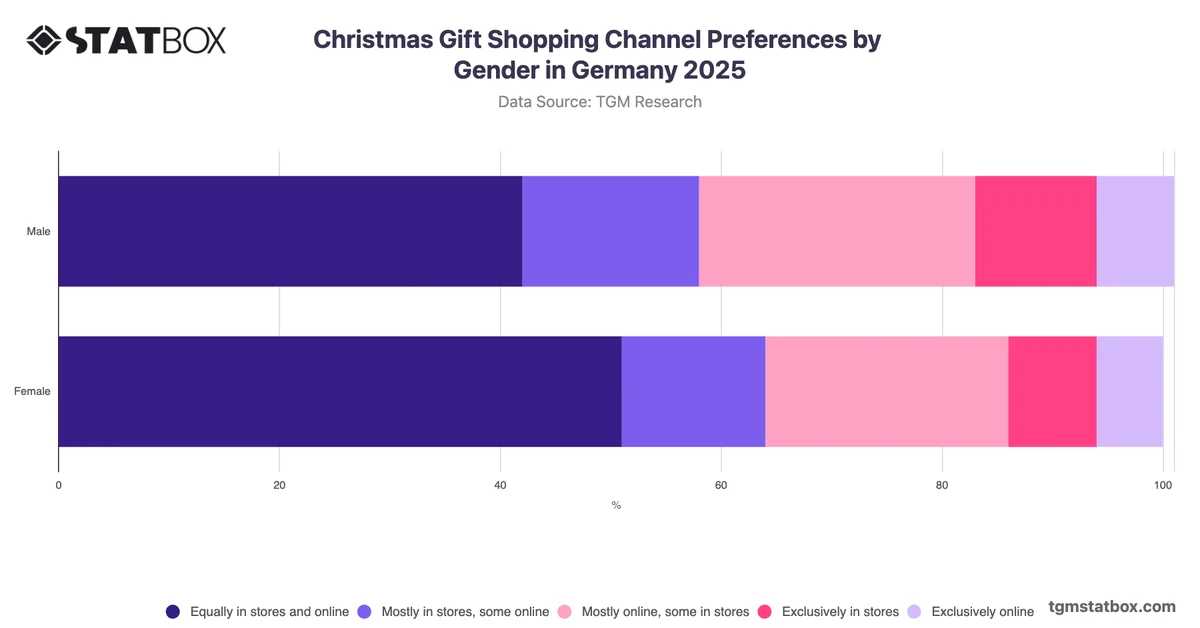
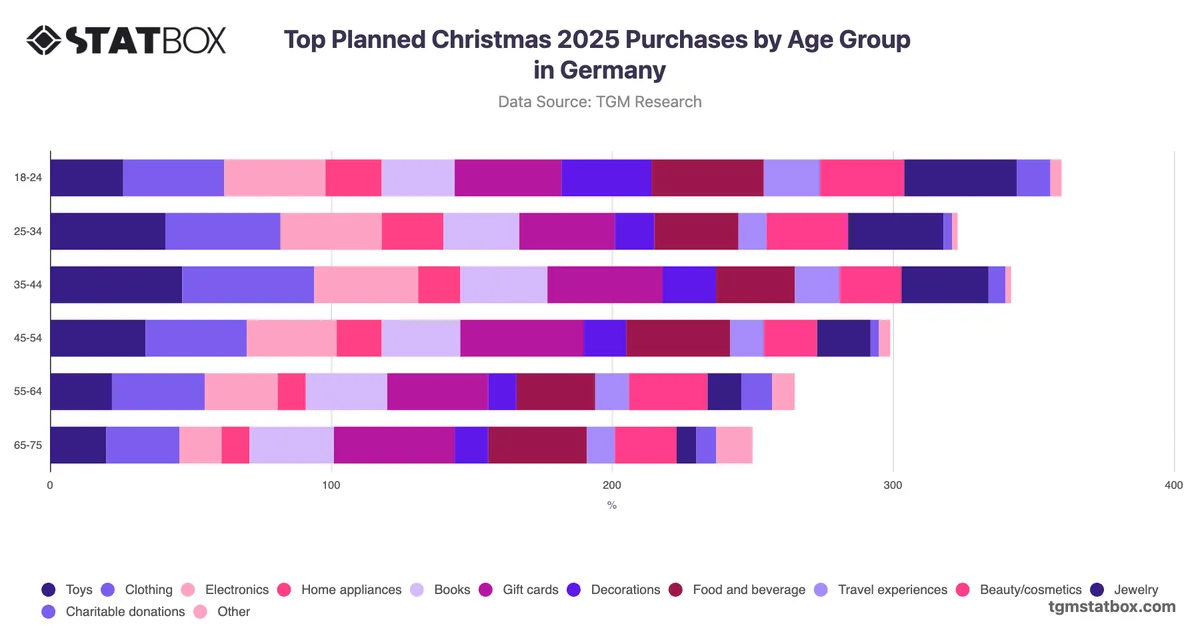
The most notable pattern in Christmas shopping channel preferences in Germany is not the dominance of any single approach, but the consistent cross-age preference for a blended model, with the balanced "equally in stores and online" option attracting plurality support across all six age groups. The most striking demographic contrast, however, lies at the older end of the spectrum: 65-to-75-year-olds are considerably more inclined toward exclusively in-store purchasing than any other group, at 23%, compared to single-digit figures among those aged 18 to 44. Meanwhile, the 35-to-44 group stands out for its notably lower appetite for an online-first approach. These patterns suggest that channel commitment intensifies at the extremes of the age range rather than in the middle. Retailers may benefit from testing age-segmented communications that emphasise in-store experience and service for older audiences while maintaining robust omnichannel messaging for mid-age groups.