Gender Differentiation in Blended Christmas Shopping Behaviour
Christmas gift purchasing in Germany involves a complex interplay between physical retail and digital commerce. Consumer channel decisions are shaped by convenience, product category, and personal preference, making the balance between in-store and online activity a meaningful dimension of seasonal retail planning.
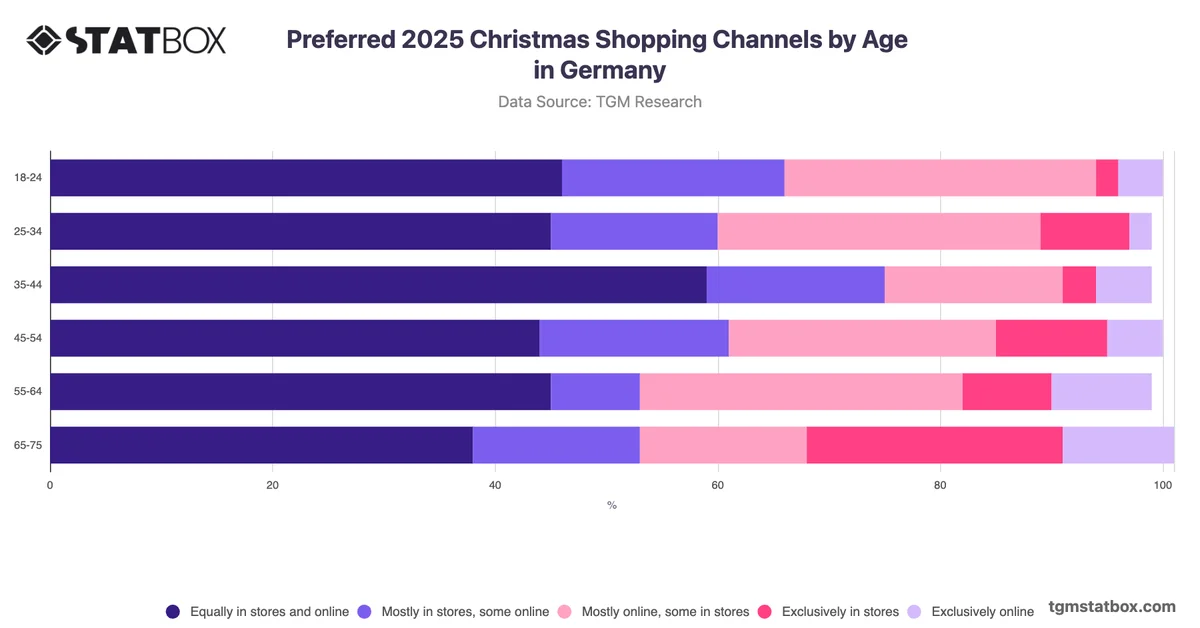
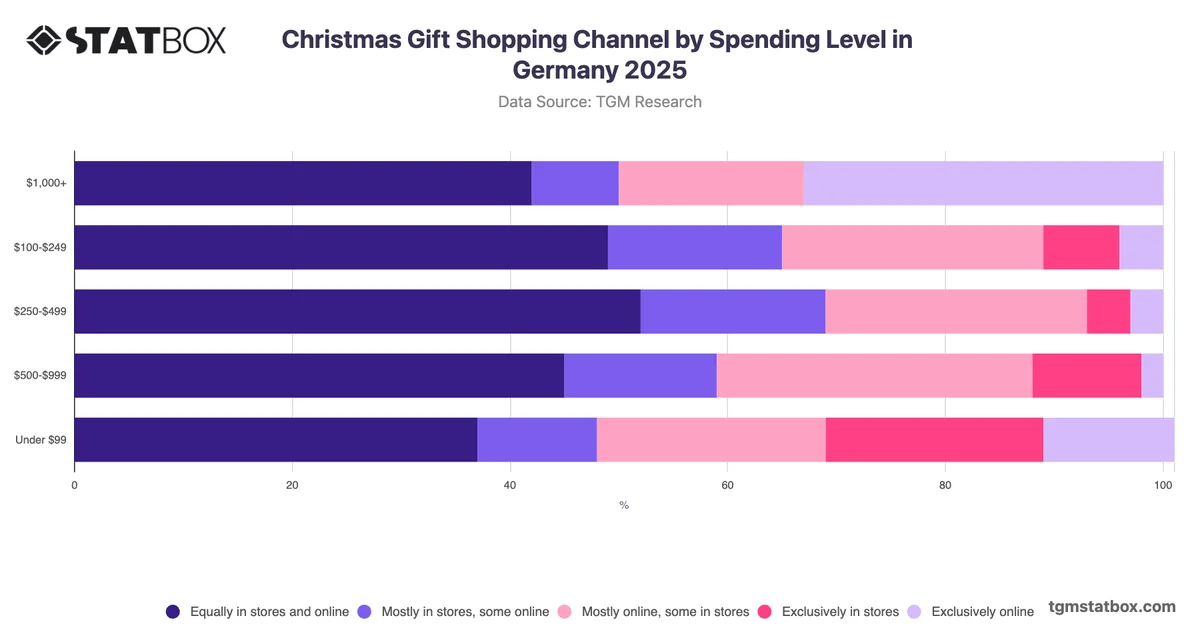
The most notable pattern across gender groups is not divergence but consistency, with blended shopping behaviour dominating for both men and women. The combined channel approach, encompassing those who shop equally or predominantly across both formats, accounts for the majority of respondents in each group. The most meaningful gender contrast lies in the balanced split category, where women are nine percentage points more likely than men to shop equally in stores and online. This suggests women may apply a more deliberate, channel-neutral strategy to gift purchasing, while men show a marginally stronger tendency toward online-led behaviour. Exclusive channel commitment remains low for both groups. For retailers, this pattern indicates that integrated channel strategies are broadly relevant across genders, but communication and fulfilment messaging targeted at women may benefit from emphasising parity between in-store and digital touchpoints rather than prioritising one channel over the other.