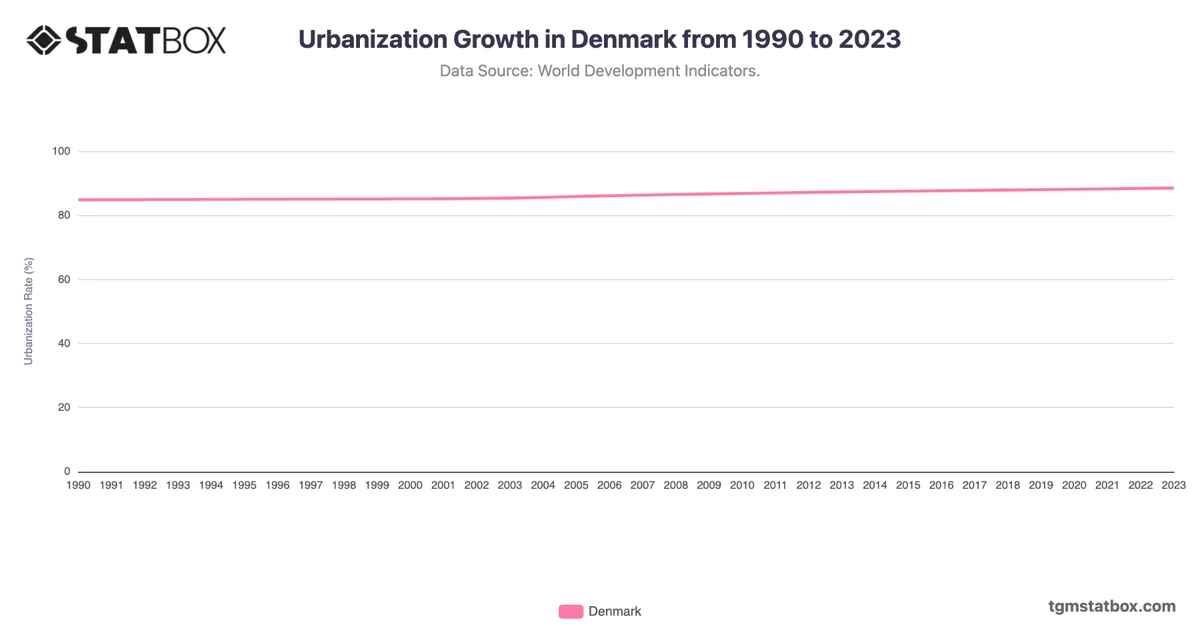
Denmark’s military personnel as a percentage of the population remained relatively stable between 1987 and 2016, generally fluctuating between 0.5% and 0.6% until 2000, when it began to trend downward. This stability reflects Denmark's consistent defense policies within the NATO framework. The decrease after 2000, dipping to 0.3% by 2011, aligns with broader European trends of reduced military size in response to budget considerations and increased urbanization.
Denmark’s high urbanization rate contributed to the shift in resource allocation from military spending to urban and social services. From 2009, the figure held steady at around 0.3%, indicating a balance between maintaining adequate defense capabilities and focusing on urban infrastructure and welfare.
Denmark’s high urbanization rate contributed to the shift in resource allocation from military spending to urban and social services. From 2009, the figure held steady at around 0.3%, indicating a balance between maintaining adequate defense capabilities and focusing on urban infrastructure and welfare.
For a broader context, visit other statistics on Denmark’s unemployment rate, Denmark’s working-age population share, Denmark’s military spending.