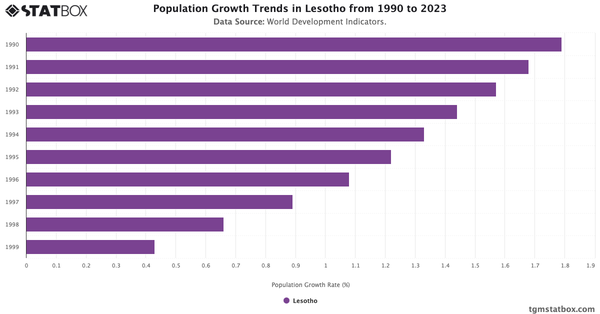
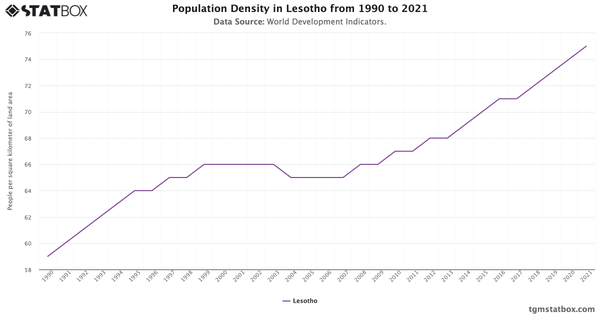
Lesotho's population growth from 1990 to 2023 reveals a nuanced pattern, marked by slow but steady increases, along with periods of stagnation and even slight decline. In 1990, the population stood at approximately 1.8 million and grew to 2.3 million by 2023. The country's demographic trajectory during this period is heavily influenced by socio-economic and health-related factors, particularly the impact of the HIV/AIDS epidemic, which slowed population growth in the early 2000s.
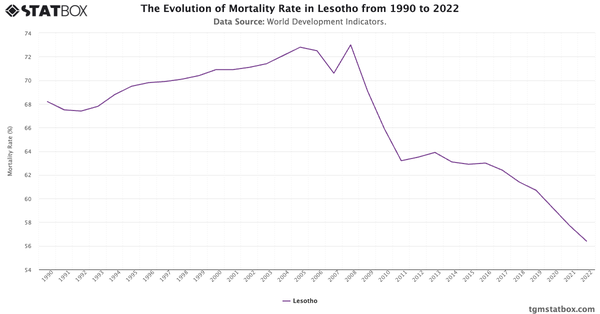
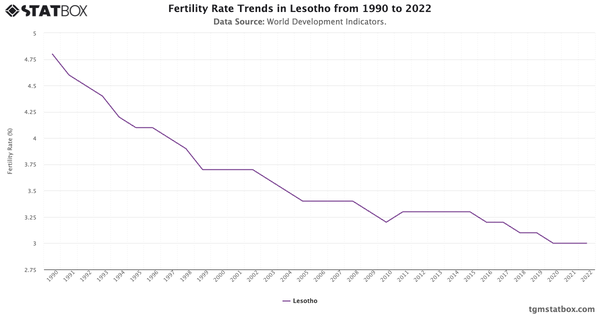
From 1990 to 1996, the population increased steadily, but from 1997 to 2003, growth slowed dramatically, with the population hovering around 2 million. This period coincides with the peak of the HIV/AIDS epidemic, which significantly affected life expectancy and birth rates. Lesotho had one of the highest HIV prevalence rates in the world, leading to a high mortality rate, which offset the natural population growth.
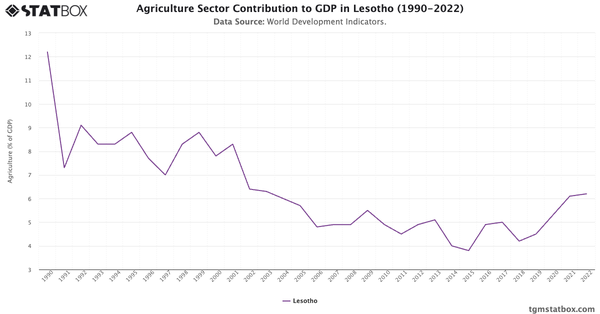
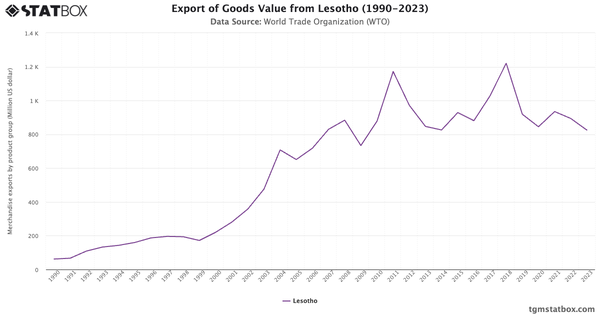
After 2004, the population slowly began to recover as health interventions improved, including antiretroviral therapy (ART) and public health campaigns. By 2010, the population had surpassed 2 million, and from 2010 to 2023, Lesotho experienced more consistent growth, although at a slower rate compared to other African nations. Economic challenges, migration to neighboring South Africa for employment, and ongoing health issues continued to moderate population expansion.
Despite these challenges, improvements in healthcare, a focus on maternal and child health, and gradual economic recovery contributed to the population reaching over 2.3 million in 2023. However, Lesotho's demographic future remains tightly linked to its ability to manage public health, improve living conditions, and address migration patterns.
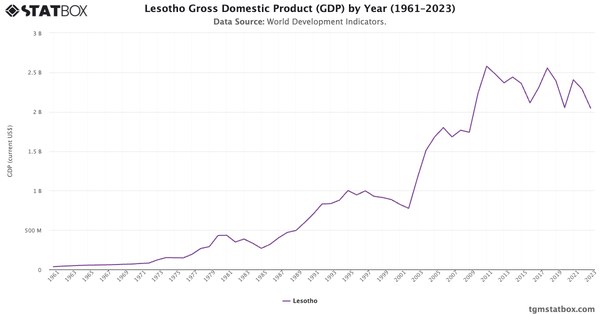
Find out more through related statistics on Lesotho’s birth life span, Lesotho’s annual GDP figures, Lesotho’s fluctuating mortality rate.