Gender Differentiation in Pet Attachment Strength in Thailand
The relationship between people and their pets carries both personal and social dimensions, influencing household decisions, consumer priorities, and community values. In Thailand, attitudes toward pets vary across demographic lines, with gender representing one meaningful axis along which emotional attachment and perceived social relevance can diverge.
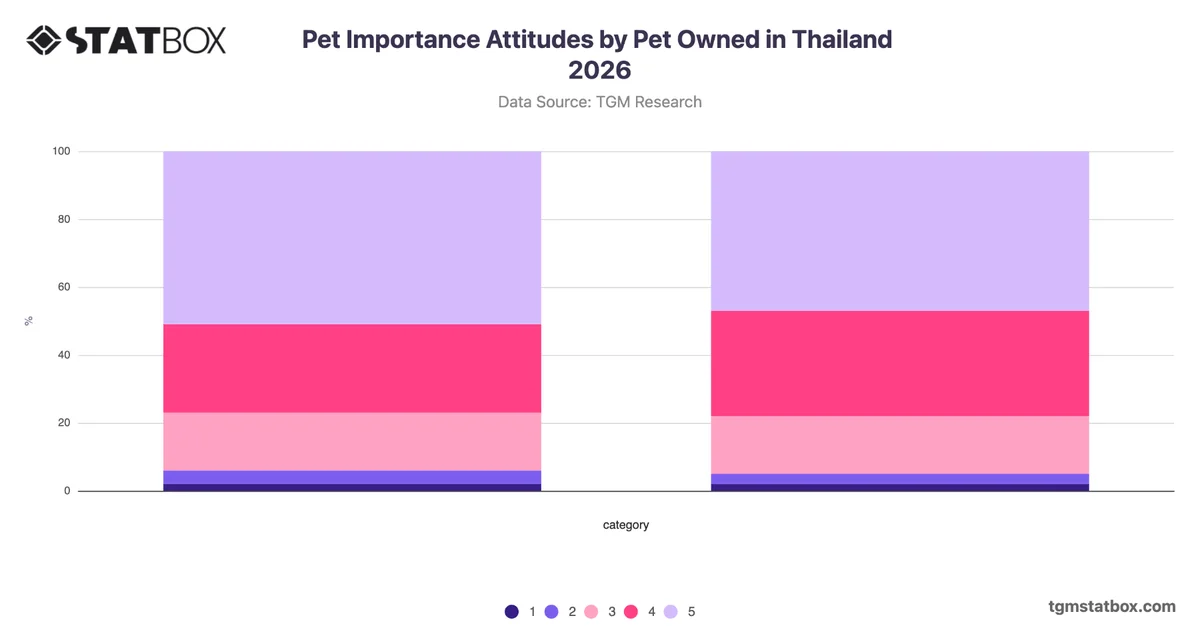
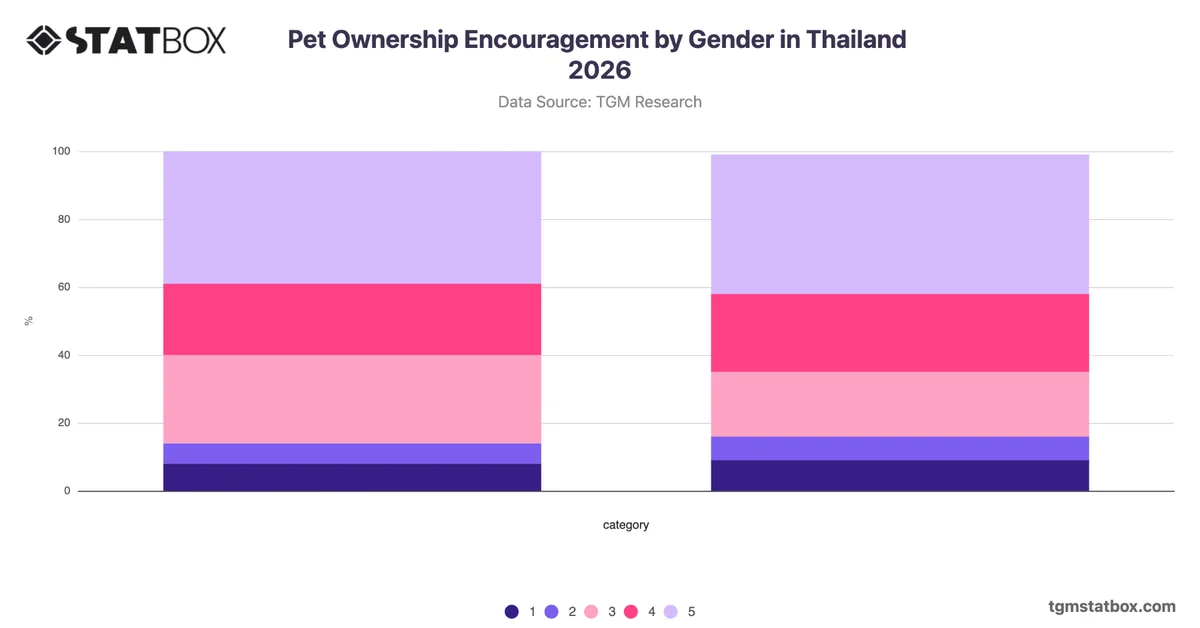
The most notable pattern in Thai attitudes toward pet importance is not the overall level of agreement but the degree of strong commitment, and the gap between male and female respondents on this dimension is meaningful. While both groups lean toward agreement, 42% of female respondents selected the strongest level of agreement compared with 34% of males, a difference of eight percentage points that points to a more deeply held attachment among women. Males, by contrast, are more concentrated in the neutral midpoint at 26% versus 17% among females, suggesting a softer or less resolved position rather than outright disagreement. For pet-related brands and service providers, this pattern indicates that communication strategies targeting strong emotional engagement may perform more effectively among female audiences, while messaging directed at male consumers may benefit from emphasising practical or social dimensions of pet ownership to move undecided attitudes toward firmer commitment.