Pet Ownership Prevalence and Its Market Implications in Thailand
Pet ownership carries significant implications for consumer spending, lifestyle priorities, and household decision-making. In Thailand, the relationship between households and their pets touches a broad range of product and service categories, from nutrition and healthcare to grooming and insurance, making ownership rates a foundational metric for category planning.
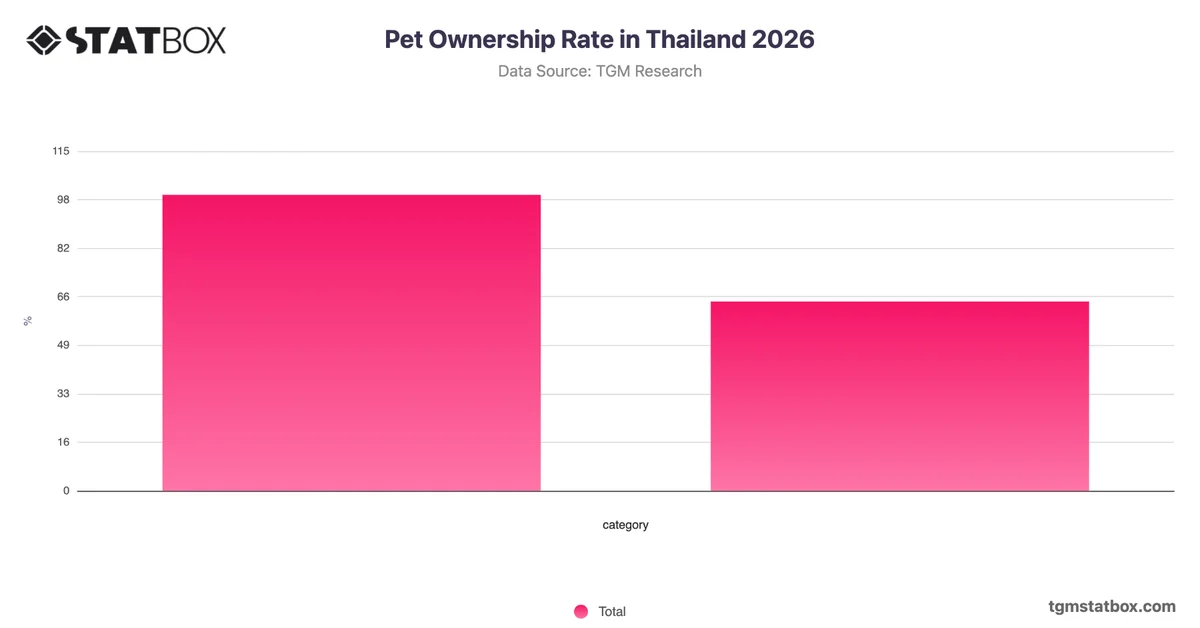
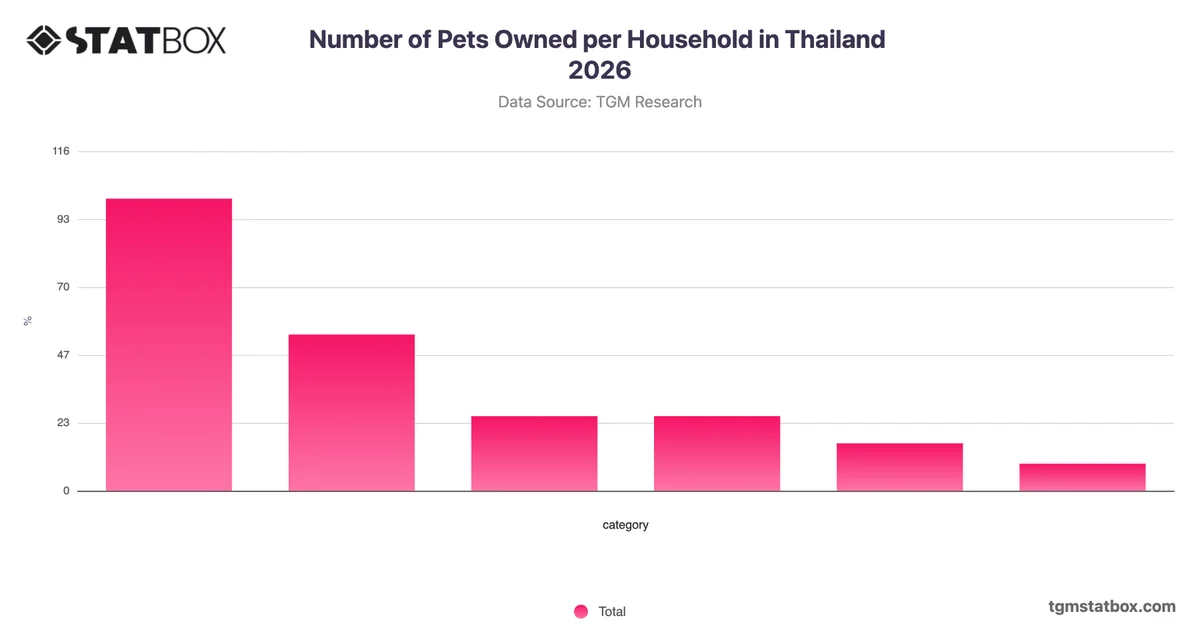
A strong majority of Thai adults, at 74%, currently own at least one pet, while only 26% do not, producing a gap of nearly 50 percentage points between owners and non-owners. This pronounced skew toward ownership indicates that pet-keeping is a well-established behaviour in Thailand rather than a niche practice confined to specific consumer segments. The scale of ownership suggests that pet-related categories operate in a broadly penetrated market, where the strategic priority is less about converting new owners and more about deepening engagement, increasing spend per household, or improving retention among existing owners. For organisations active in this space, segmentation strategies that distinguish between single-pet and multi-pet households, or between different pet types, are likely to yield more actionable insight than broad ownership tracking alone.