Pet Ownership Prevalence and Its Market Implications in Japan
Pet ownership occupies a meaningful place in household decision-making, influencing spending on food, healthcare, accessories, and services. Understanding the proportion of adults with direct ownership experience is foundational to assessing market reach, product relevance, and the depth of consumer engagement within the pet care sector in Japan.
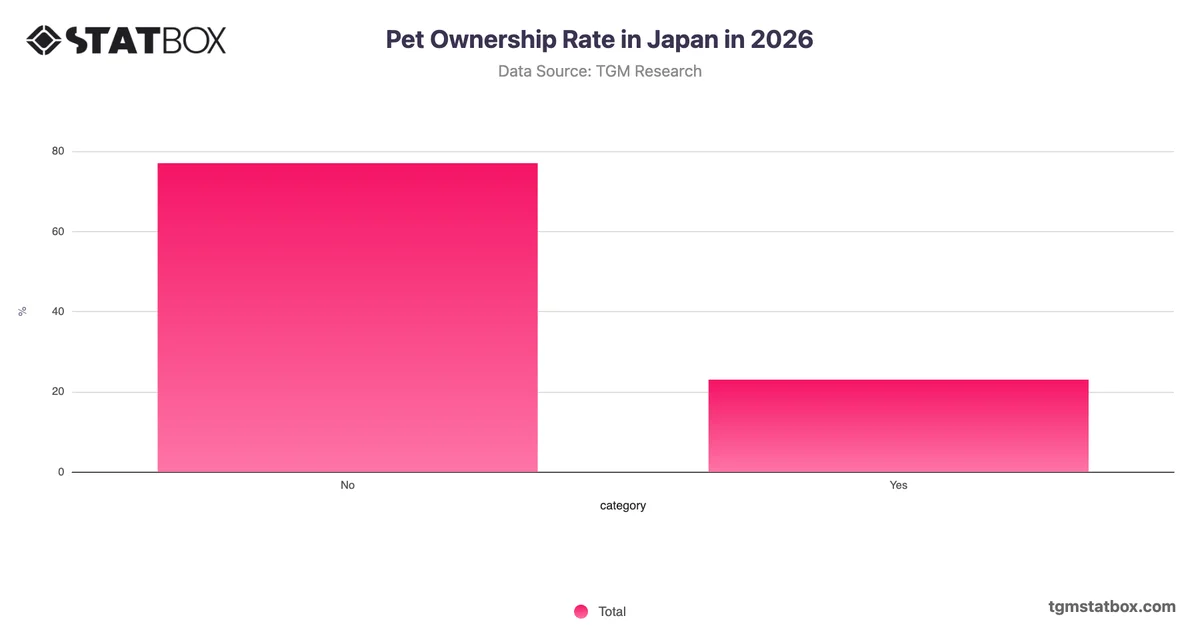
The adult population in Japan is nearly evenly divided on pet ownership, with a slim majority of 53% having owned a pet compared to 47% who have not. The proximity of these figures points to a market without a dominant consumer majority, suggesting that pet ownership has not reached universal adoption among Japanese adults. Rather than indicating a mature, saturated market, this close split may signal a population in which non-owners represent a substantial and commercially relevant segment. For organisations operating in the pet care space, this balance warrants careful segmentation: strategies targeting existing owners require a different value proposition than those aimed at potential first-time owners. Investigating the barriers, motivations, and lifestyle circumstances that separate these two groups would provide more actionable direction than treating the adult population as a broadly pet-oriented market.