Gender Differentiation in Japanese Pet Ownership Patterns
Pet ownership intersects with household decision-making, lifestyle preferences, and discretionary spending in ways that vary meaningfully across demographic groups. In Japan, understanding how gender relates to pet ownership behaviour provides relevant context for companies operating across pet care, retail, and related consumer services.
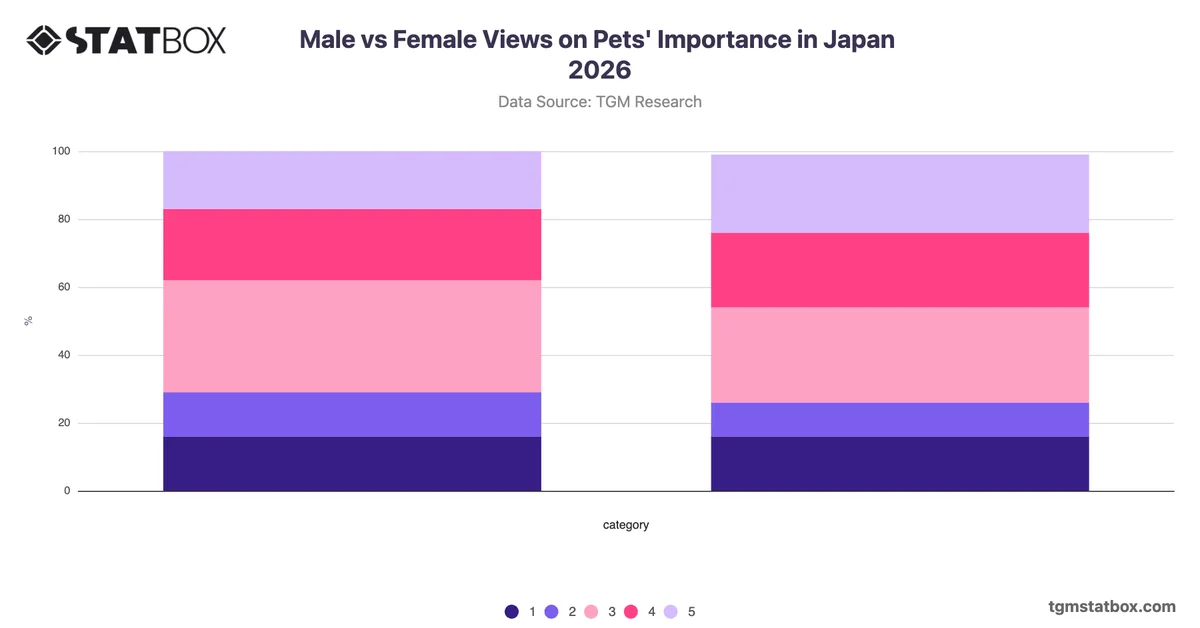
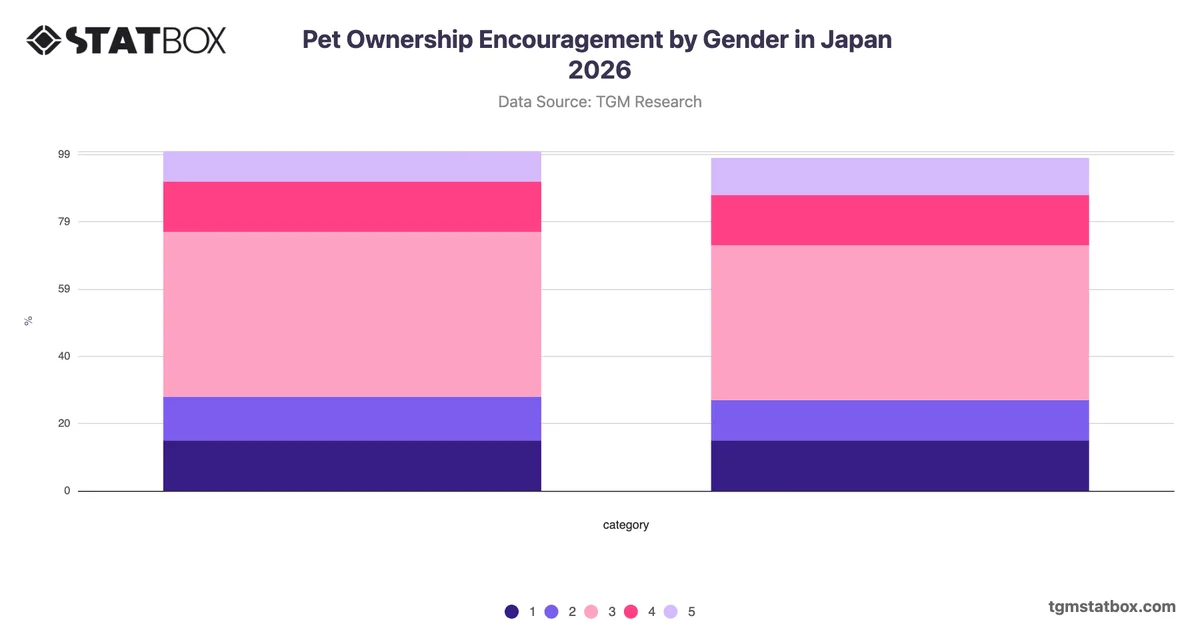
The most notable finding is not the direction of the gender gap but its near absence. Male pet ownership in Japan stands at 24%, compared with 22% among females, a difference of only two percentage points. This degree of consistency across gender groups indicates that pet ownership in Japan is not a meaningfully gendered behaviour. The dominant pattern is non-ownership, with approximately three in four respondents in both groups reporting no current pets. This concentration among non-owners suggests that barriers to pet ownership, whether related to housing constraints, lifestyle factors, or personal preference, apply broadly regardless of gender. For organisations targeting pet owners or prospective owners in Japan, gender segmentation is unlikely to be a productive primary variable. Segmentation strategies would be better directed toward household type, living situation, or life stage, where differentiation in ownership rates may be more pronounced.