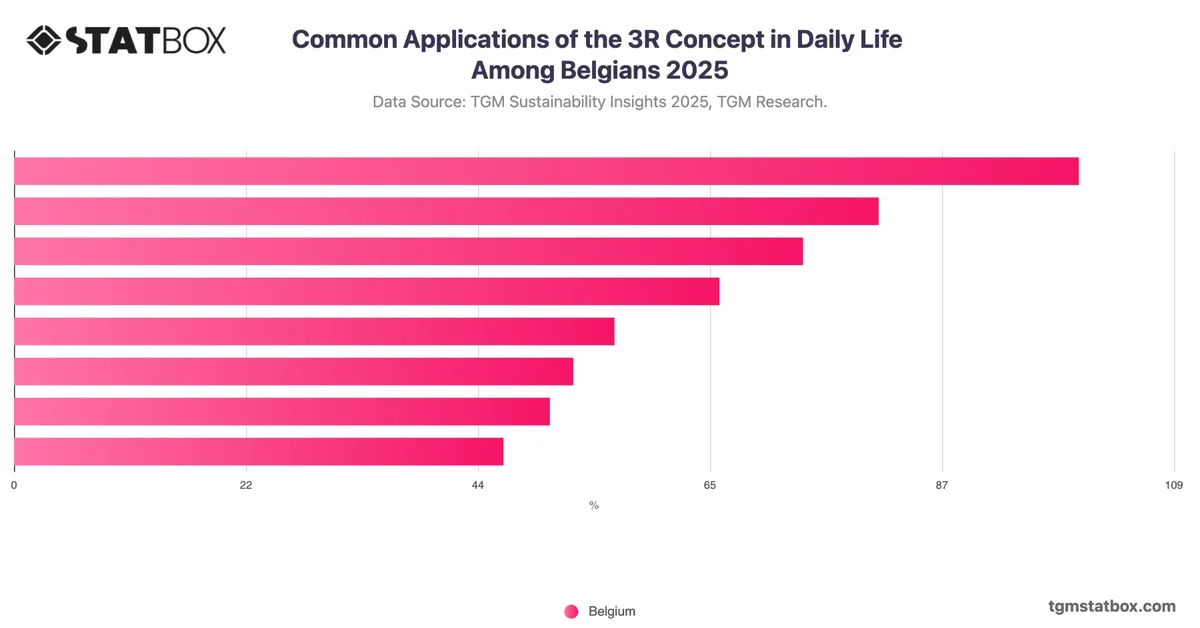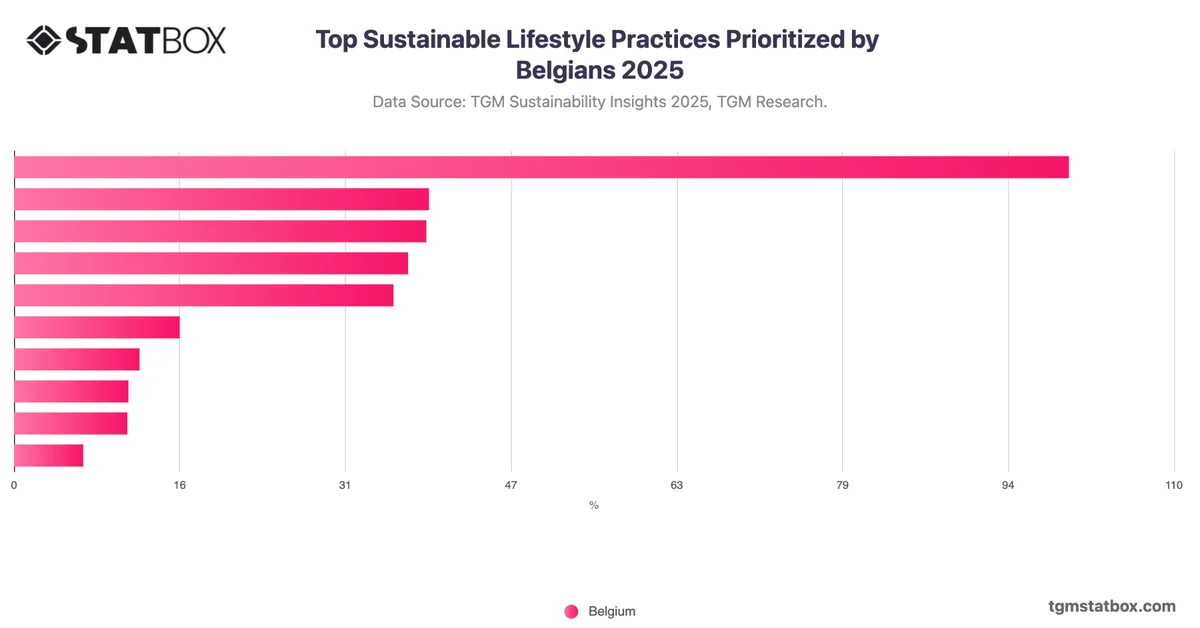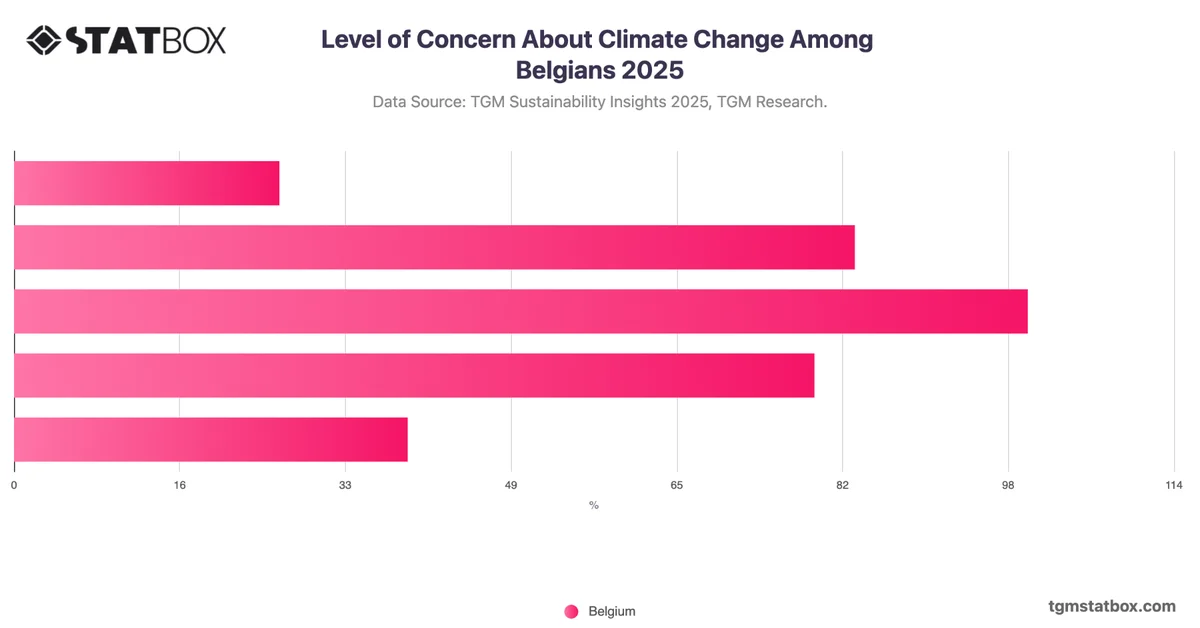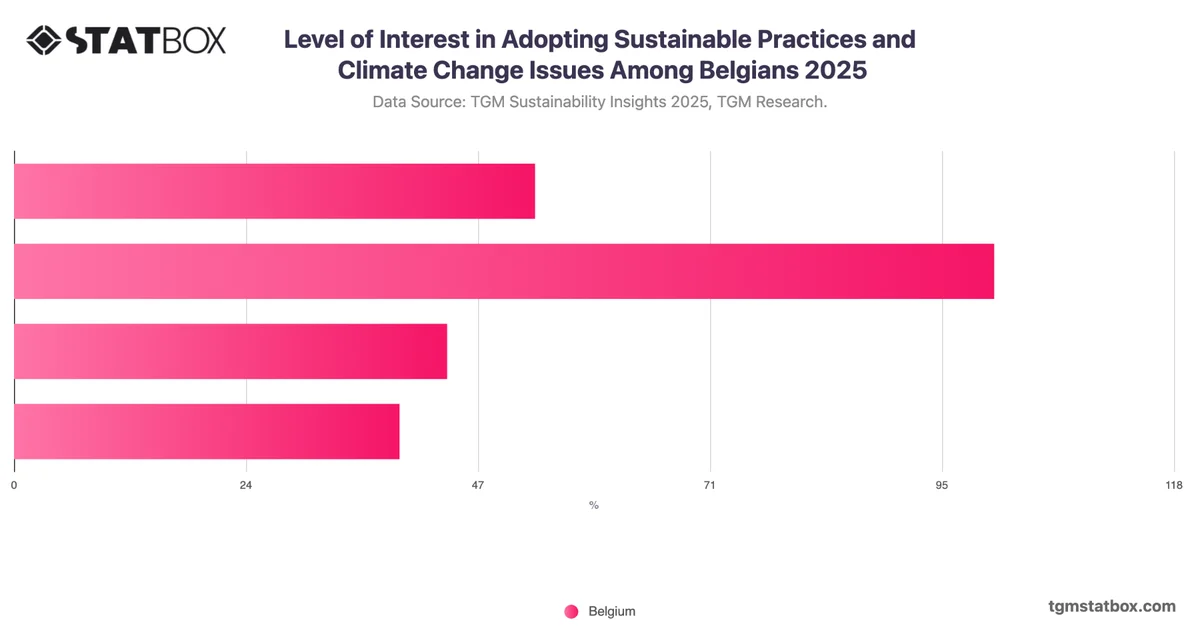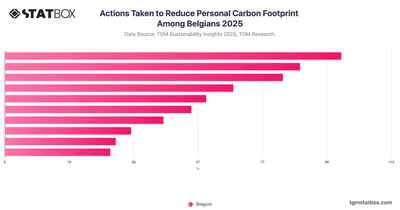
Recycling and composting top the list: of Belgians adopt these habits to shrink their carbon footprint. It’s familiar, accessible, and reinforced by strong national waste policies. Water conservation follows at , likely influenced by Belgium’s growing drought alerts and tighter usage campaigns. Meanwhile, invest in energy-efficient appliances, a clear nod to rising energy costs and EU-driven incentives for greener homes. Lower on the list but still significant, shift to sustainable transport. This is a promising sign, given Belgium's push for low-emission zones in cities like Ghent and Brussels. Solar panel adoption stands at , impressive given the barriers for renters and urban dwellers. Meat reduction and local food buying trail behind, hinting at slower cultural shifts in diet. While deeper behavioral change is still emerging, these figures reveal that Belgians are already taking measurable steps toward sustainability, steps rooted in practicality, policy, and a growing awareness of environmental urgency.
For a broader context, visit other statistics on Belgians’ interest in sustainability and climate concerns, Common applications of the 3R concept in daily life in Belgium, most mainstream sustainable lifestyles in Belgium.