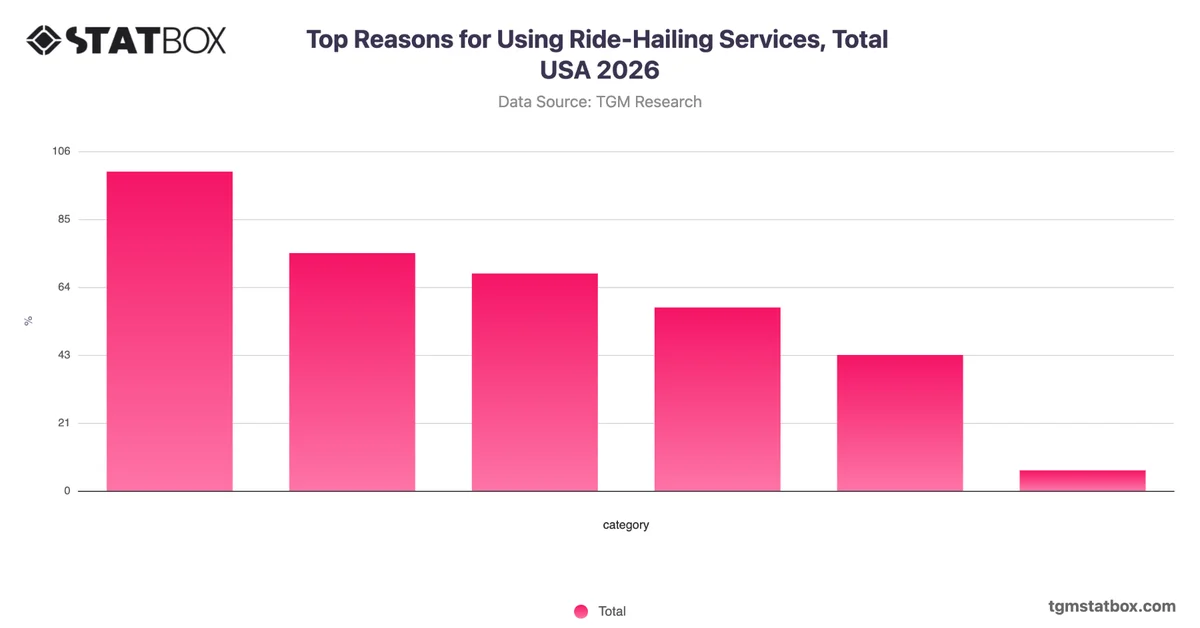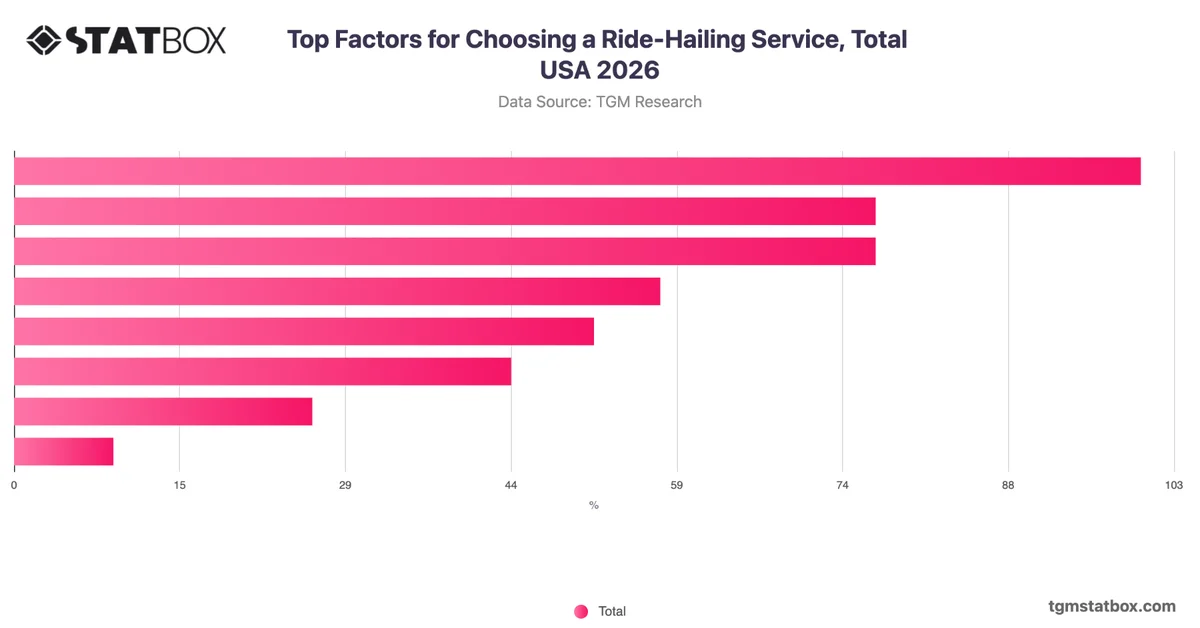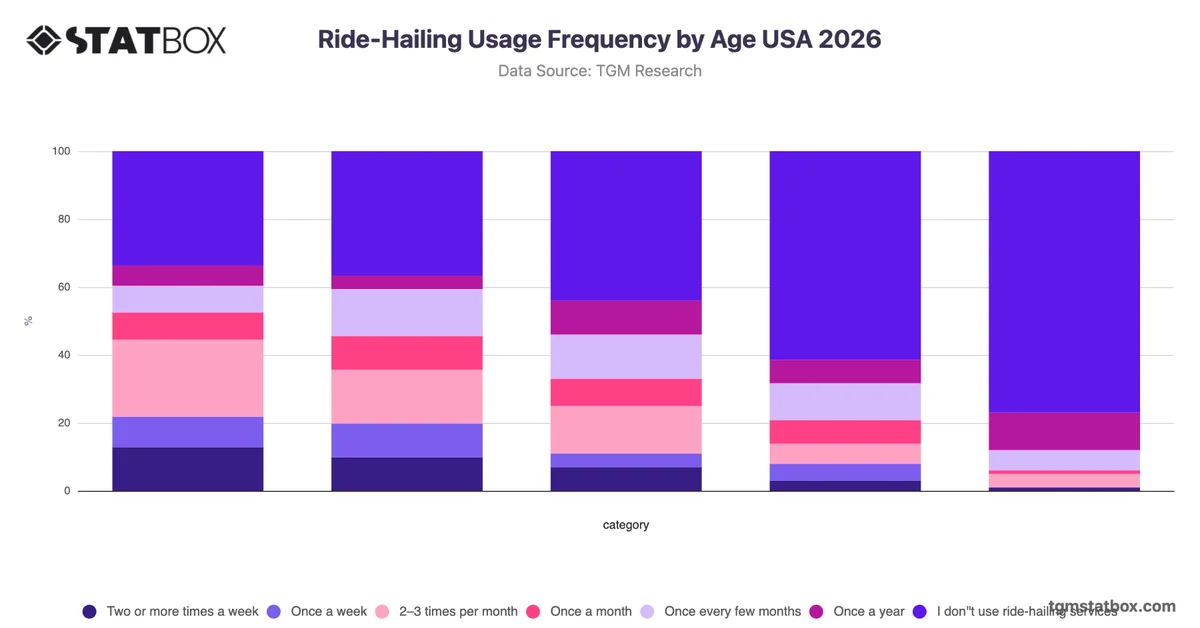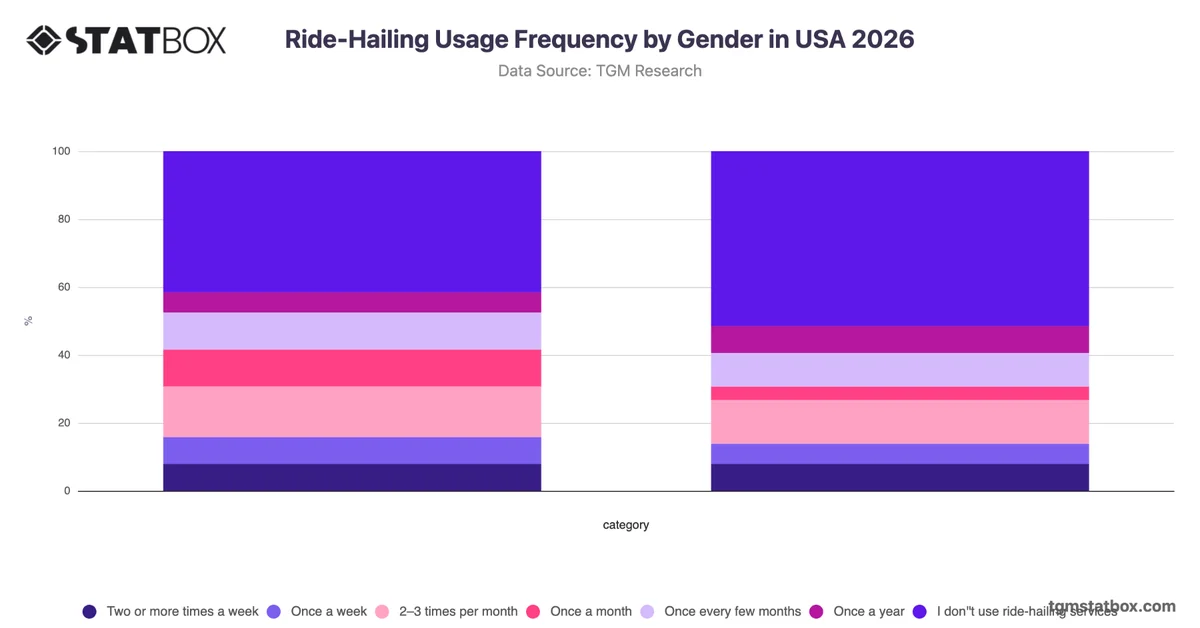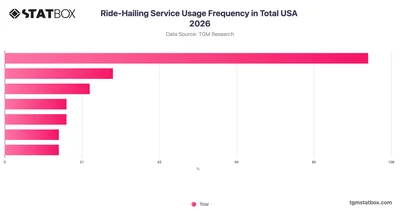
Ride-hailing services such as Uber and Lyft have become a practical alternative to car ownership and public transit, offering on-demand convenience for commuting, airport travel, and nightlife. These platforms benefit users by reducing the need for parking, lowering transportation costs in dense urban areas, and providing flexible mobility without vehicle maintenance. Understanding how frequently Americans turn to these services helps industry players refine pricing strategies, driver supply planning, and loyalty programs to better match real demand patterns across different usage segments.