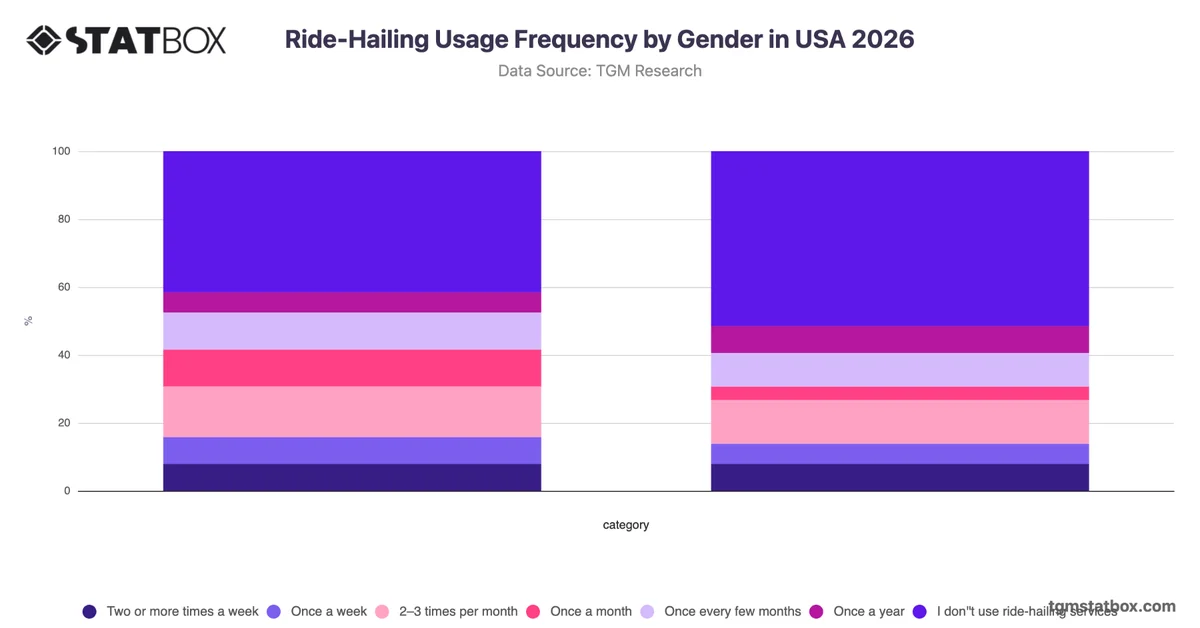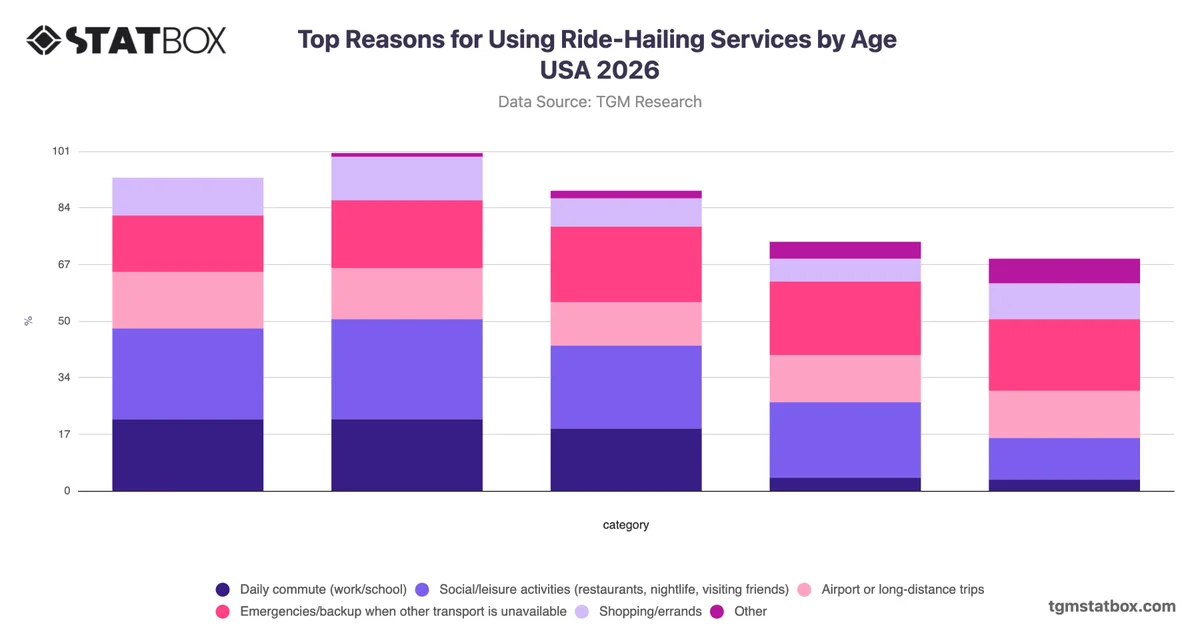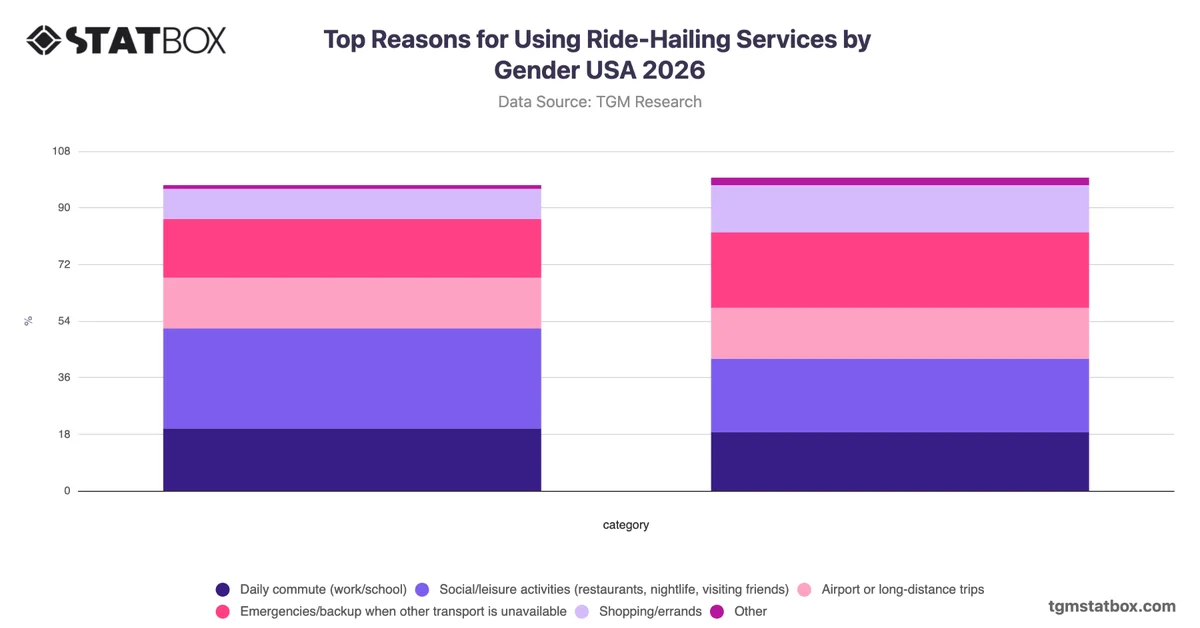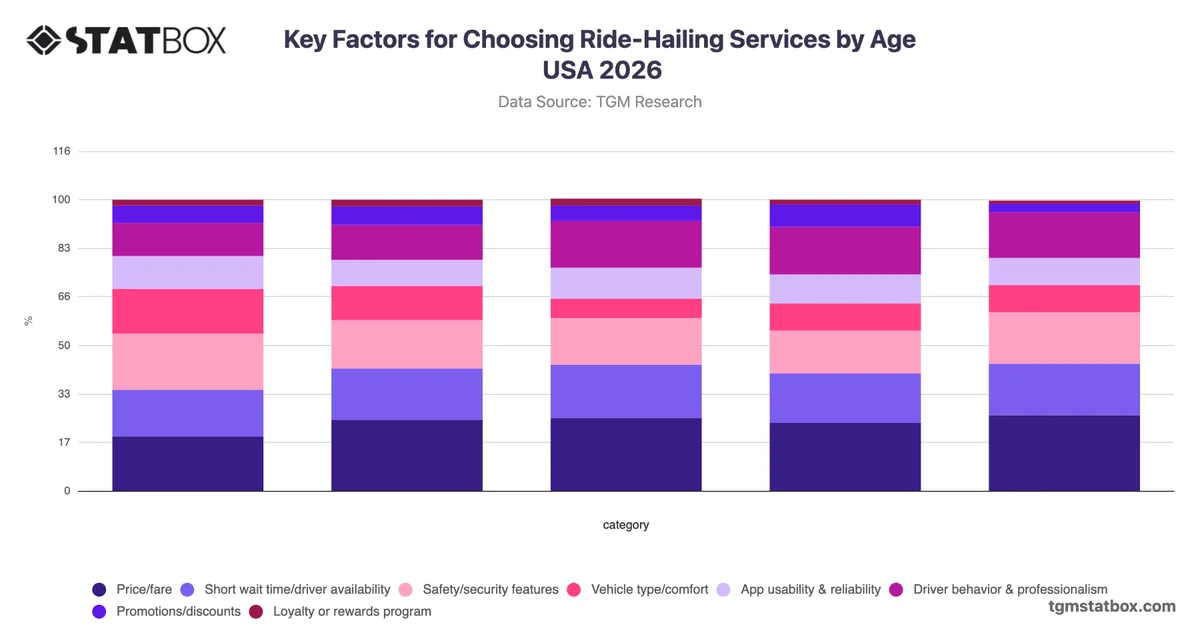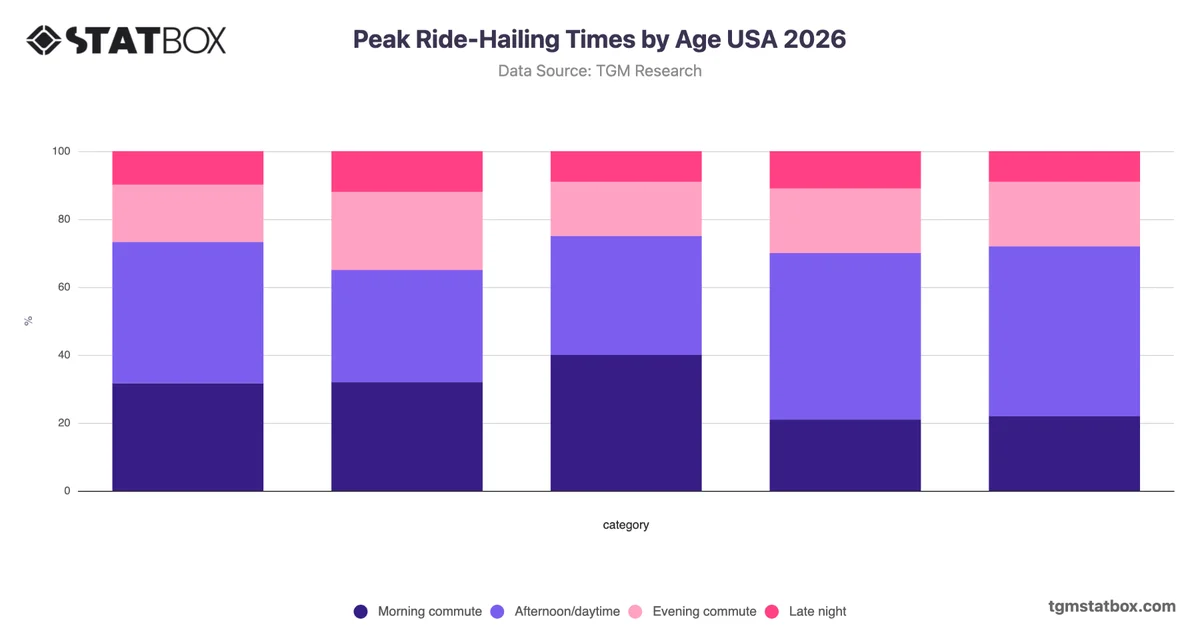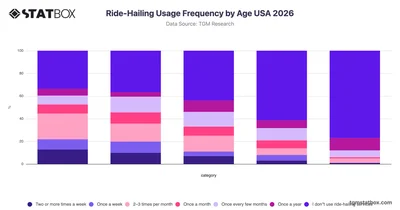
Ride-hailing services such as Uber and Lyft offer urban travelers a convenient, app-based alternative to car ownership, public transit, and taxis, with benefits ranging from on-demand availability to cashless payments and door-to-door convenience. Understanding how usage patterns differ across age groups helps mobility brands, city planners, and advertisers allocate resources more effectively and tailor outreach to the right audiences. Younger adults, who are more likely to live in dense urban areas and delay car ownership, represent a core opportunity for ride-hailing platforms looking to build long-term customer habits.