Chart

Population Density in Rwanda from 1990 to 2021

Population Density in Rwanda from 1990 to 2021

Share the statistic on social media channels or embed the statistic in your website using "Embed Code", where available.

Share chart

Embed chart
Select Citation

Cite this statistic and select one of the following formats: APA, Chicago, Harvard, MLA & Bluebook


  • APA
  • Chicago
  • Harvard
  • MLA
  • Bluebook
  • IEEE
TGM StatBox. (2024). Population Density in Rwanda from 1990 to 2021. TGM StatBox.
Insights

Key Takeaways

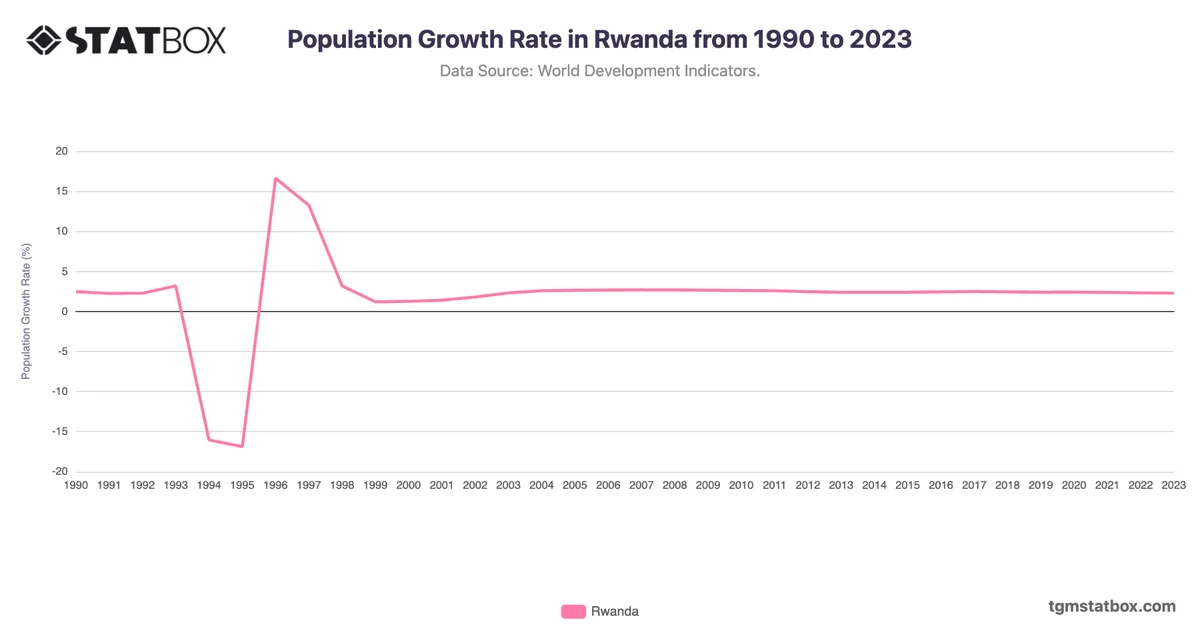
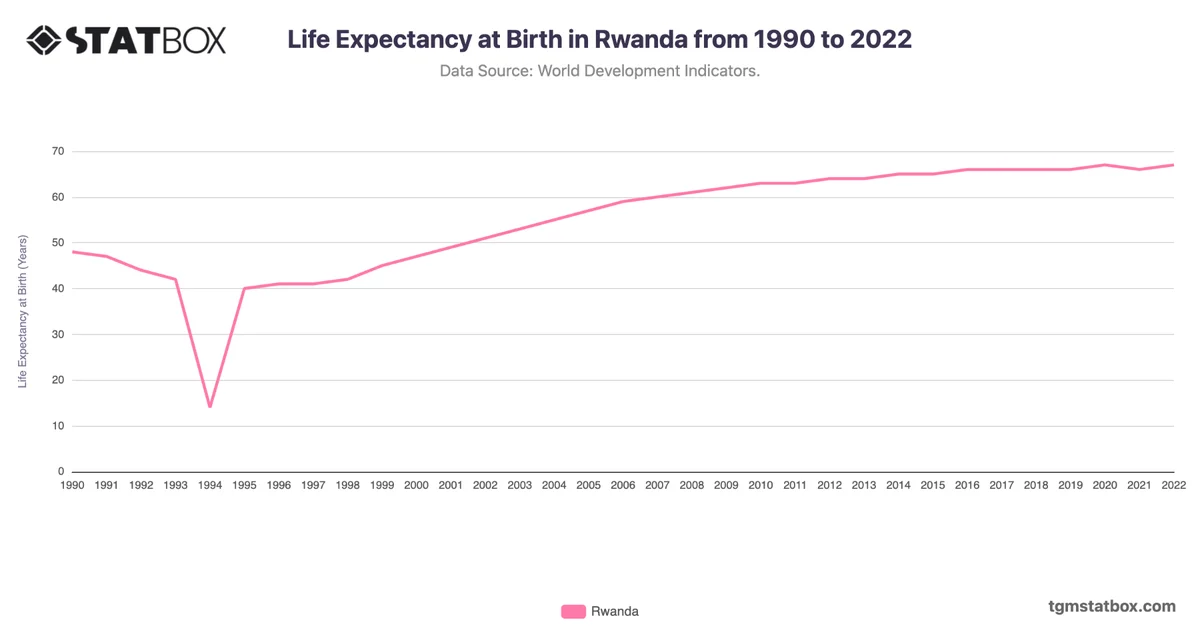
Rwanda's population density has seen a significant rise over the past three decades, driven by consistent population growth in a geographically small nation. In 1990, the density was 297 people per square kilometer, increasing steadily to 320 by 1993. However, the 1994 genocide caused a sharp decline to 273, and further to 231 in 1995, reflecting the devastating impact of mass displacement and loss of life during this period.

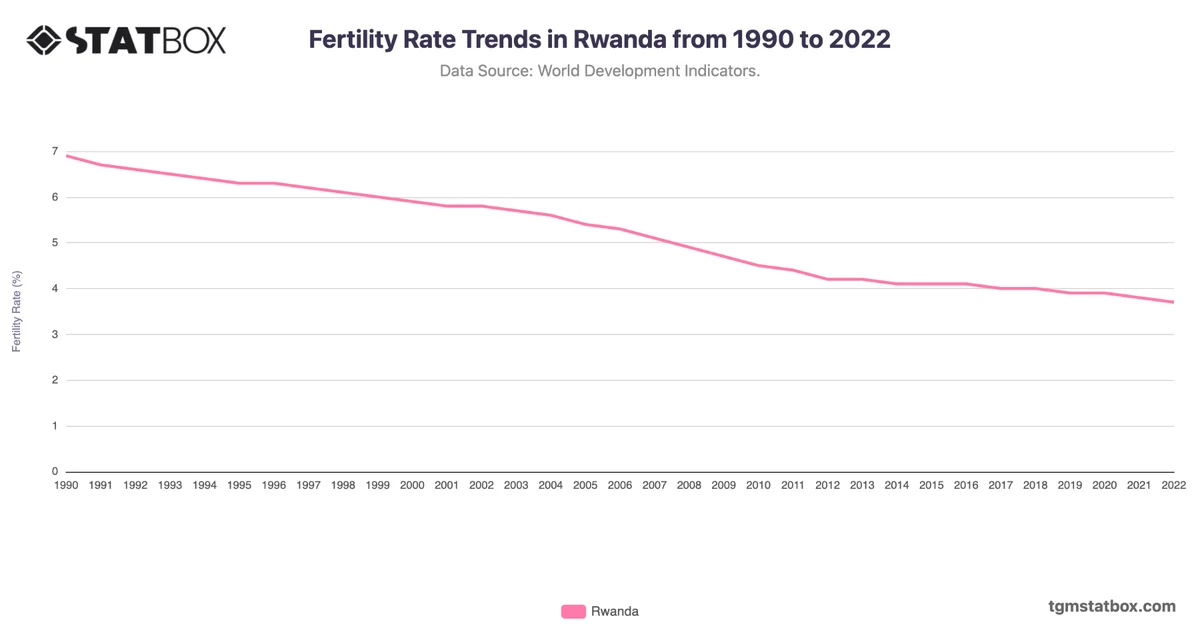
Post-1995, Rwanda's recovery efforts led to a rapid population return, with density rebounding to 272 in 1996 and steadily increasing thereafter. By 2008, density surpassed 397, and by 2021, it reached 546 people per square kilometer. This growth highlights Rwanda's demographic pressures, driven by high fertility rates and limited land availability. While economic development and urbanization have supported this growth, the rising density underscores challenges in land use, resource allocation, and sustainable planning for one of Africa's most densely populated nations.

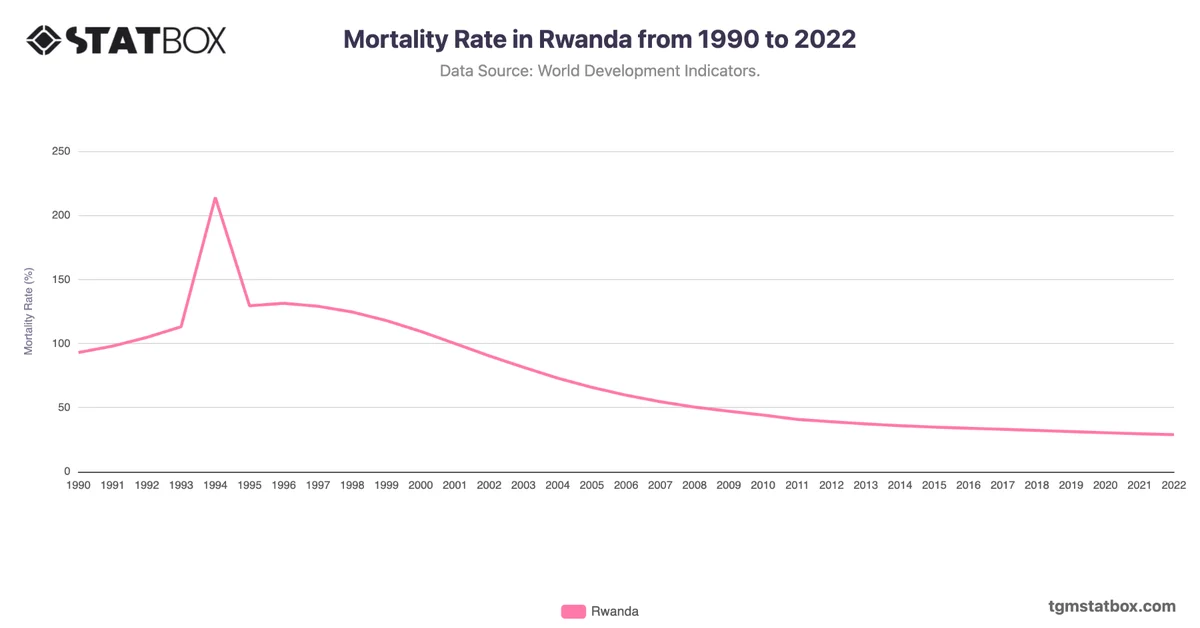
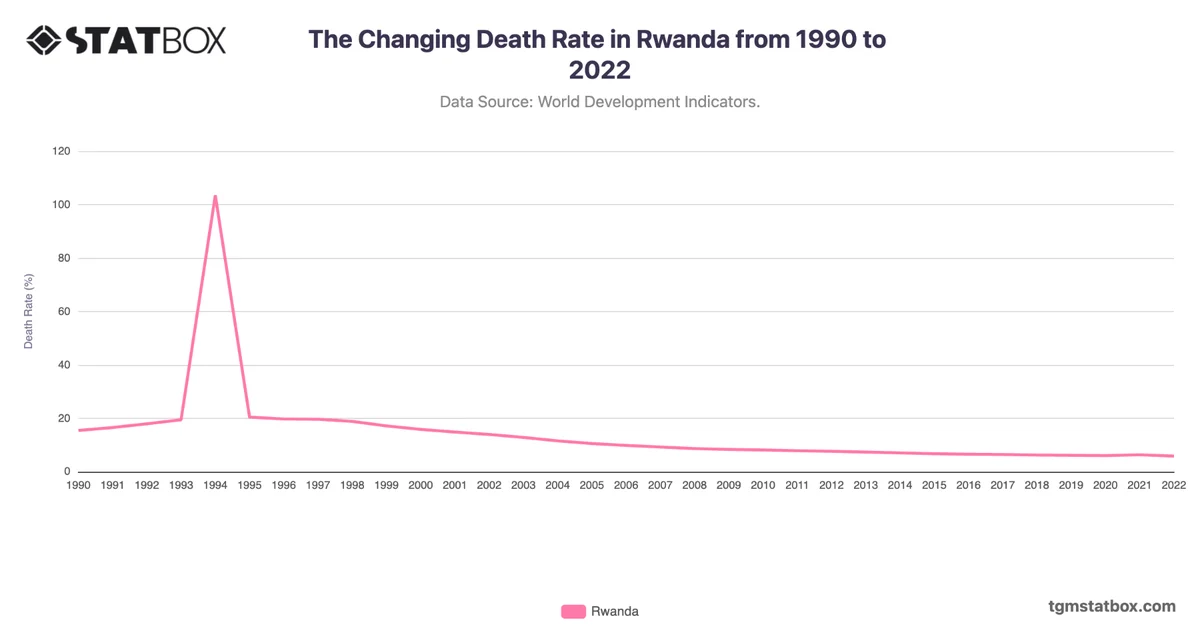
Find out more through related statistics on Rwanda’s annual GDP growth rate, Rwanda’s mortality rate, Rwanda’s net ODA overview.

AI-powered chart insight: This summary is automatically generated to help you understand the chart at a glance. It is intended as an overview; view the full chart and underlying data for complete context.

Charts library

Further Recommended Rwanda Statistics

Statbox vector
The briefing
New data, in your inbox

Consumer insights, data stories and product updates as we publish them. No other mail, and one click to leave.

Roughly two emails a month.

Research services
Have a question our newsroom hasn't answered? Ask it directly.

Our team can run the study behind the story — in 60+ countries, on your question, with the data belonging to you.