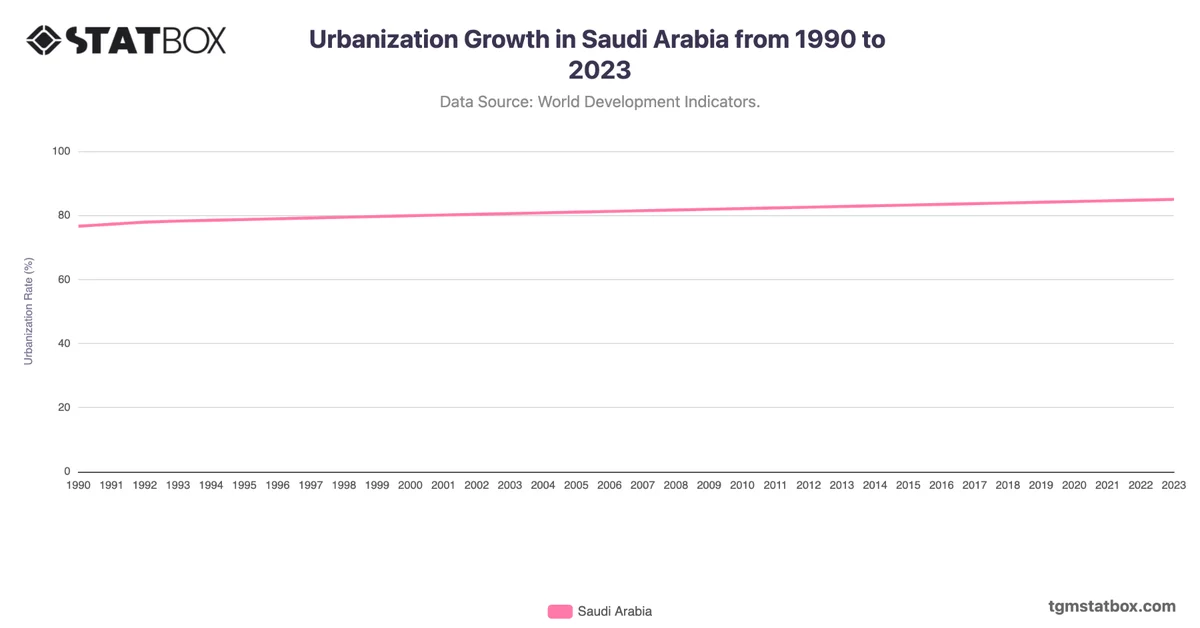
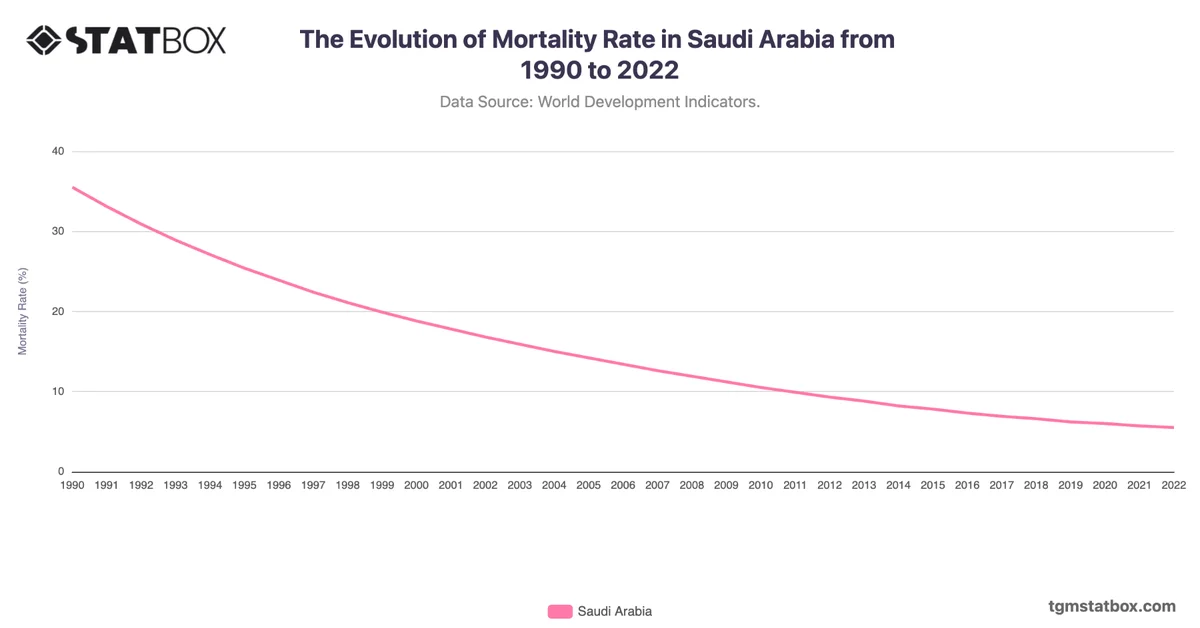
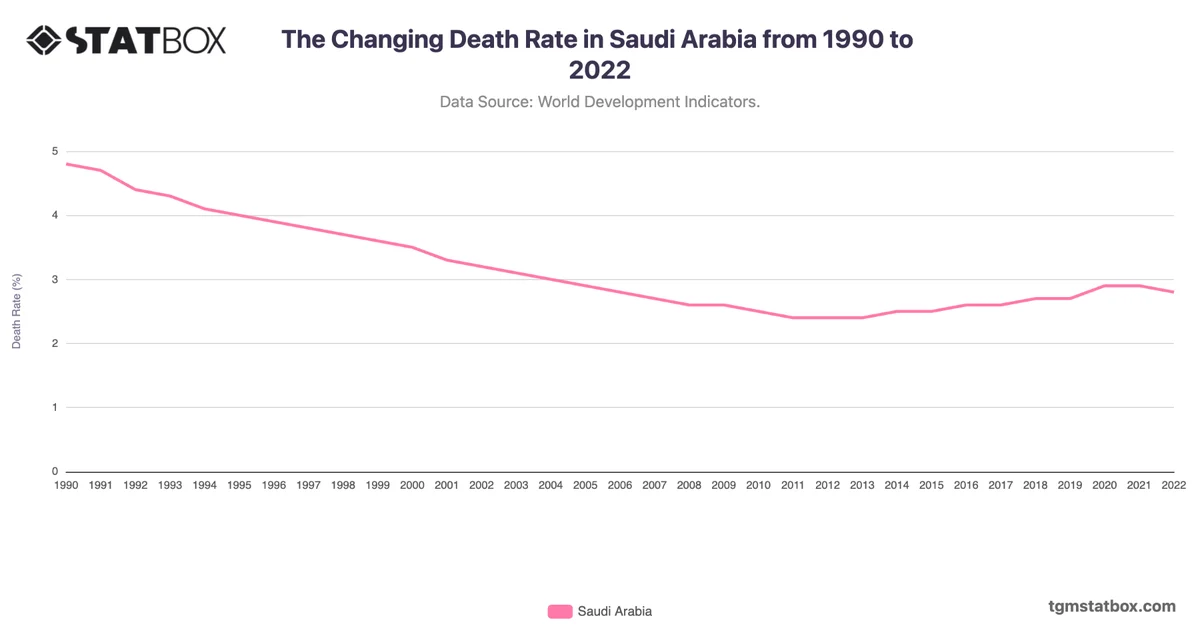
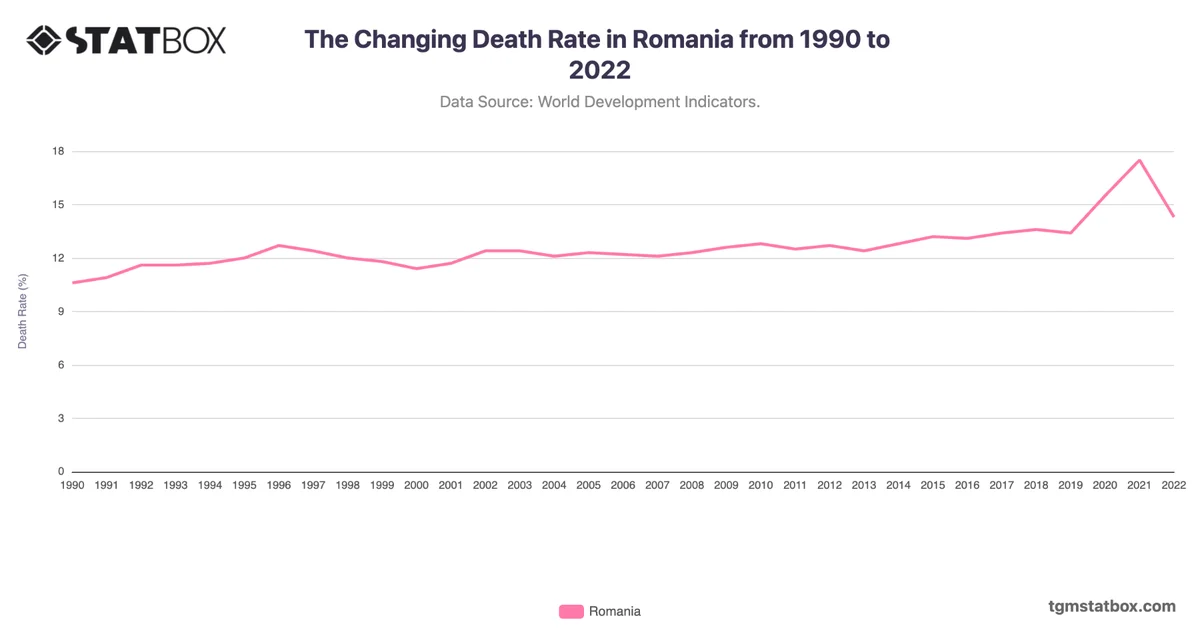
Saudi Arabia's population growth rate experienced a steady decline from a high of 4.2% in 1990 to 2.0% by 2015, reflecting changes in labor migration policies and slower natural population increases. Notable spikes, such as in 2006 at 4.0%, correspond to significant economic expansions and infrastructural projects that attracted expatriates.
The impact of the COVID-19 pandemic saw growth drop to 0.5% in 2020 and -0.1% in 2021. However, recent efforts to diversify the economy and attract skilled migrants boosted growth to 1.5% in 2023. This recovery highlights the role of strategic policies in revitalizing demographic trends.
The impact of the COVID-19 pandemic saw growth drop to 0.5% in 2020 and -0.1% in 2021. However, recent efforts to diversify the economy and attract skilled migrants boosted growth to 1.5% in 2023. This recovery highlights the role of strategic policies in revitalizing demographic trends.
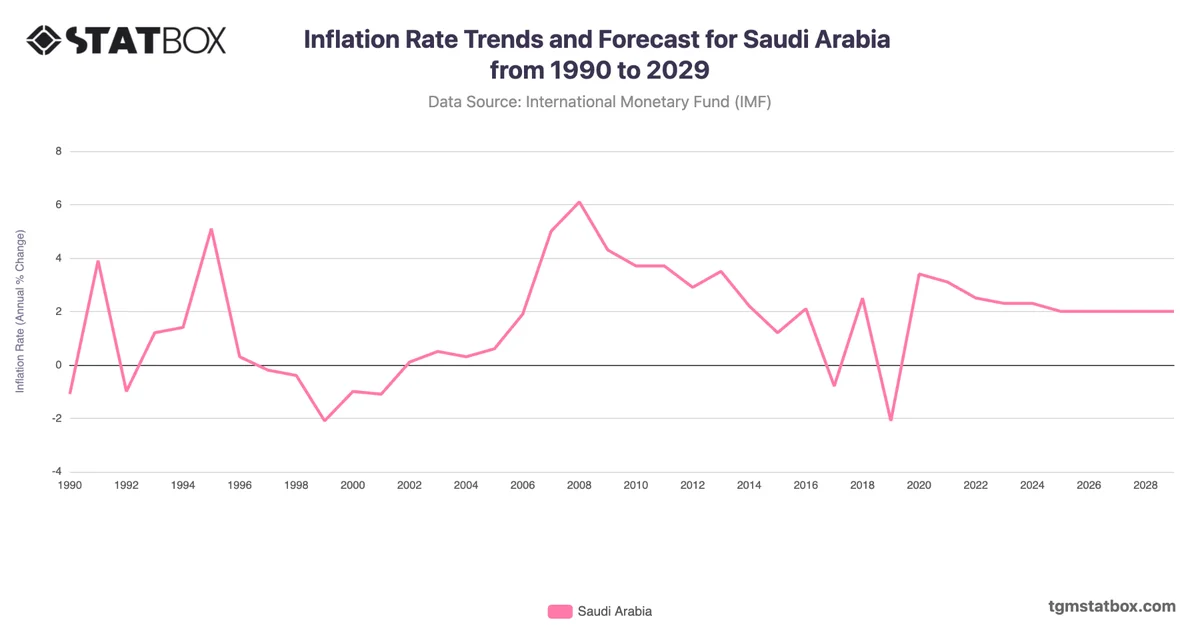
For a broader context, visit other statistics on Saudi Arabia’s inflation rate outlook, Saudi Arabia’s working-age population trend, Saudi Arabia’s fertility rate trends.