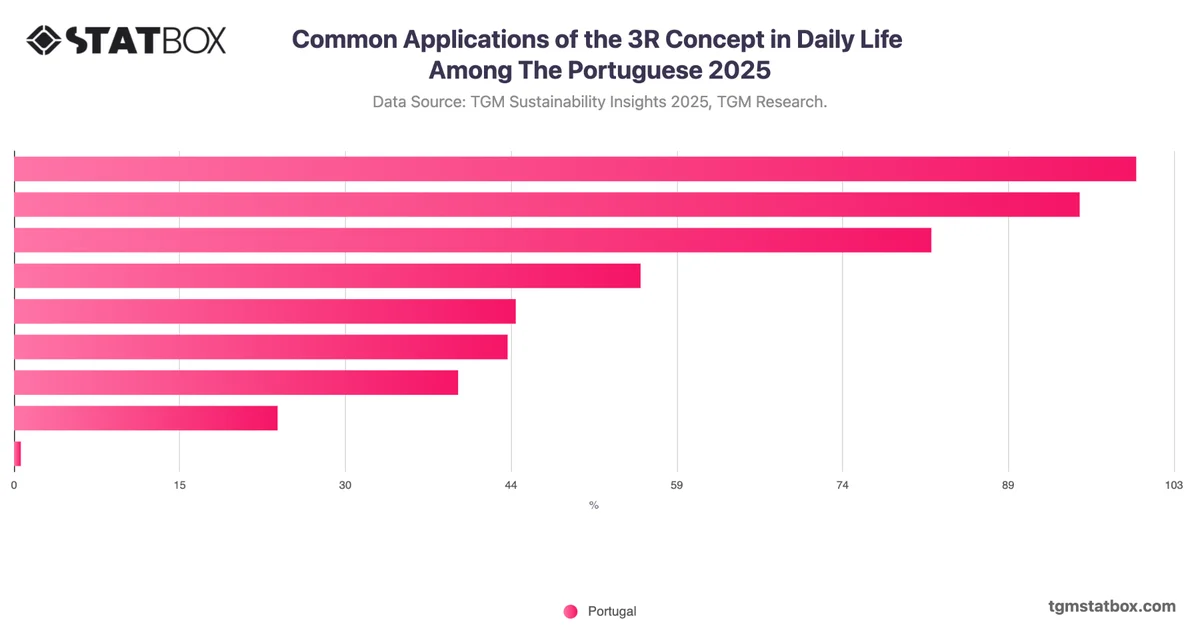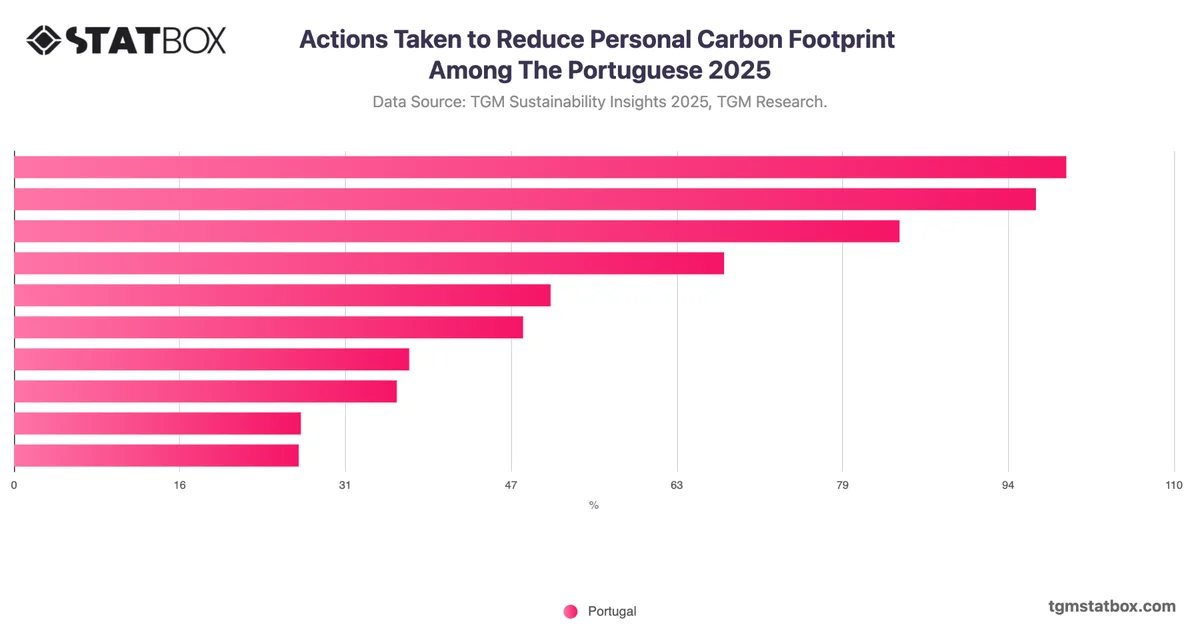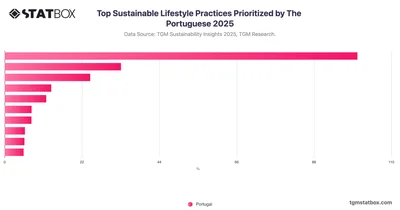
In Portugal, the most common way people bring sustainability into daily life is by saving water, nearly half of respondents make it their top priority. This reflects both environmental awareness and a practical response to the country’s recurring drought concerns.
Other lifestyle changes are less widespread but still notable. Around have adopted a plant-based diet, and about focus on recycling and composting to cut down on waste.
Energy-saving habits at home, choosing eco-friendly products, and greener travel options like biking or public transport each attract smaller but steady support. Practices such as supporting fair-trade brands, avoiding single-use plastics, or buying local are on the radar for some, but they remain niche compared to water conservation.
In Portugal, sustainability often starts with everyday, tangible actions, especially those that align with local environmental realities, while bigger lifestyle shifts or investments are adopted more gradually.
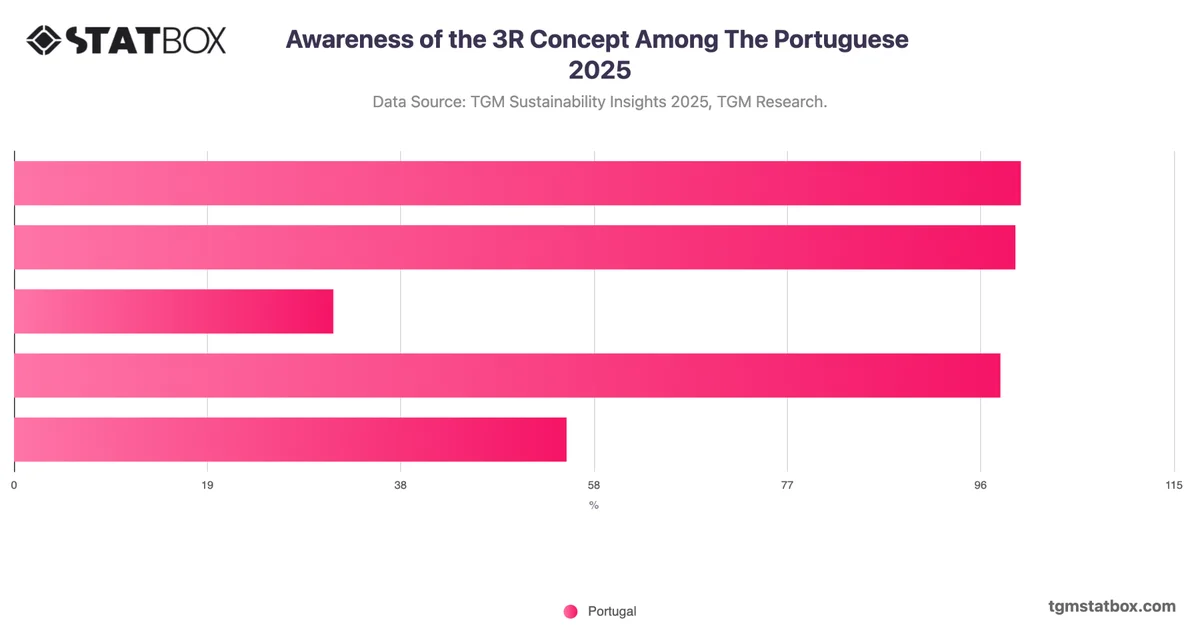
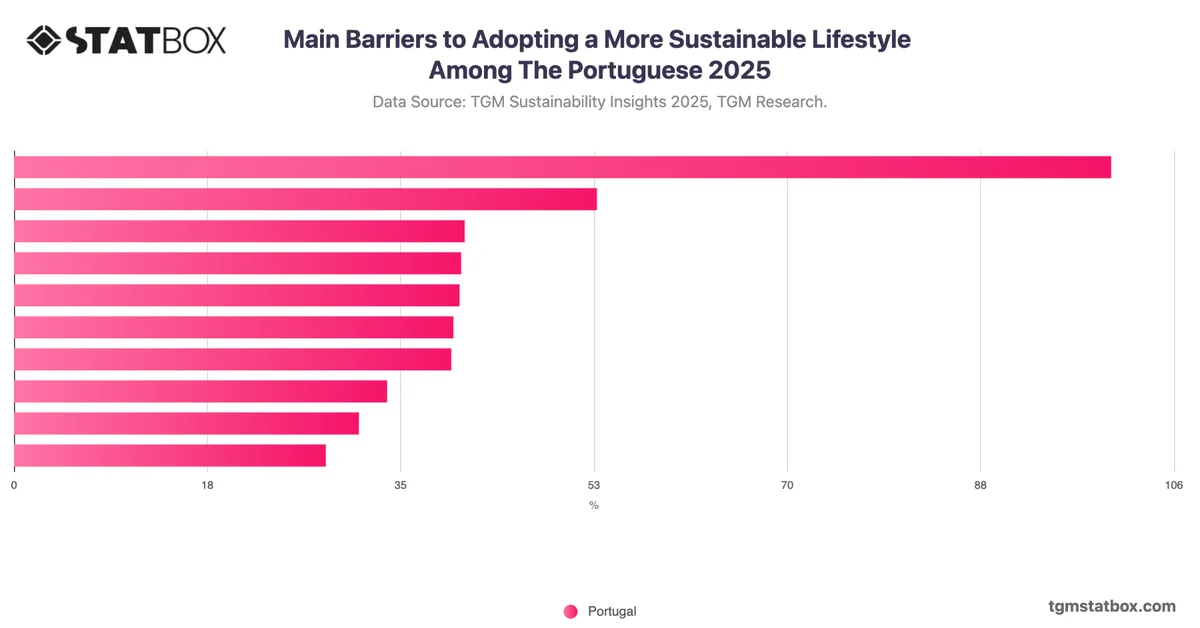
Uncover more insights with related statistics on Steps to reduce carbon footprint in Portugal, Awareness of the 3R concept among Portuguese, Challenges to adopting a sustainable lifestyle in Portugal.