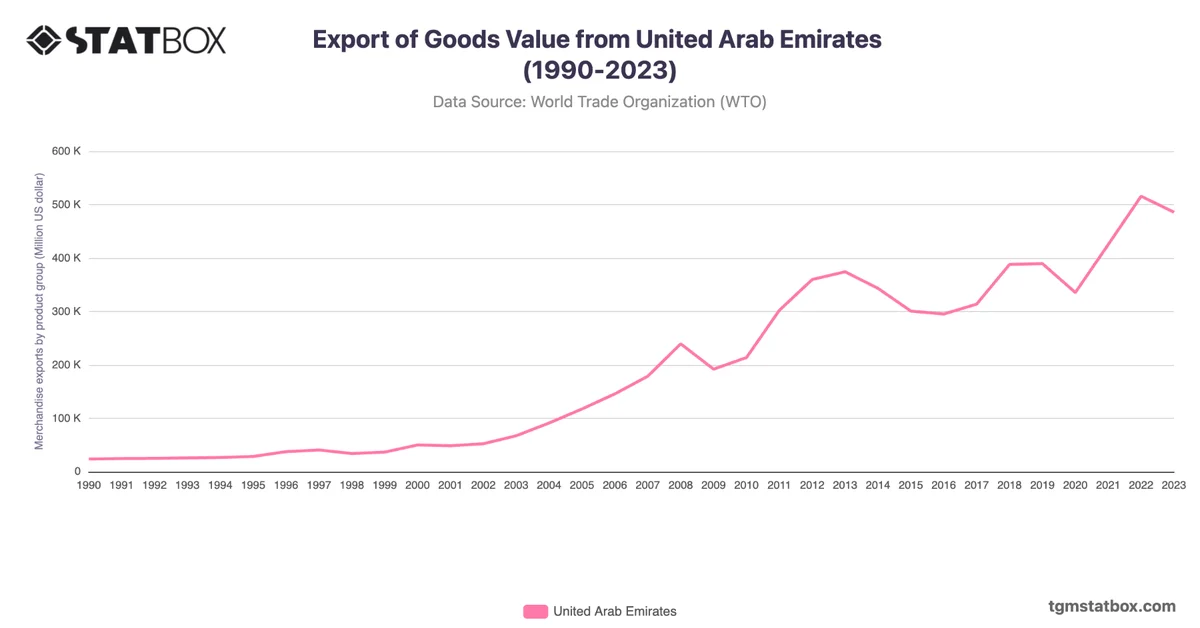
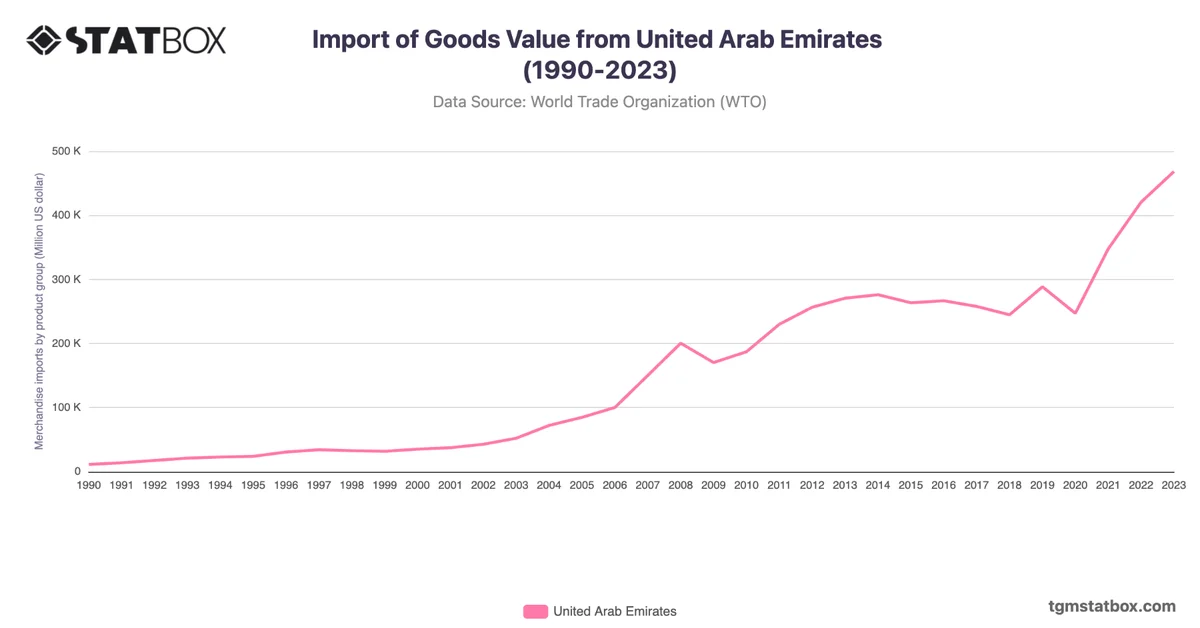
The UAE consistently posted trade surpluses from 2017 to 2023, supported by its oil exports and diversified economy. The surplus peaked at 143,276.4 million USD in 2018, reflecting high oil prices and robust non-oil export growth. However, it declined to 39,090 million USD in 2023, driven by moderating oil prices and higher imports tied to infrastructure investments and domestic consumption.
The UAE’s trade performance reflects its ability to leverage hydrocarbons while expanding non-oil exports, including gold, electronics, and machinery. The decline in the 2023 surplus highlights its sensitivity to global energy market trends despite diversification efforts.
The UAE’s trade performance reflects its ability to leverage hydrocarbons while expanding non-oil exports, including gold, electronics, and machinery. The decline in the 2023 surplus highlights its sensitivity to global energy market trends despite diversification efforts.
Gain a broader perspective by reviewing United Arab Emirates export value, UAE’s urbanization rate, UAE’s industry sector share in GDP.