The UAE's fertility rate dropped significantly from 4.5 in 1990 to 1.4 in 2022, reflecting the nation’s rapid development and modernization. The sharpest decline occurred between 1990 and 1995, as the rate fell to 3.3. This period coincided with an economic boom and urbanization, which shifted societal priorities and encouraged smaller families.
From the mid-2000s, the rate decreased more gradually, reaching 1.5 by 2015. Government policies aimed at diversifying the economy and improving healthcare, coupled with an influx of expatriates with differing fertility norms, influenced this trend. By 2020, fertility rates remained low at 1.5, stabilizing at 1.4 in 2022, reflecting a balance between local cultural influences and global trends in family planning.
From the mid-2000s, the rate decreased more gradually, reaching 1.5 by 2015. Government policies aimed at diversifying the economy and improving healthcare, coupled with an influx of expatriates with differing fertility norms, influenced this trend. By 2020, fertility rates remained low at 1.5, stabilizing at 1.4 in 2022, reflecting a balance between local cultural influences and global trends in family planning.
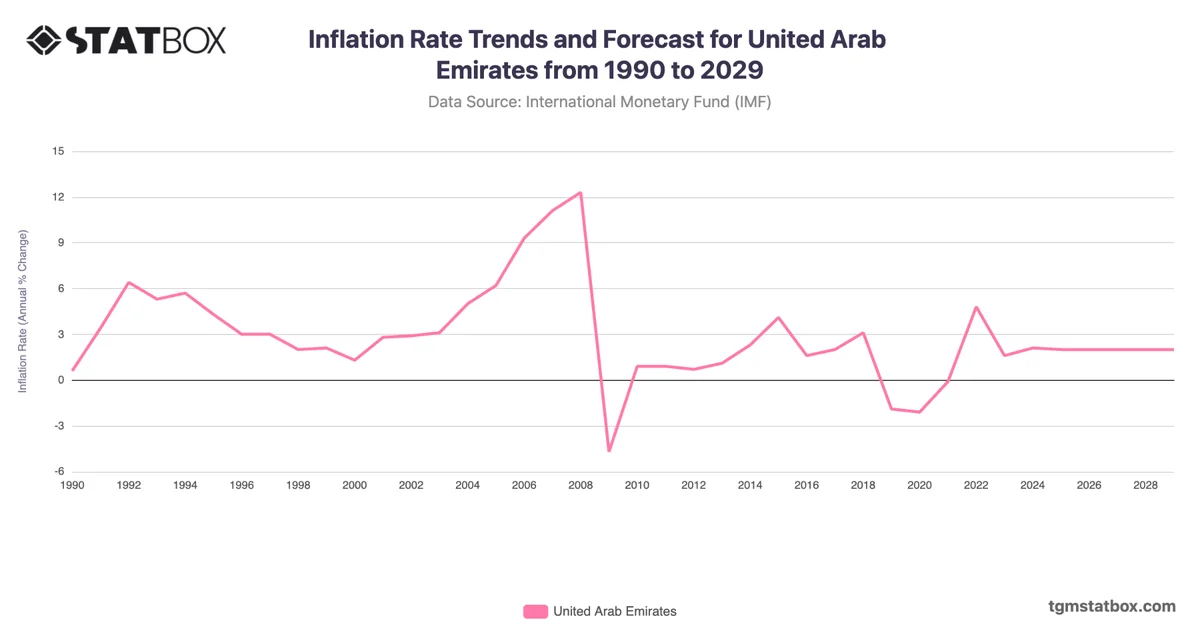
Discover additional trends and data on unemployment rate trend in UAE, Demographic totals in the UAE, UAE’s inflation rate trends.