Argentina's Net ODA as a percentage of GNI has been consistently low, peaking at only 0.2% in 1991 and tapering to negligible levels from the mid-1990s onward. This pattern reflects Argentina's status as an upper-middle-income country with limited eligibility for traditional ODA. The modest levels of aid in the early 1990s were likely tied to structural adjustment programs supported by international organizations following the country's economic crisis.
Since the early 2000s, Argentina's Net ODA has been effectively zero, demonstrating its reduced reliance on aid due to sustained economic development and financial independence. The slight uptick to 0.1% in 2022 is an anomaly, possibly tied to small-scale initiatives or specific development projects.
Since the early 2000s, Argentina's Net ODA has been effectively zero, demonstrating its reduced reliance on aid due to sustained economic development and financial independence. The slight uptick to 0.1% in 2022 is an anomaly, possibly tied to small-scale initiatives or specific development projects.
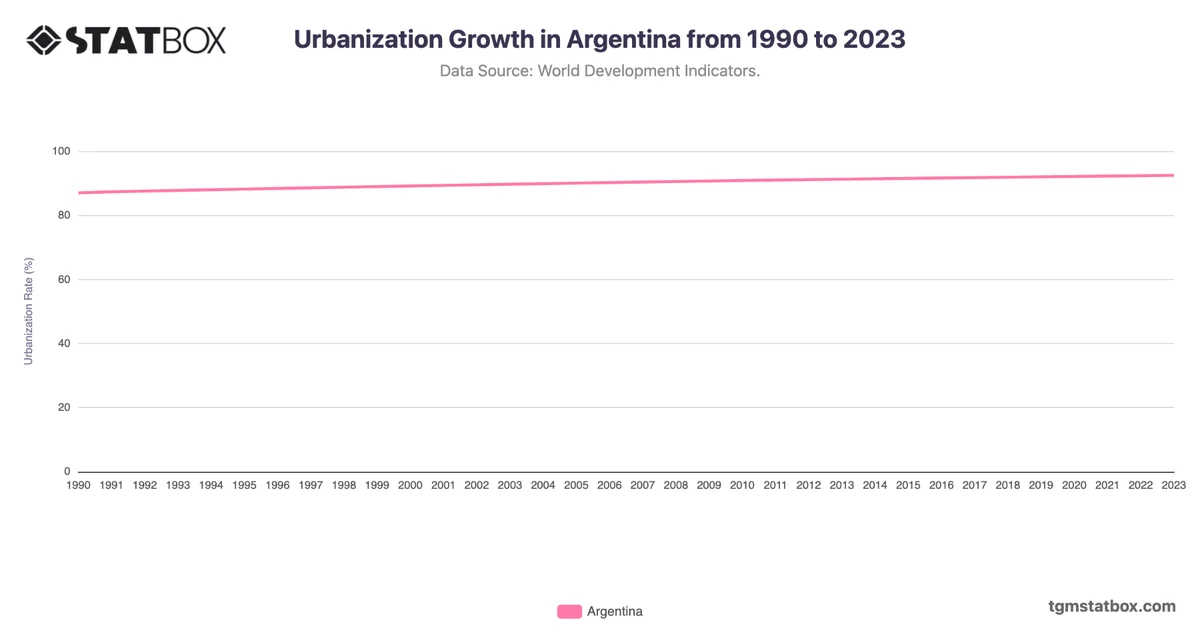
Gain a broader perspective by reviewing Argentina’s urbanization rate, Argentina’s defense spending, Argentina’s yearly GDP growth rate.