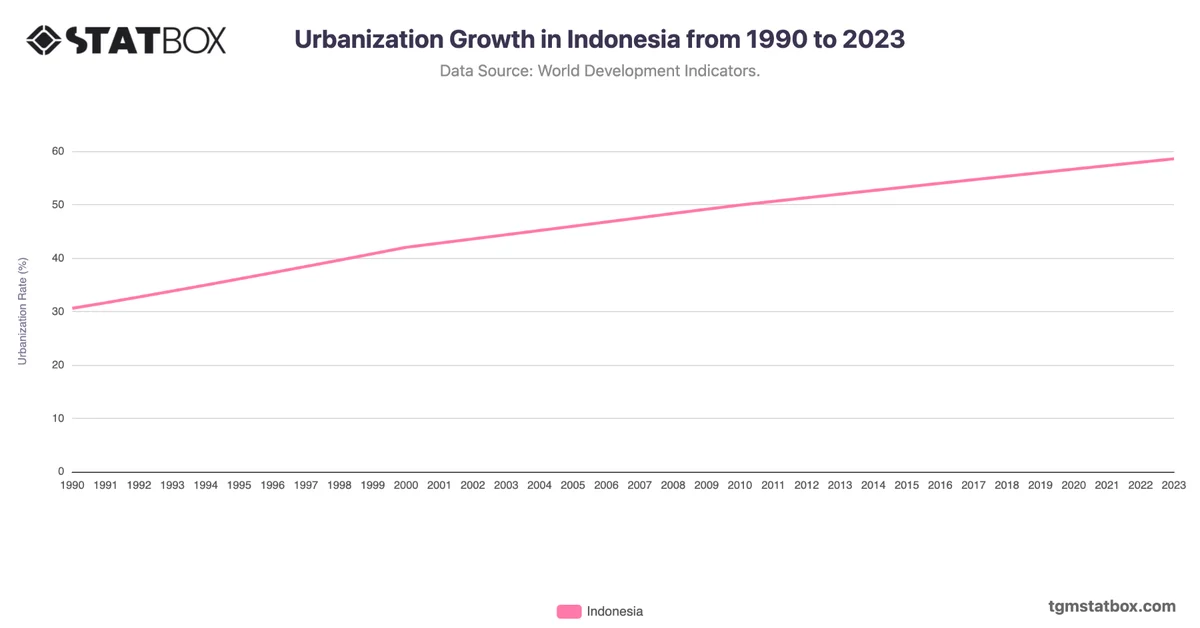
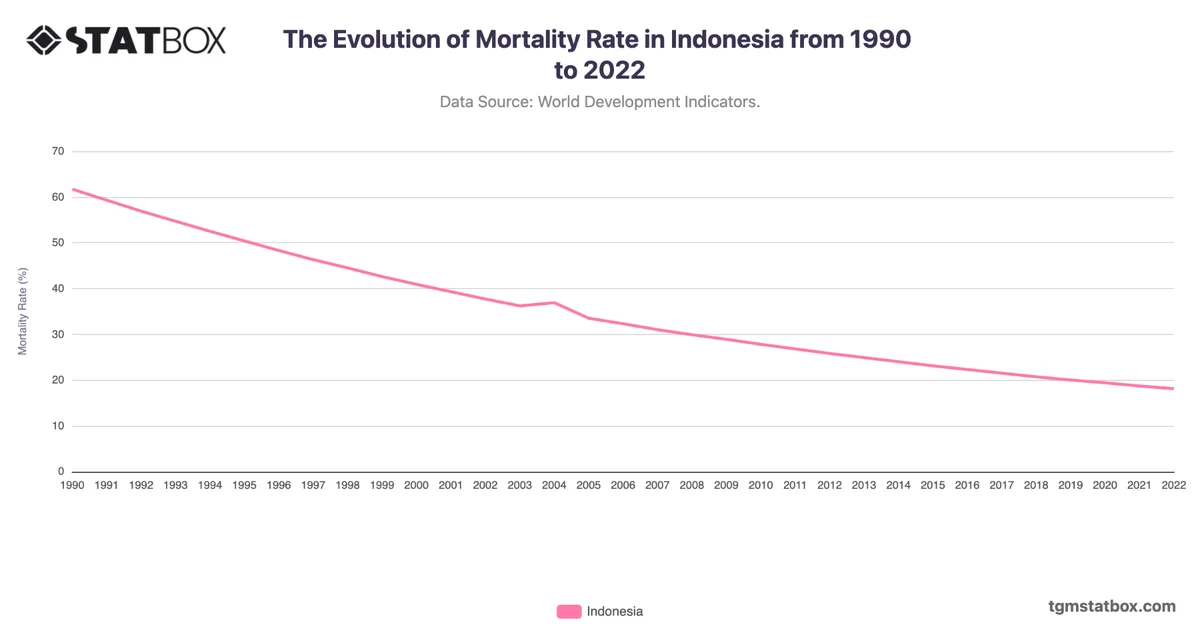
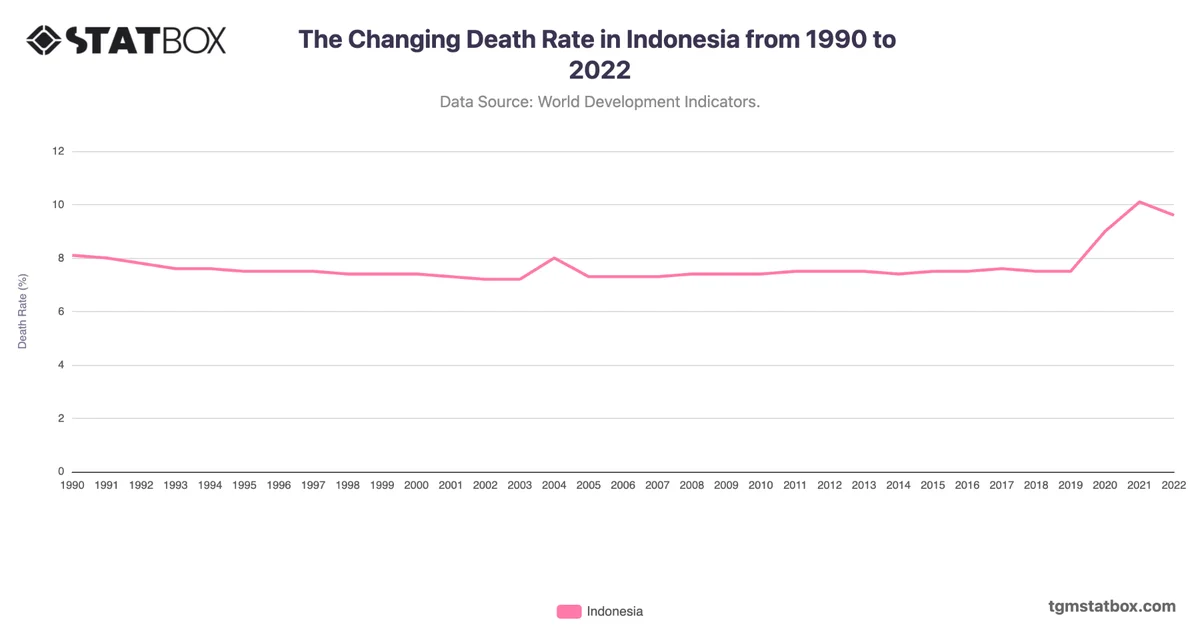
Indonesia's median age has risen from 23.6 years in 2000 to an estimated 31.8 years by 2030, reflecting a broad demographic transition. This shift has been influenced by a steady decline in birth rates and increasing urbanization. From 2000 to 2010, the median age grew from 23.6 to 26.6, as urban migration drove changes in lifestyle and family size. The shift from rural to urban areas has led to greater access to healthcare and education, resulting in a lower fertility rate and a gradual aging of the population.
After 2010, the median age rose more steadily, reaching 29.8 by 2023, as the urban population continued to expand, altering traditional family structures and reducing birth rates. With a projected median age of 31.8 by 2030, Indonesia faces the challenges and opportunities of an aging population, which will impact workforce composition, healthcare needs, and social services planning.
After 2010, the median age rose more steadily, reaching 29.8 by 2023, as the urban population continued to expand, altering traditional family structures and reducing birth rates. With a projected median age of 31.8 by 2030, Indonesia faces the challenges and opportunities of an aging population, which will impact workforce composition, healthcare needs, and social services planning.
For a broader context, visit other statistics on Indonesia’s population growth trends, Indonesia’s urbanization increase, Indonesia’s military personnel rate.