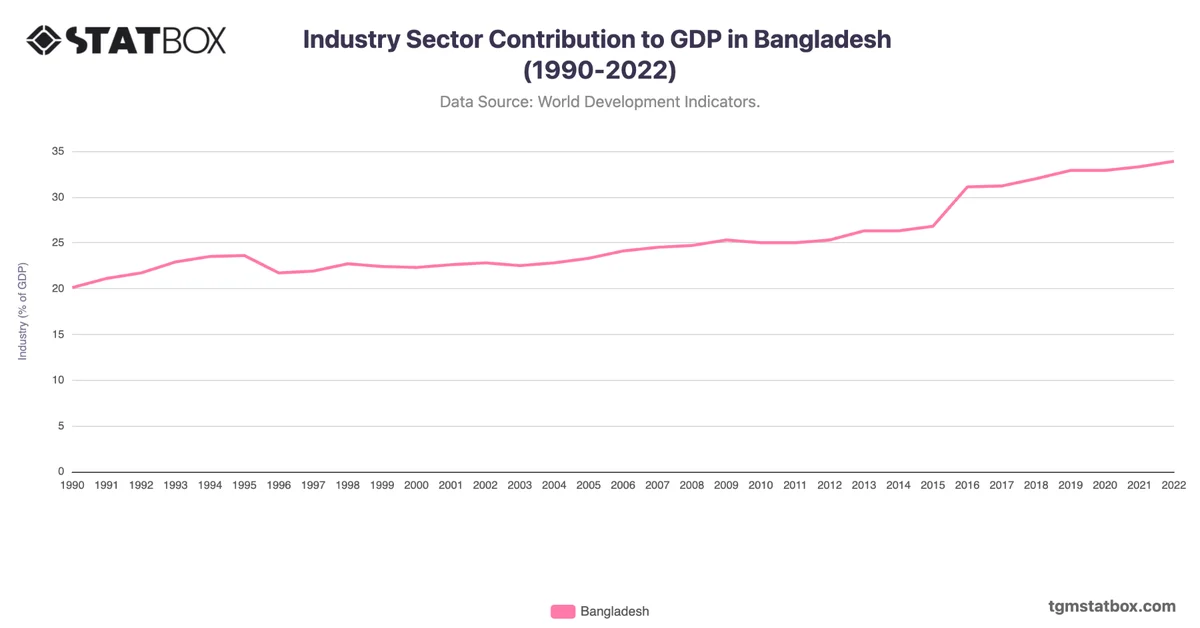
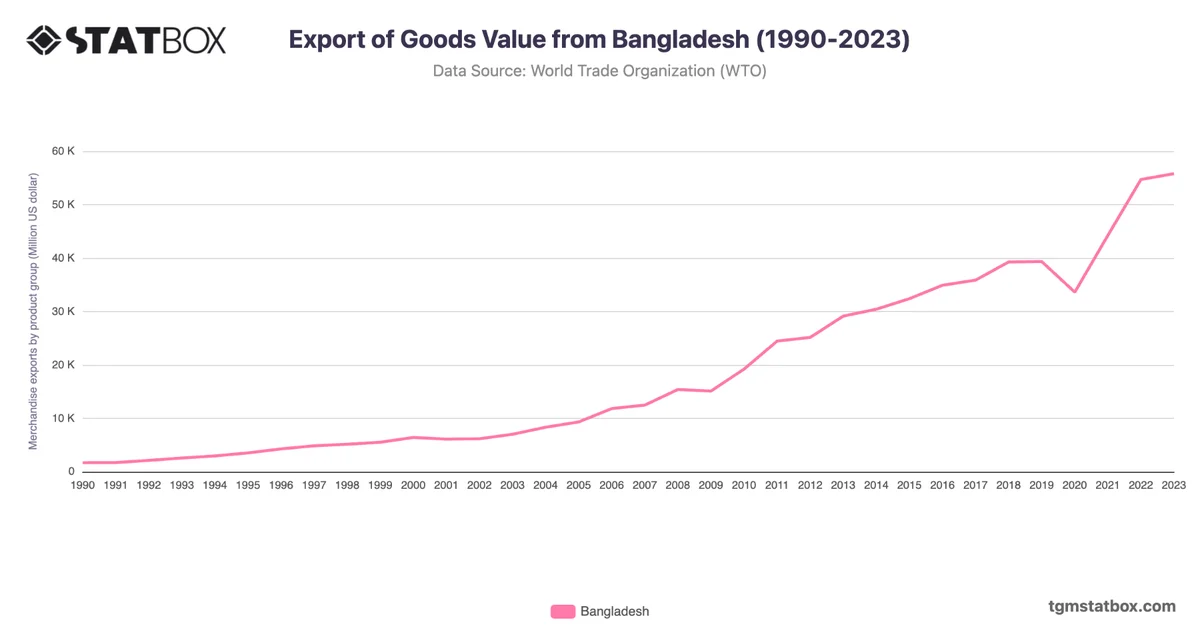
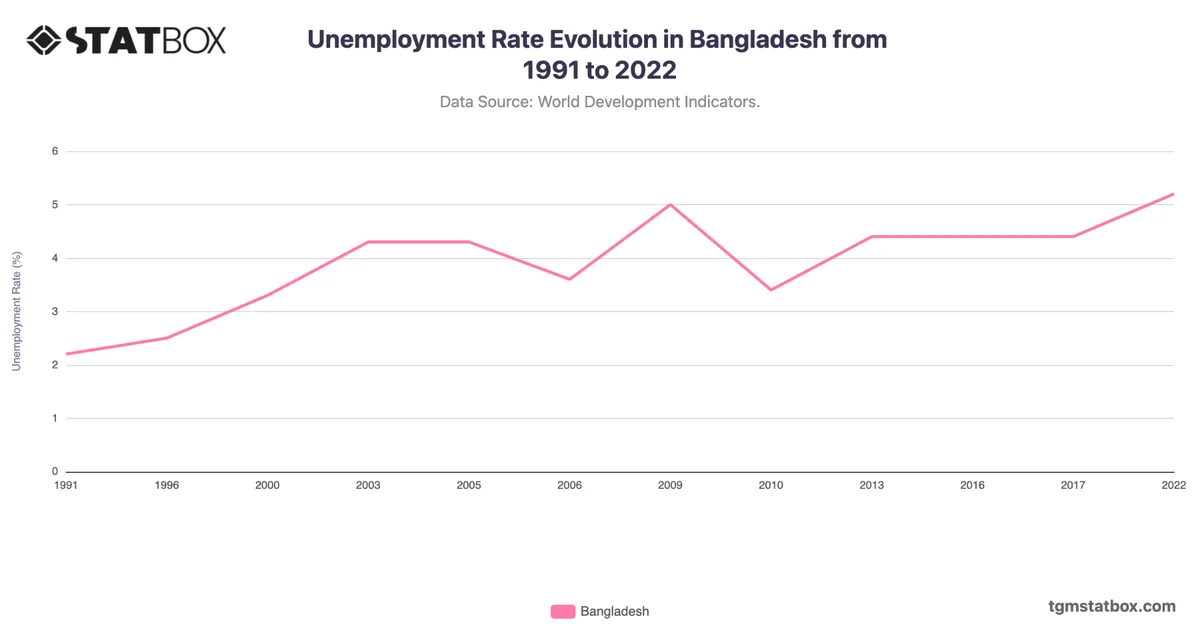
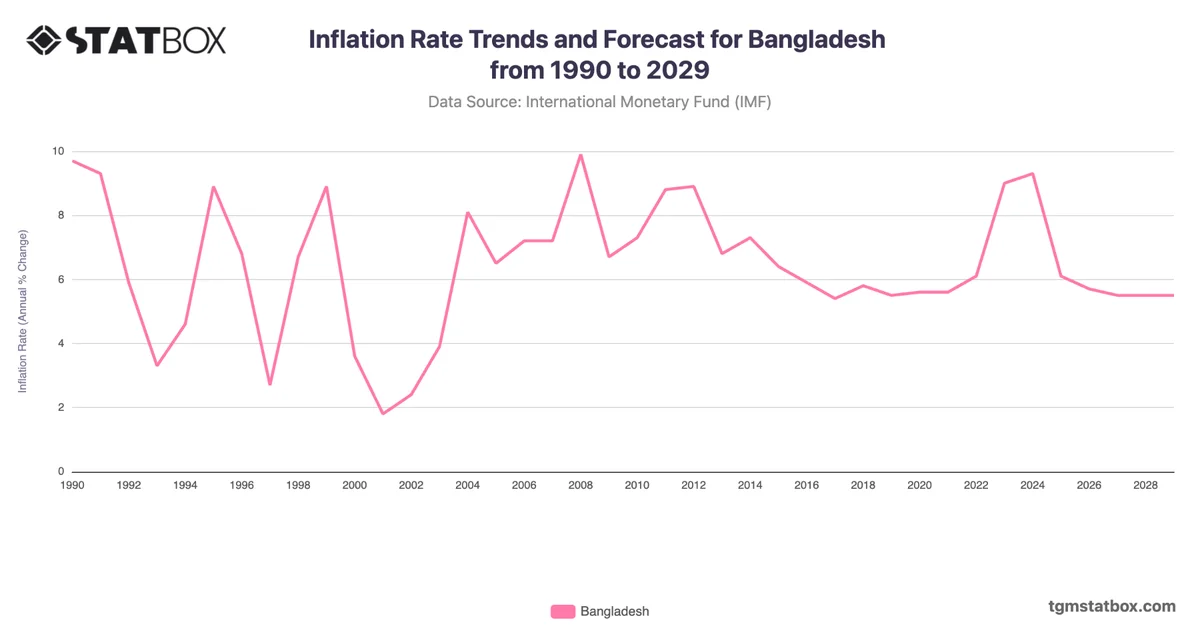
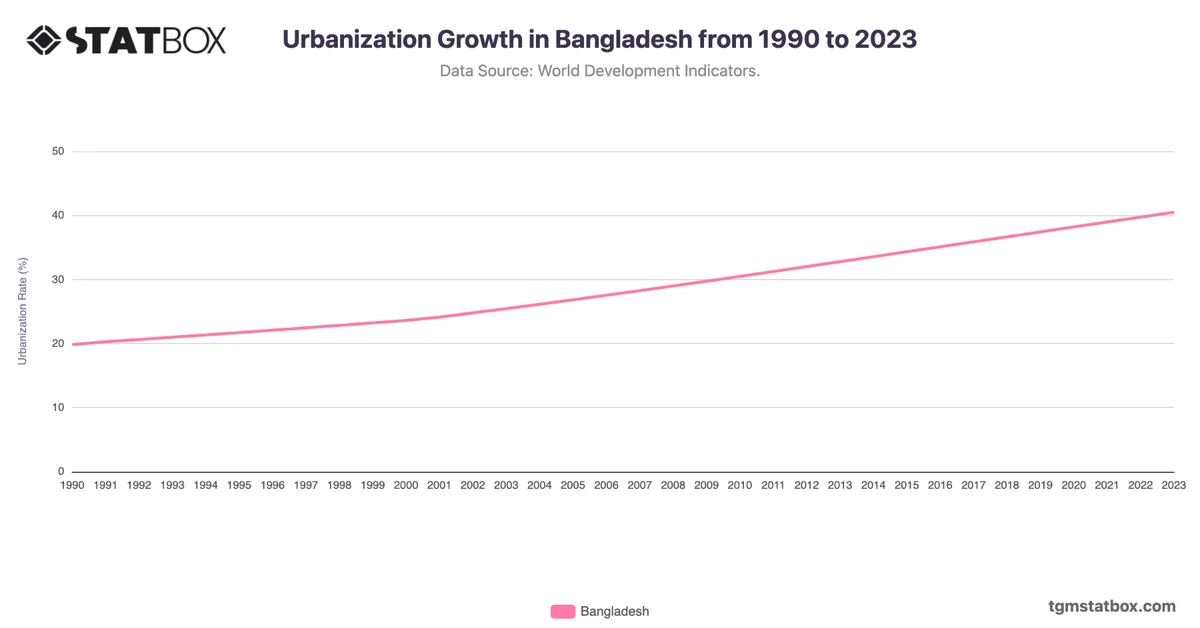
Bangladesh's GDP has seen significant growth since 1961, reflecting its transition from an agrarian economy to a more diversified one. During the initial years, GDP remained relatively low due to political instability and limited industrial development. However, following independence in 1971, GDP began to rise gradually. Key sectors like agriculture, manufacturing, and later, the booming textile industry have been driving forces behind this growth. Economic reforms in the 1980s and 1990s contributed to further acceleration, as the country shifted towards export-led growth.
The 2000s saw a more pronounced rise in GDP, driven by rapid industrialization, remittances from expatriates, and infrastructure development. By 2023, the GDP stood at an impressive $437.4 billion.
The 2000s saw a more pronounced rise in GDP, driven by rapid industrialization, remittances from expatriates, and infrastructure development. By 2023, the GDP stood at an impressive $437.4 billion.
Find out more through related statistics on Bangladesh’s manufacturing sector GDP share, Bangladesh’s defense spending, Bangladesh’s export value.