Belgium's fertility rate remained within a narrow range of 1.5 to 1.9 births per woman throughout 1990-2022, reflecting a stable demographic pattern. A brief uptick to 1.9 in 2008 and 2010 coincided with improved economic conditions and family-friendly policies. However, the rate declined to 1.5 by 2022, aligning with broader European trends of delayed parenthood and smaller family sizes.
The slight rise in the late 2000s may be linked to increased government support for working parents, including subsidized childcare. Nonetheless, socioeconomic challenges and cultural shifts toward prioritizing careers contributed to the gradual decline post-2011. Belgium's aging population and reliance on migration for demographic growth highlight the impact of its declining fertility rate.
The slight rise in the late 2000s may be linked to increased government support for working parents, including subsidized childcare. Nonetheless, socioeconomic challenges and cultural shifts toward prioritizing careers contributed to the gradual decline post-2011. Belgium's aging population and reliance on migration for demographic growth highlight the impact of its declining fertility rate.
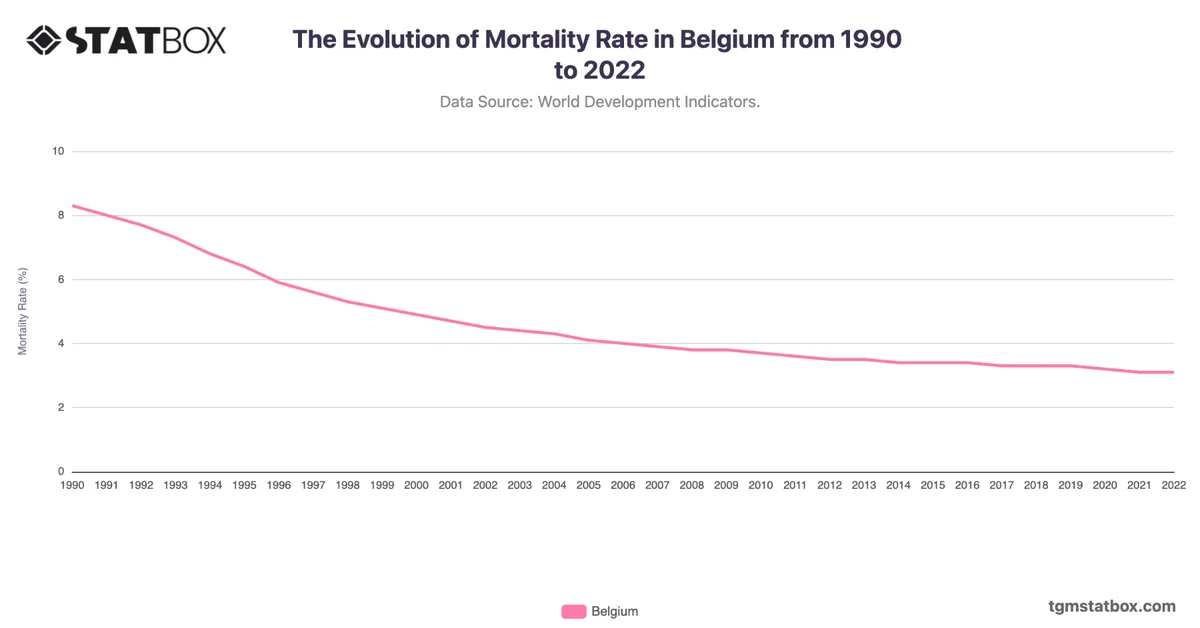
Discover additional trends and data on Belgium’s population count, Belgium’s services sector share in GDP, Belgium’s mortality rate.