Chile’s fiscal balance reflects its robust macroeconomic framework and reliance on commodity exports. The early 2000s saw surpluses, with the balance peaking at 8% in 2007, supported by high copper prices. The global financial crisis and declining commodity prices led to deficits averaging -2% in the 2010s.
The pandemic caused a significant deficit of -7.5% in 2021. However, Chile’s fiscal discipline and strong institutional framework have facilitated recovery, with projections for 2029 showing a balanced budget at 0%. This reflects continued efforts to stabilize public finances while supporting economic growth.
The pandemic caused a significant deficit of -7.5% in 2021. However, Chile’s fiscal discipline and strong institutional framework have facilitated recovery, with projections for 2029 showing a balanced budget at 0%. This reflects continued efforts to stabilize public finances while supporting economic growth.
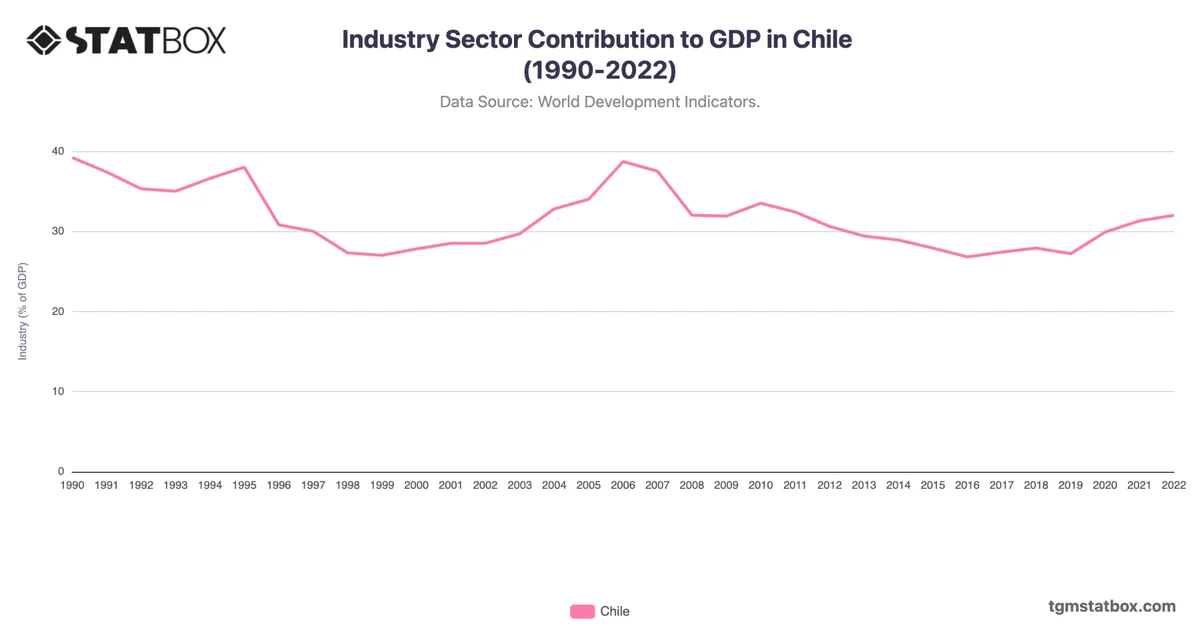
Gain a broader perspective by reviewing Chile’s annual GDP growth rate, Chile’s military personnel proportion, Industry sector’s GDP share in Chile.