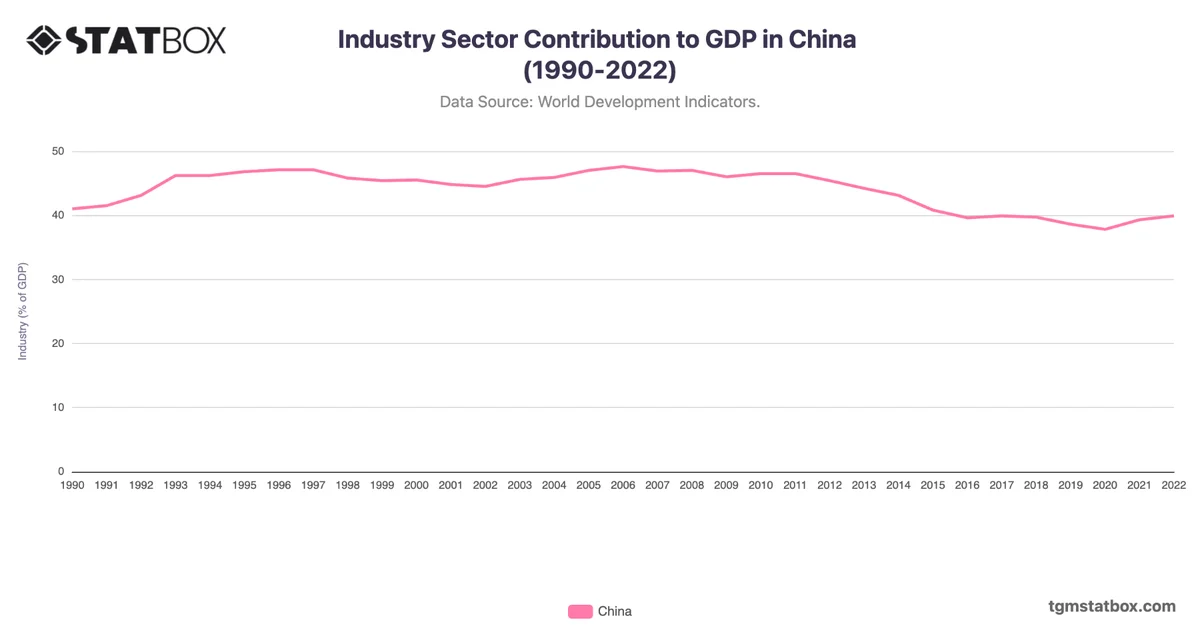
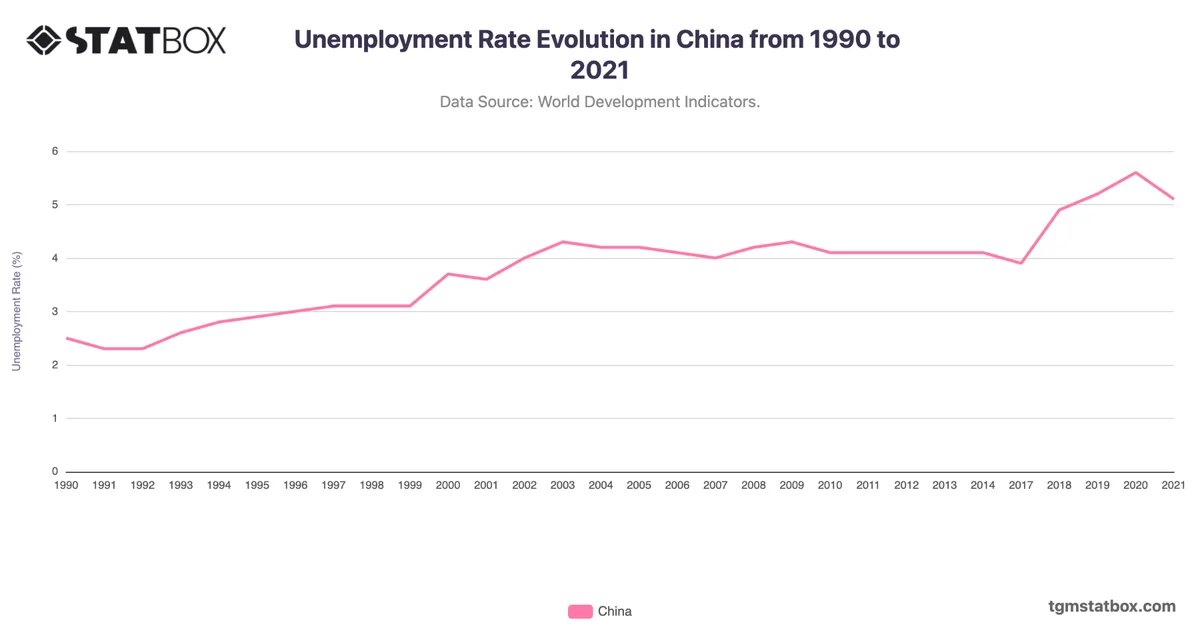
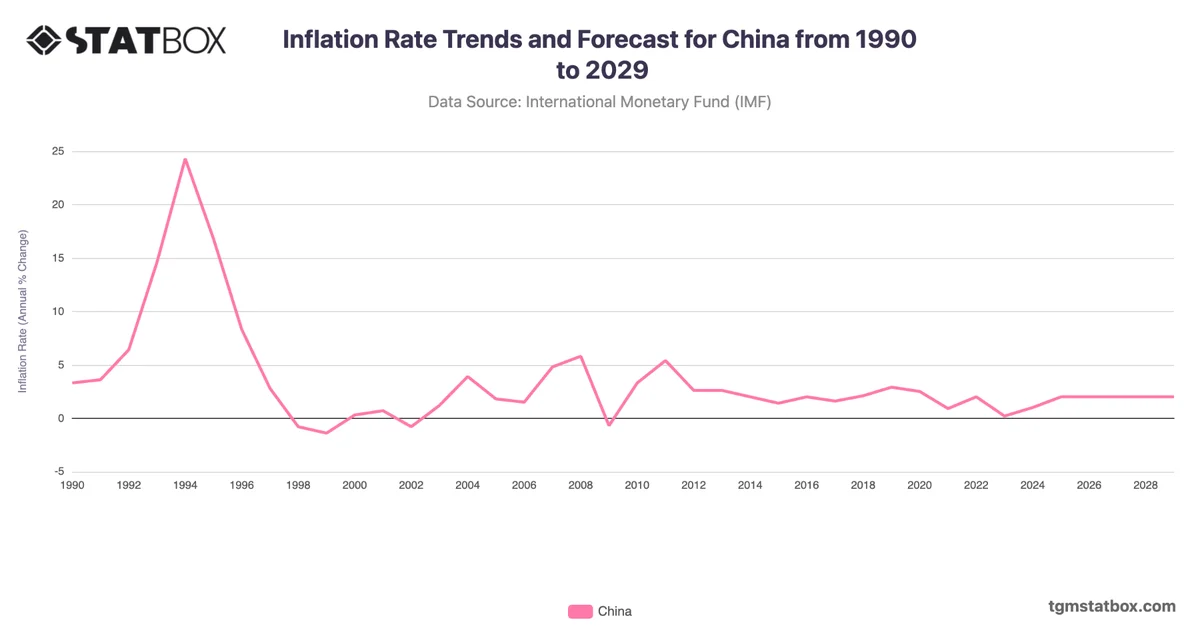
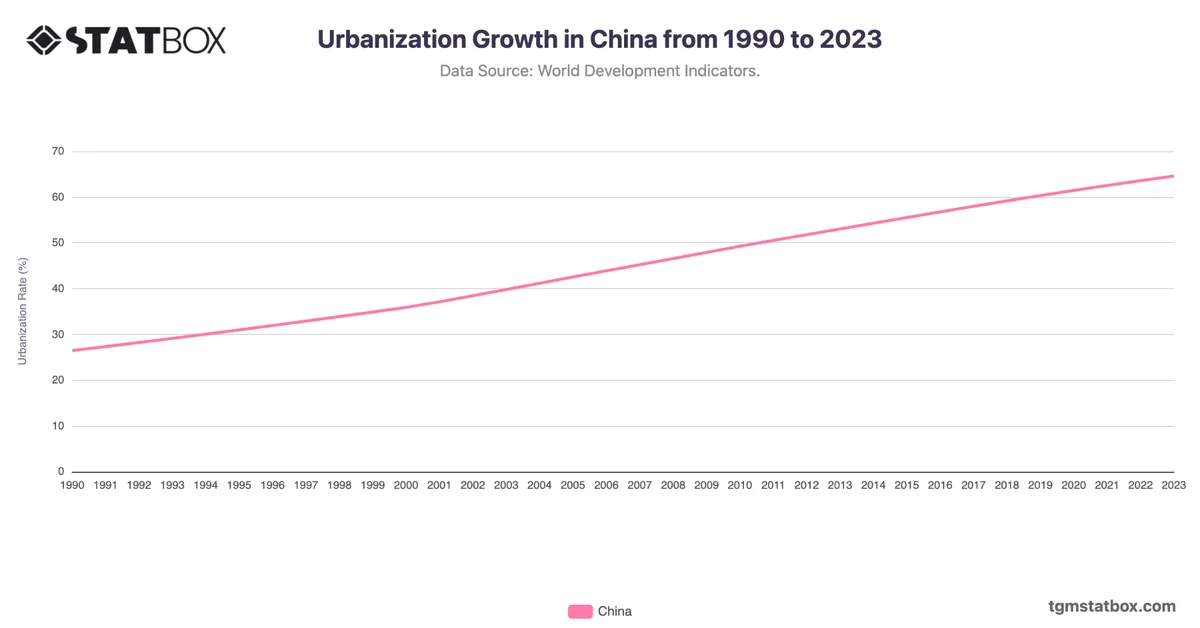
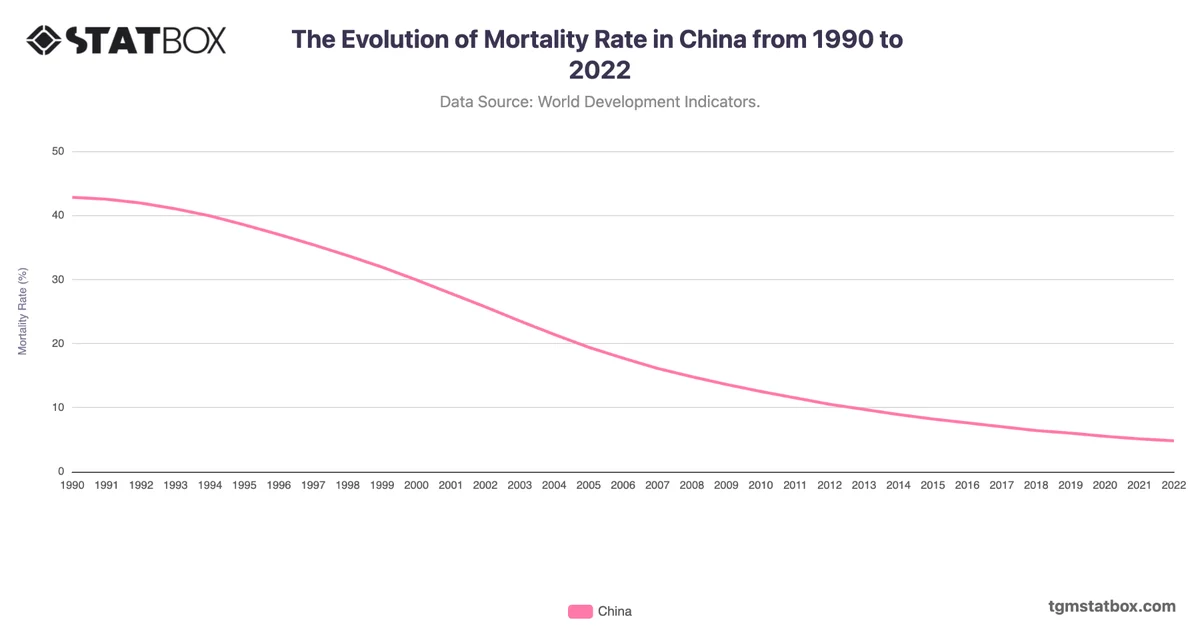
China's agriculture sector's GDP share experienced a rapid decrease from 26.6% in 1990 to 7.3% in 2022, driven by rapid industrialization and urbanization. Economic reforms in the 1980s and 1990s encouraged manufacturing and technology growth, significantly reducing agriculture's relative contribution. By the early 2000s, agriculture's share fell below 15%, aligning with China’s shift toward a more urban and service-based economy.
The agriculture sector saw slight rebounds, such as 7.7% in 2020, likely due to the COVID-19 pandemic's impact on food security and the government's increased focus on agricultural sustainability. While its contribution has lessened, agriculture remains crucial for rural employment and food security in China’s vast and diverse economy.
The agriculture sector saw slight rebounds, such as 7.7% in 2020, likely due to the COVID-19 pandemic's impact on food security and the government's increased focus on agricultural sustainability. While its contribution has lessened, agriculture remains crucial for rural employment and food security in China’s vast and diverse economy.
Find out more through related statistics on China’s annual GDP growth rate, China’s manufacturing sector share in GDP, China’s services sector share in GDP.