Côte d’Ivoire’s debt-to-GDP ratio peaked at 173.87% in 1994, primarily driven by a severe economic crisis and currency devaluation within the West African Economic and Monetary Union (WAEMU). Subsequent debt restructuring and fiscal reforms led to a sharp decline, reaching 78.02% in 1999 and further to 56.38% in 2003.
After 2011, the debt ratio stabilized at lower levels, largely due to the Heavily Indebted Poor Countries (HIPC) Initiative, which granted substantial debt relief. However, public investments to support infrastructure and growth caused debt to rise modestly, from 24.69% in 2012 to 37.52% in 2019. The pandemic-induced spending in 2020 led to a rise to 46.35%, with the ratio further climbing to 56.75% by 2022, reflecting ongoing fiscal challenges.
After 2011, the debt ratio stabilized at lower levels, largely due to the Heavily Indebted Poor Countries (HIPC) Initiative, which granted substantial debt relief. However, public investments to support infrastructure and growth caused debt to rise modestly, from 24.69% in 2012 to 37.52% in 2019. The pandemic-induced spending in 2020 led to a rise to 46.35%, with the ratio further climbing to 56.75% by 2022, reflecting ongoing fiscal challenges.
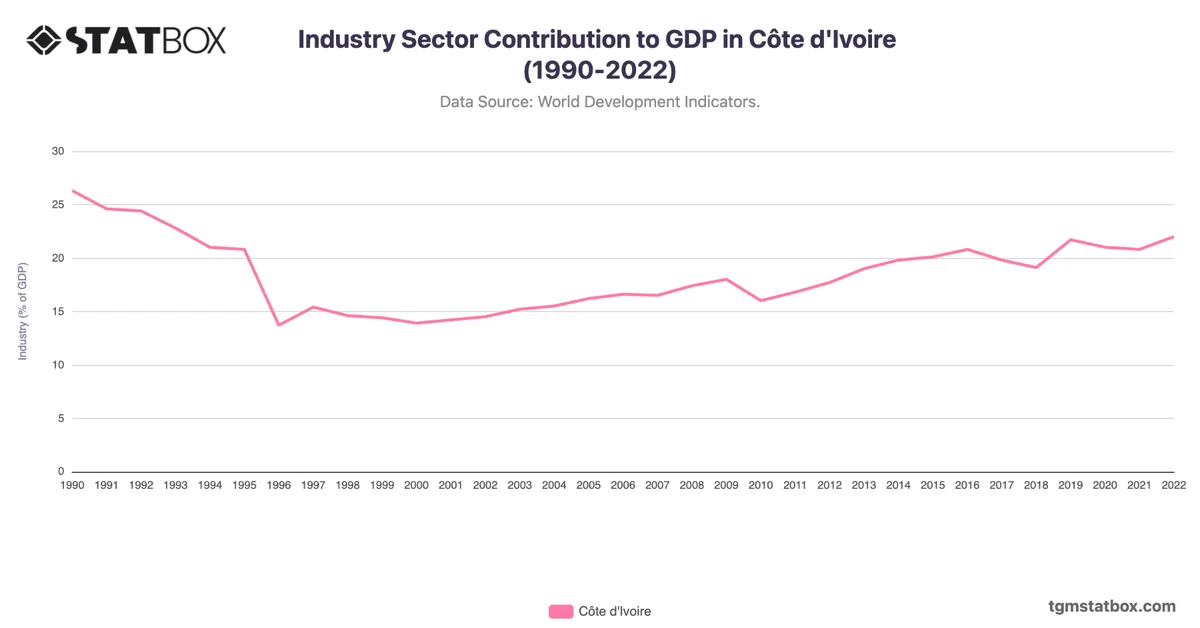
Find out more through related statistics on Côte d’Ivoire’s yearly net ODA, manufacturing share of GDP in Côte d’Ivoire, Côte d'Ivoire’s net lending/borrowing.