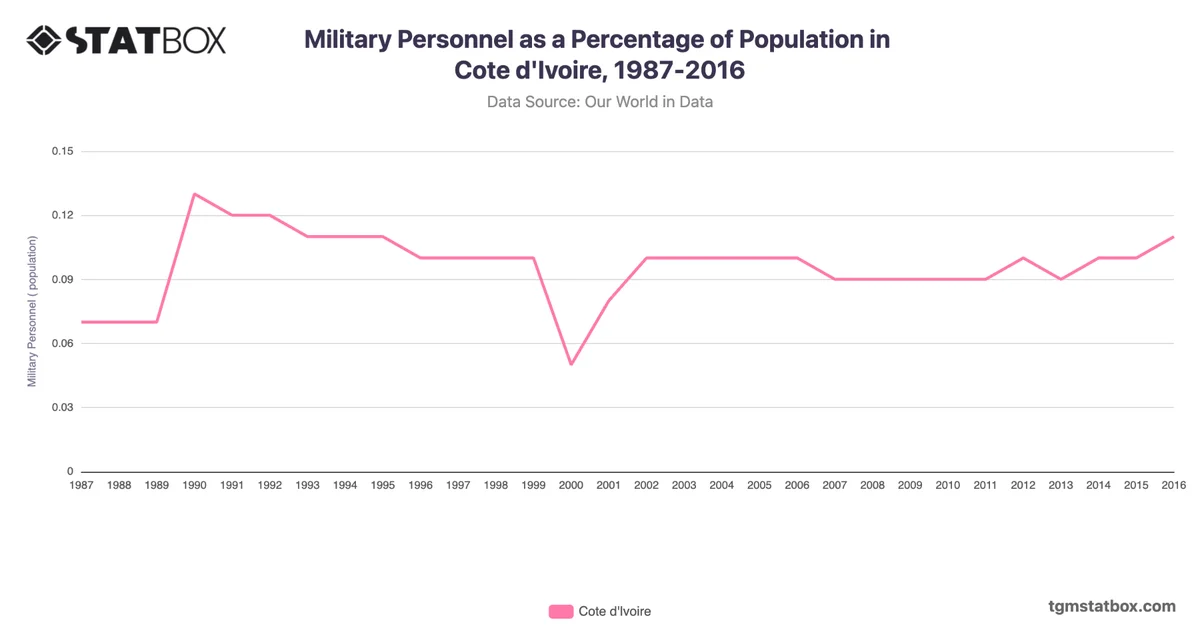
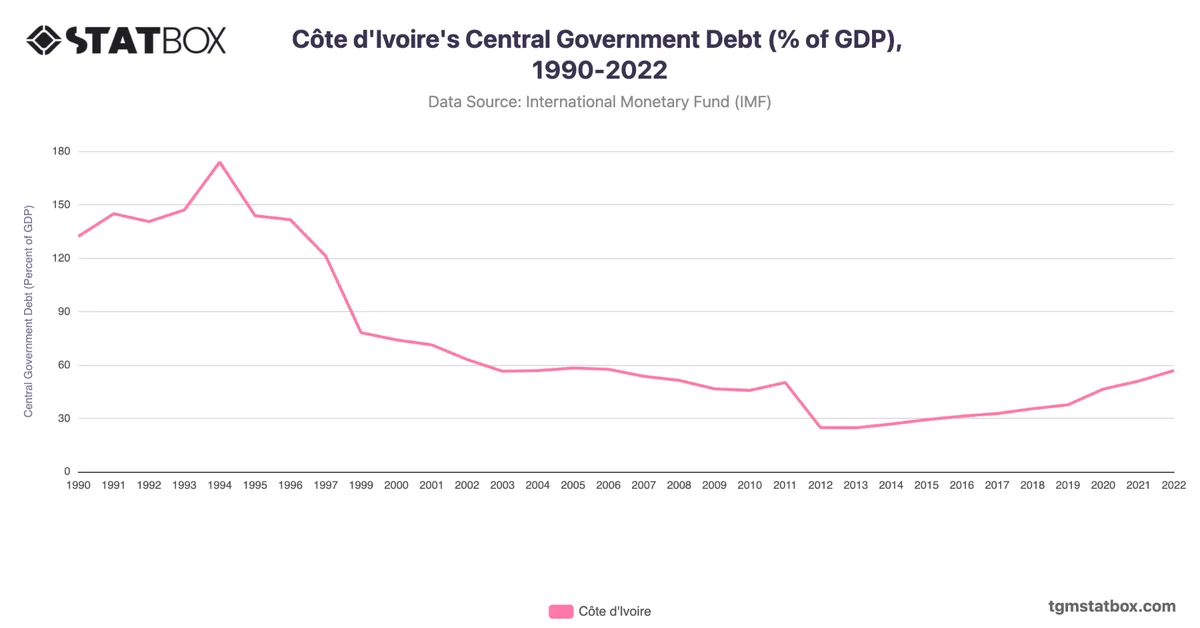
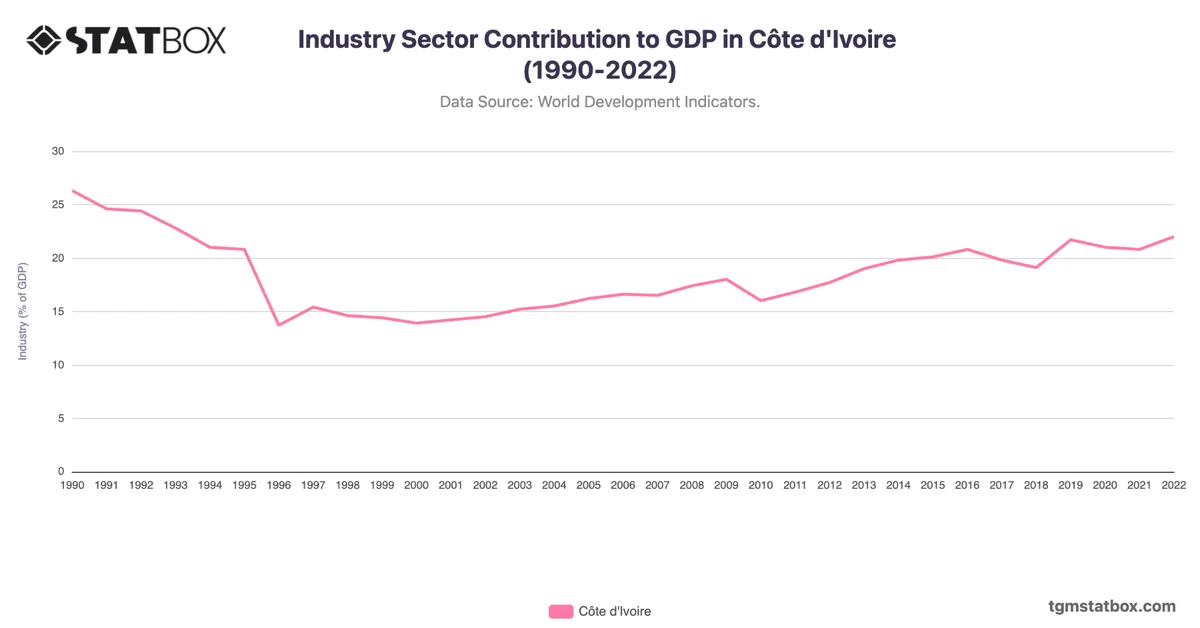
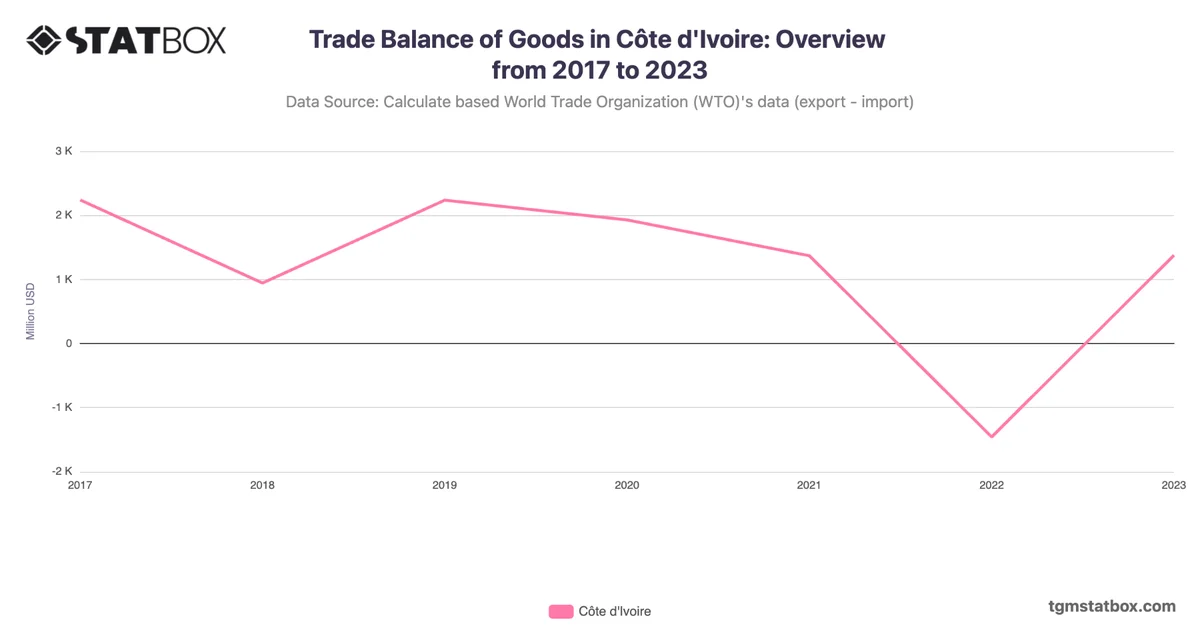
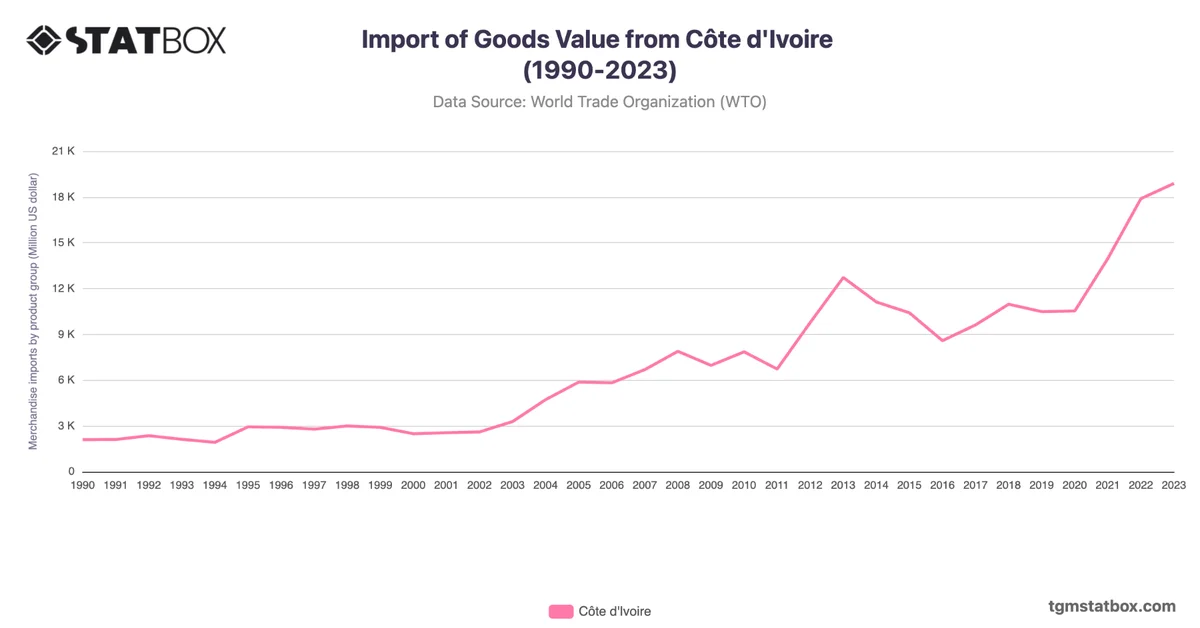
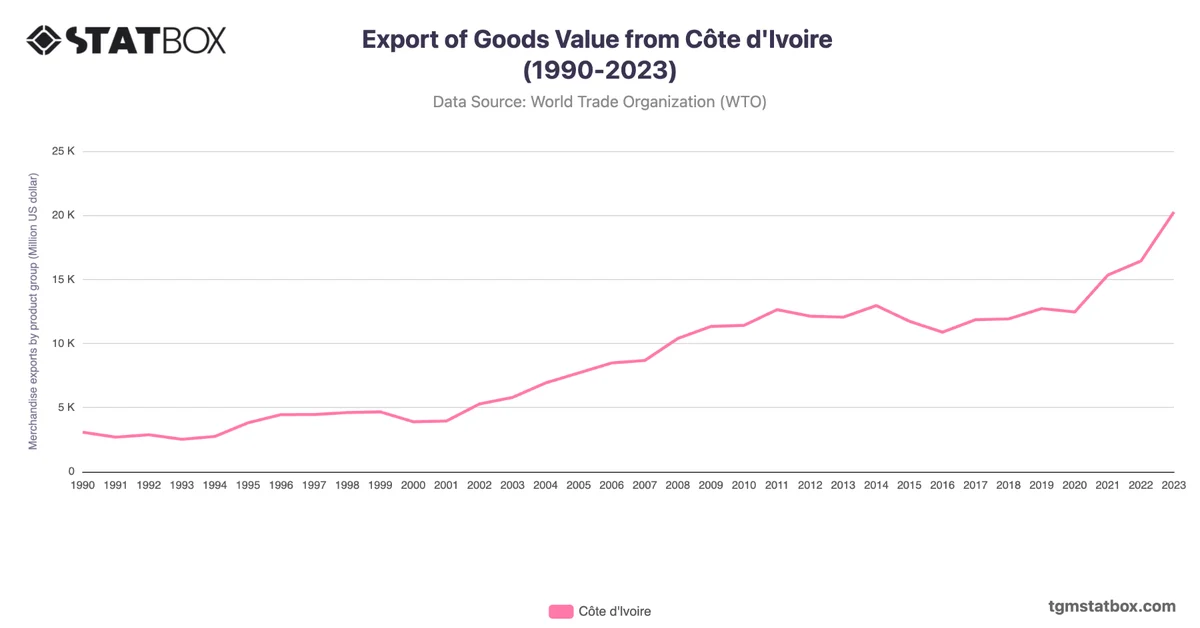
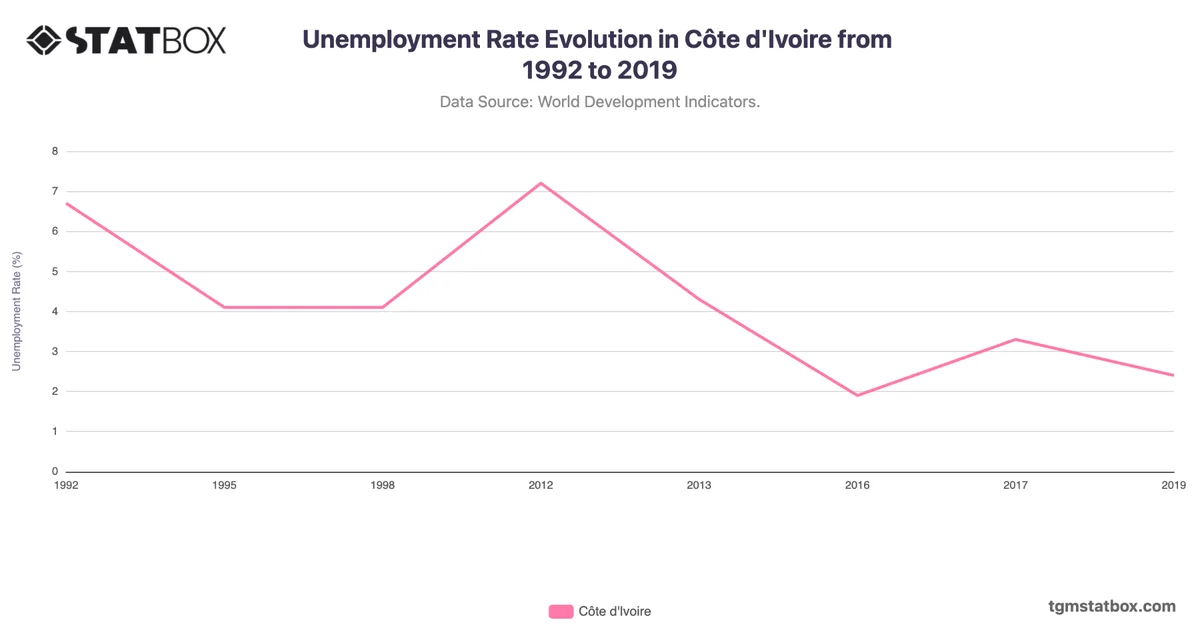
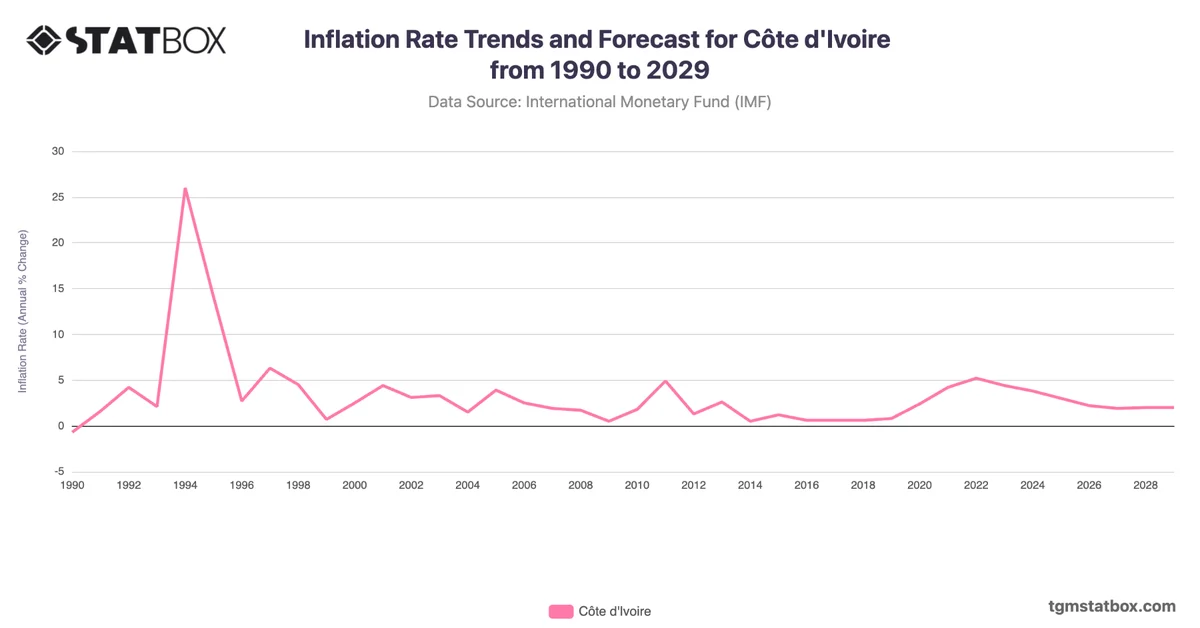
Côte d'Ivoire's population has grown substantially from 11.9 million in 1990 to 28.9 million in 2023. This steady rise can be linked to multiple factors, including high birth rates, internal migration, and the country's economic resilience. In the early 1990s, Côte d'Ivoire faced political instability and economic challenges, but population growth remained steady due to natural increase.
The late 1990s and early 2000s marked a period of political unrest, culminating in a civil war from 2002 to 2007. Despite these difficulties, population growth persisted, fueled by high fertility rates and a relatively young population. Additionally, Côte d'Ivoire's status as a regional economic hub attracted migrants from neighboring countries, contributing to population increases, particularly in urban areas like Abidjan.
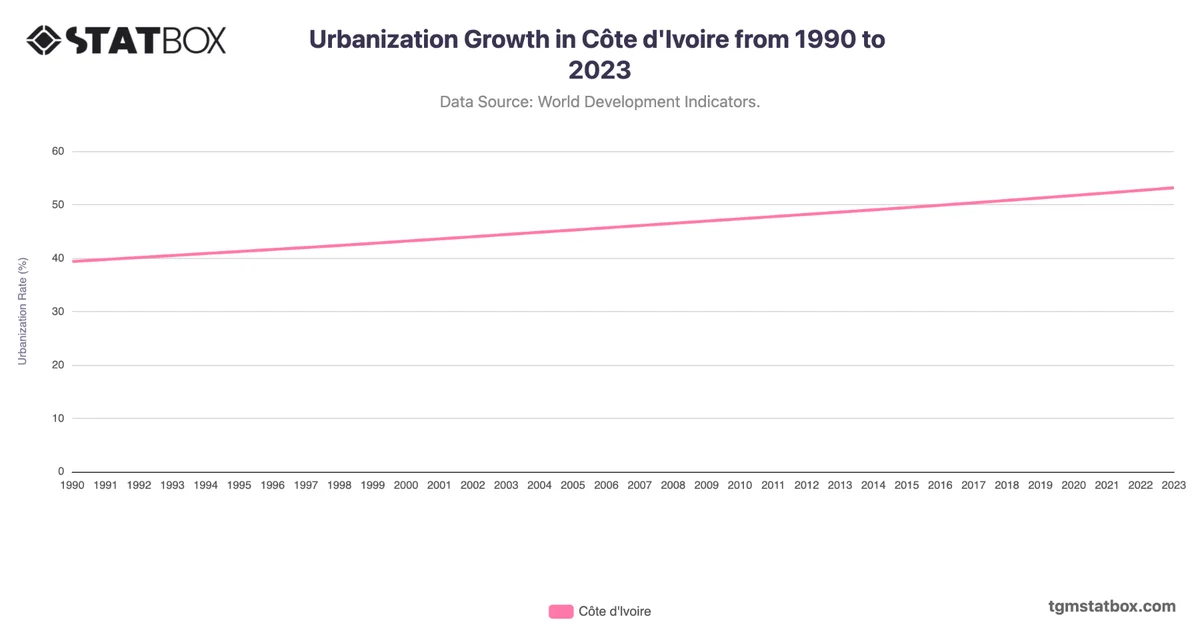
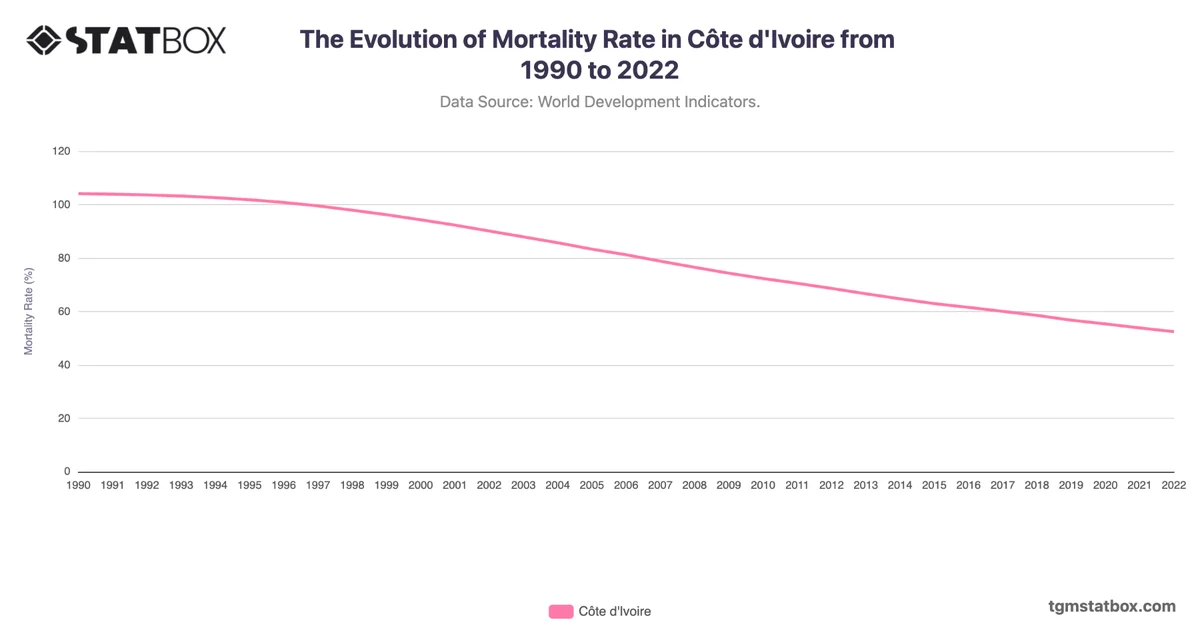
Following the post-war period, from 2010 onward, the country witnessed political stabilization and economic recovery, which further boosted population growth. Economic reforms, growth in agriculture (notably cocoa), and improvements in healthcare reduced mortality rates, while urbanization accelerated as more people moved to cities for better job opportunities.
In the 2020s, Côte d'Ivoire continues to experience rapid population growth, presenting both opportunities and challenges for the country's development, including infrastructure, healthcare, and education expansion.
The late 1990s and early 2000s marked a period of political unrest, culminating in a civil war from 2002 to 2007. Despite these difficulties, population growth persisted, fueled by high fertility rates and a relatively young population. Additionally, Côte d'Ivoire's status as a regional economic hub attracted migrants from neighboring countries, contributing to population increases, particularly in urban areas like Abidjan.
Following the post-war period, from 2010 onward, the country witnessed political stabilization and economic recovery, which further boosted population growth. Economic reforms, growth in agriculture (notably cocoa), and improvements in healthcare reduced mortality rates, while urbanization accelerated as more people moved to cities for better job opportunities.
In the 2020s, Côte d'Ivoire continues to experience rapid population growth, presenting both opportunities and challenges for the country's development, including infrastructure, healthcare, and education expansion.
For a broader context, visit other statistics on share of agriculture in Côte d'Ivoire’s GDP, Côte d'Ivoire’s population growth, Côte d'Ivoire’s population density.