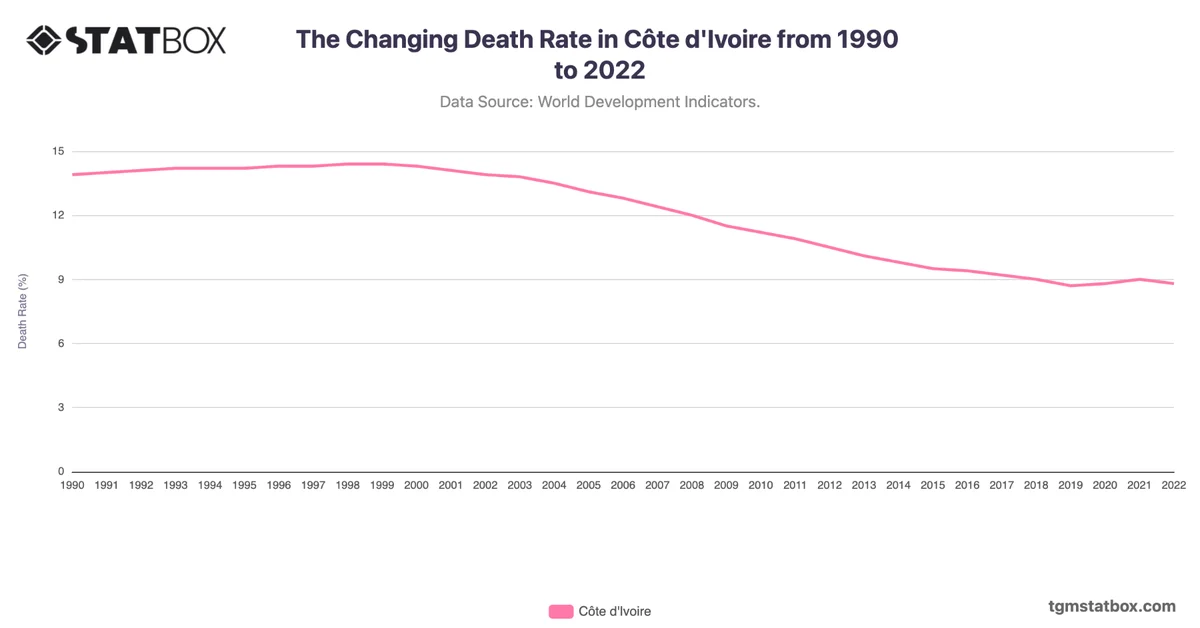
Côte d'Ivoire's mortality rate showed a gradual decline from 104.1 in 1990 to 52.4 in 2022. The 1990s saw a modest reduction, with the rate reaching 94.3 by 2000. This period was marked by efforts to improve healthcare access and immunization coverage despite political instability that constrained progress.
Post-2000, the decline accelerated, with the rate falling to 72.3 by 2010, as international aid and health initiatives targeted malaria, HIV/AIDS, and maternal health. By 2022, the rate had further reduced to 52.4, driven by improved healthcare infrastructure and public health campaigns. However, ongoing challenges such as economic inequality and regional disparities continue to impact progress.
Post-2000, the decline accelerated, with the rate falling to 72.3 by 2010, as international aid and health initiatives targeted malaria, HIV/AIDS, and maternal health. By 2022, the rate had further reduced to 52.4, driven by improved healthcare infrastructure and public health campaigns. However, ongoing challenges such as economic inequality and regional disparities continue to impact progress.
Explore related charts to gain a better understanding of Côte d’Ivoire’s population numbers, Côte d'Ivoire's evolving mortality rate, manufacturing share of GDP in Côte d’Ivoire.