Denmark’s agriculture sector saw a gradual decline in GDP contribution from 3.3% in 1990 to around 1.2% by 2022, reflecting the country’s transition to a service-based economy with a strong focus on renewable energy and high-tech industries. The drop from 2.1% in 1998 to 1.6% by 2004 aligns with Denmark’s integration into the European Union's common market, which shifted agricultural priorities and improved efficiency across sectors.
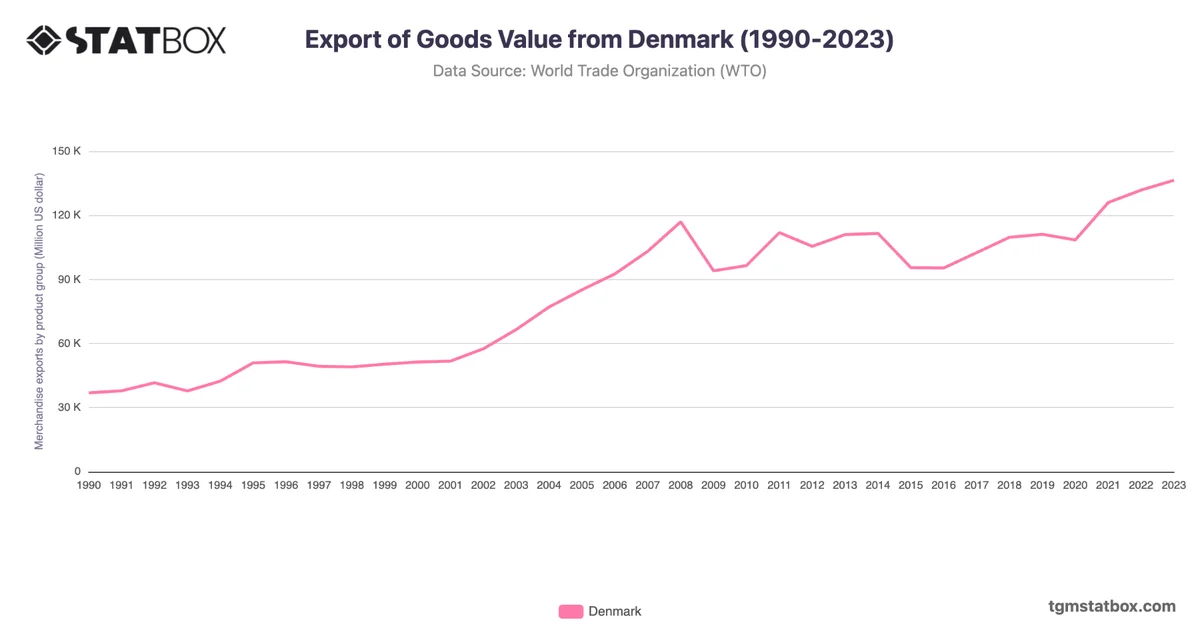
Minor rebounds, like the increase to 1.7% in 2012, suggest intermittent boosts in agricultural productivity or demand, potentially from exports of key products such as dairy and pork. The consistent levels around 1.2% in recent years highlight Denmark’s efficient agricultural sector, which, despite its low GDP share, remains a critical part of its export economy.
Minor rebounds, like the increase to 1.7% in 2012, suggest intermittent boosts in agricultural productivity or demand, potentially from exports of key products such as dairy and pork. The consistent levels around 1.2% in recent years highlight Denmark’s efficient agricultural sector, which, despite its low GDP share, remains a critical part of its export economy.
For a deeper dive into the topic, explore Denmark’s population density, Denmark’s trade balance overview, Denmark’s annual GDP growth.