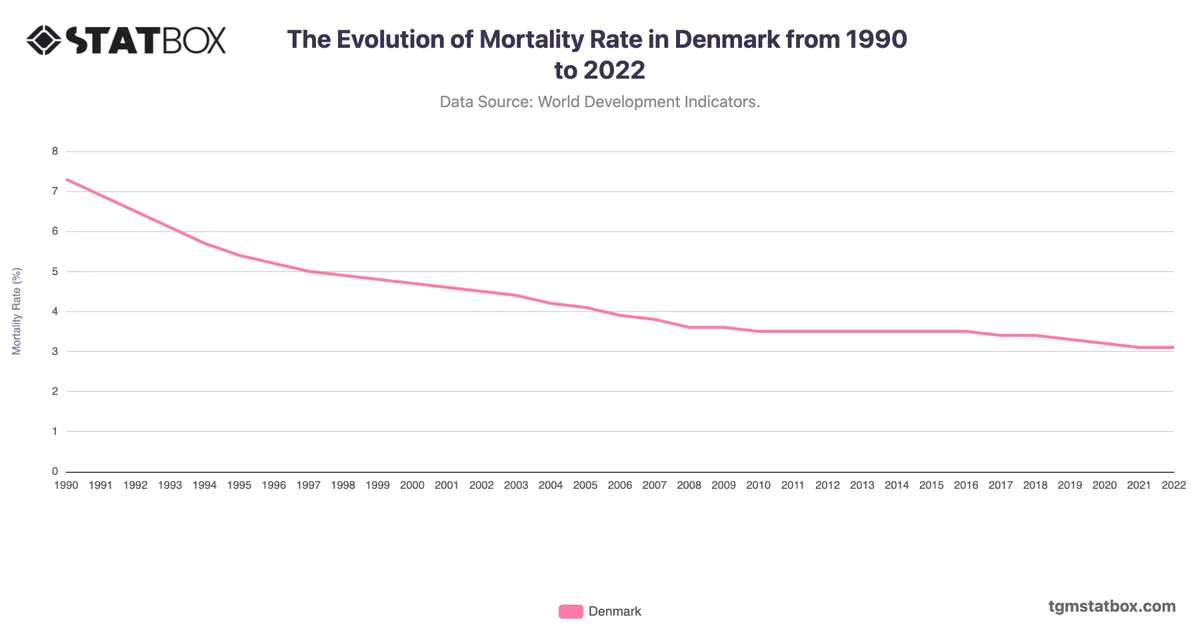
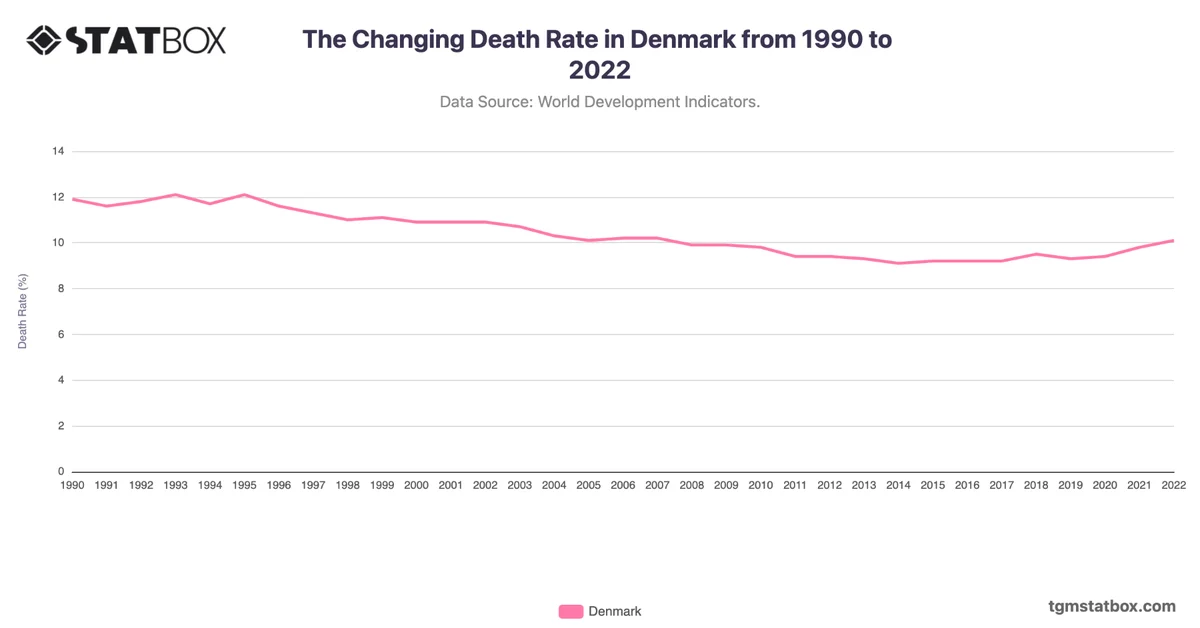
Denmark's population growth exhibited consistent, steady trends from 1990 to 2023, generally fluctuating between 0.2% and 0.6% until 2008. During this period, factors such as economic stability and a robust welfare system contributed to the steady population increases. A significant rise occurred in 2008, reaching 0.6%, correlating with improved immigration policies and a higher net migration rate.
The mid-2010s marked further growth, with rates peaking at 0.8% in 2016, driven by favorable economic conditions and immigration trends. The years 2022 and 2023 witnessed a resurgence to 0.8% and 0.7%, respectively, reflecting Denmark's success in attracting skilled workers and maintaining high standards of living. This stable growth highlights Denmark's resilience in sustaining a balanced population trajectory.
The mid-2010s marked further growth, with rates peaking at 0.8% in 2016, driven by favorable economic conditions and immigration trends. The years 2022 and 2023 witnessed a resurgence to 0.8% and 0.7%, respectively, reflecting Denmark's success in attracting skilled workers and maintaining high standards of living. This stable growth highlights Denmark's resilience in sustaining a balanced population trajectory.
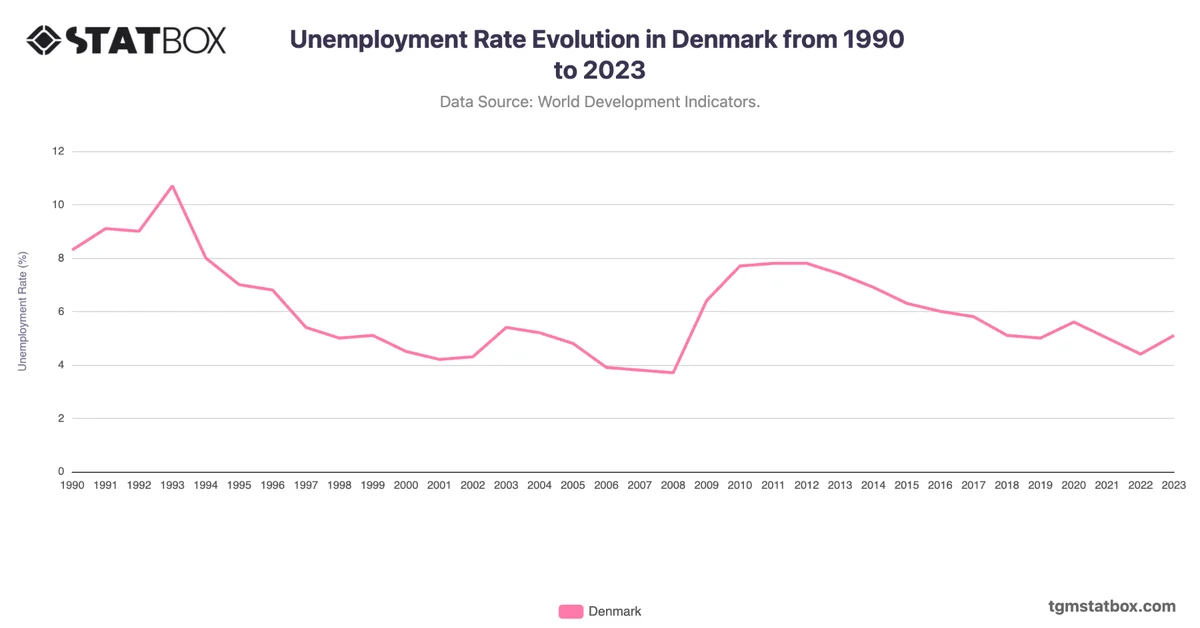
Discover additional trends and data on Denmark’s annual GDP growth, Denmark’s unemployment rate, Denmark’s working-age population share.