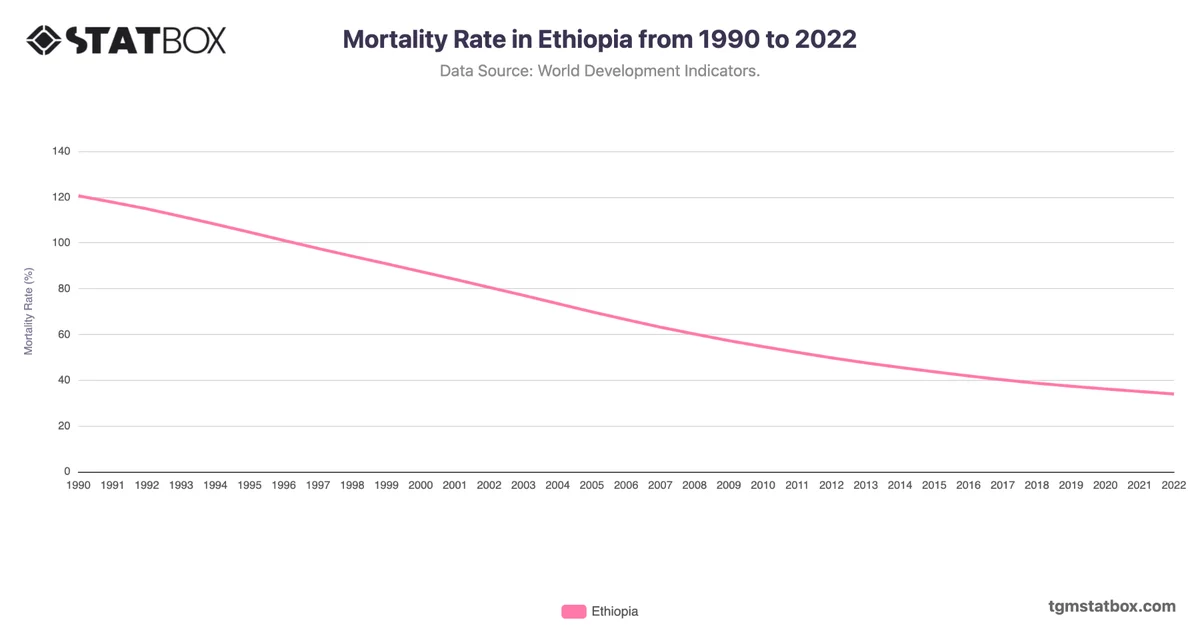
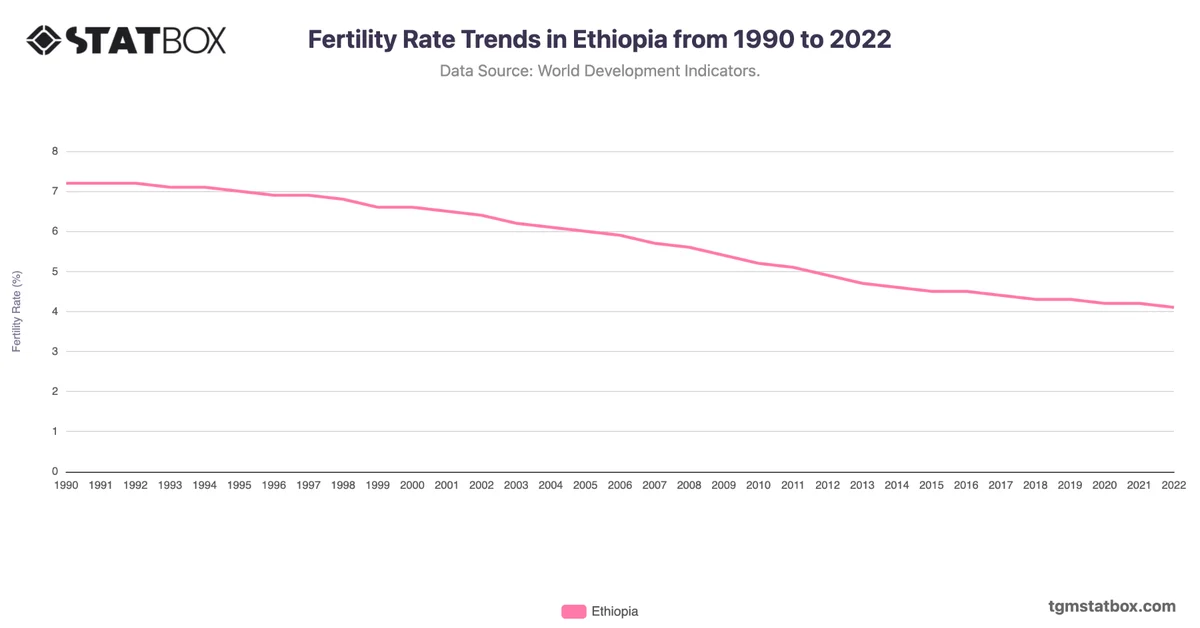
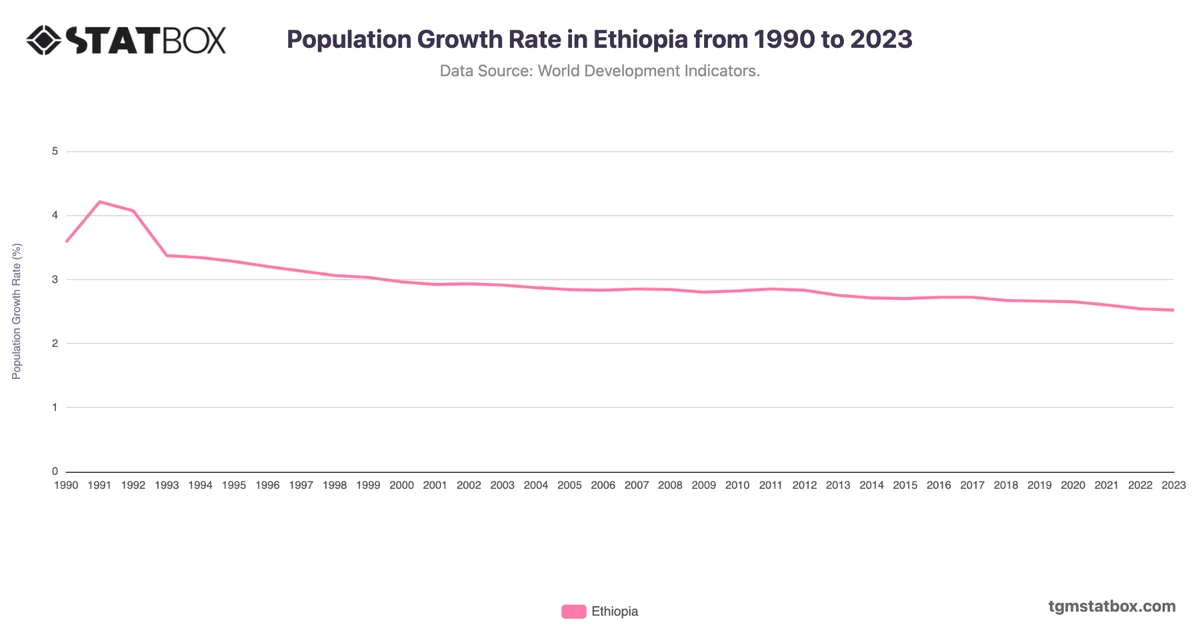
Ethiopia's death rate has significantly decreased from 20.1 per 1,000 people in 1990 to 6.5 in 2022. This reduction is attributed to improvements in public health, including the expansion of vaccination programs, enhanced maternal and child health services, and better access to clean water and sanitation. The death rate dropped consistently in the early 2000s, particularly in response to international health initiatives aimed at controlling infectious diseases.
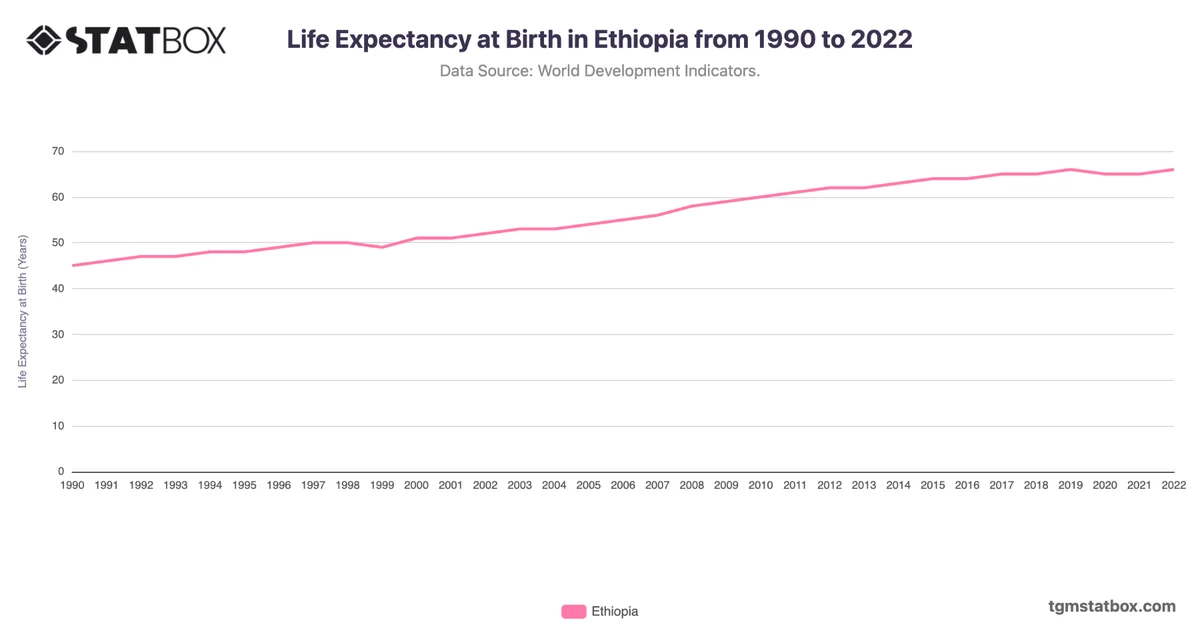
However, despite this progress, Ethiopia's death rate rose slightly in 2020 and 2021, with a recorded increase in 2020 to 6.6, possibly due to the impact of the COVID-19 pandemic. While health interventions have been crucial in reducing mortality, Ethiopia still faces challenges such as malnutrition, limited healthcare access in rural areas, and the effects of climate change, which may hinder future improvements in life expectancy.
However, despite this progress, Ethiopia's death rate rose slightly in 2020 and 2021, with a recorded increase in 2020 to 6.6, possibly due to the impact of the COVID-19 pandemic. While health interventions have been crucial in reducing mortality, Ethiopia still faces challenges such as malnutrition, limited healthcare access in rural areas, and the effects of climate change, which may hinder future improvements in life expectancy.
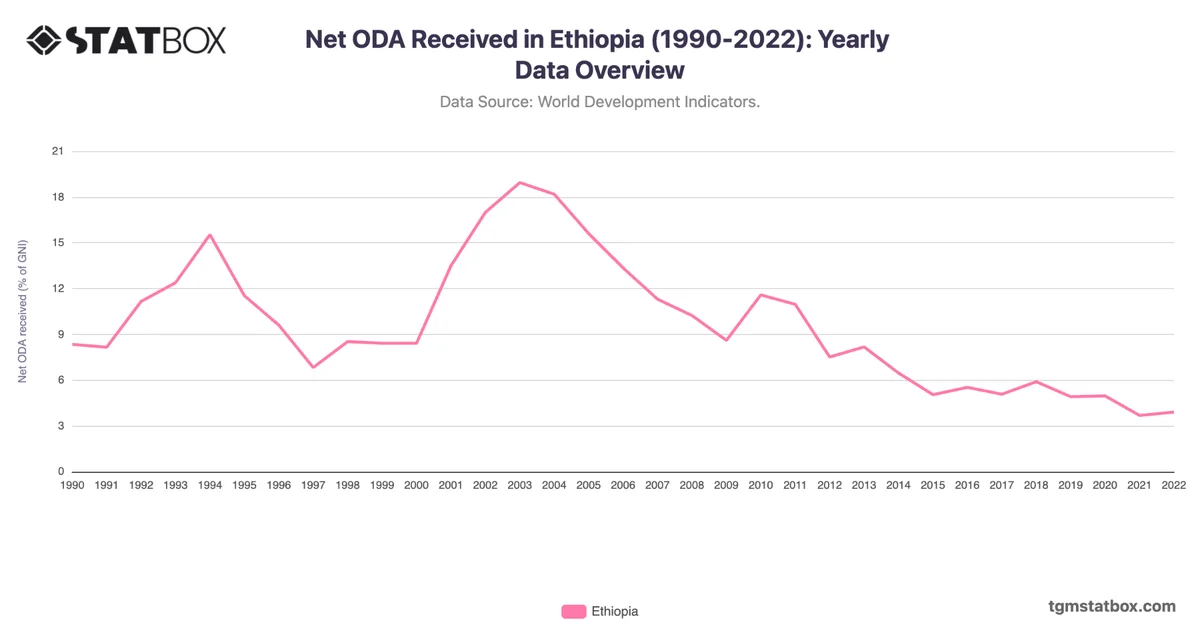
Find out more through related statistics on Ethiopia’s mortality rate, Ethiopia’s yearly net ODA received, Ethiopia’s urban growth.